Quick Facts
- Terrain Categories: Flat/Recreational, Rolling/Trail, and Mountain/Technical.
- Sizing Logic: Selection is based on Total Load, which includes body weight plus 10–30 lbs of winter gear.
- Women-Specific Edge: Narrower frame geometry (7–8 inches) and tapered ergonomic design accommodate a smaller stride.
- Technical Advancements: Mountain models feature televators to reduce calf fatigue and aggressive traction features for safety on ice.
- Flotation Tip: Use removable snowshoe tail extensions to provide modular flotation capacity in deep powder without buying a second pair.
- Market Trend: Snowshoeing participation in the United States rose by a significant increase of 5.7% for the 2024-2025 season.
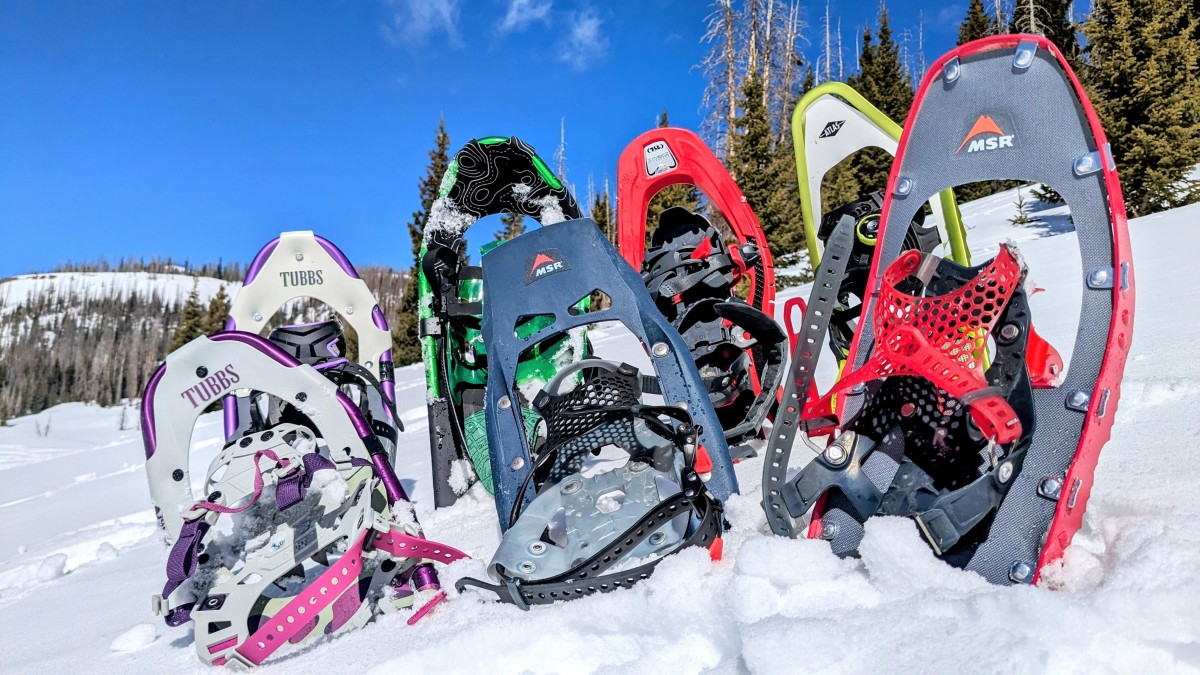
Women's snowshoes are categorized based on terrain: flat terrain models for recreational trail walking, rolling terrain shoes for off-trail day hiking, and steep mountainous models for technical backcountry ascents. This women's snowshoe guide will help you select the right pair based on your total load weight, gait biomechanics, and the specific winter conditions you plan to explore.
In 2023, female participation in outdoor recreation in the United States reached a record high of 51.9%, marking the first time that more than half of American women participated in outdoor activities. As more women head into the backcountry, the demand for specialized equipment has shifted the industry toward refined, women-specific engineering. Choosing the right snowshoe is no longer just about picking a smaller size or a different color; it is about understanding how physics and biomechanics interact on the snow.
The Biomechanics: Why Choose Women-Specific Designs?
When our testers take new gear out on the trails, the most immediate feedback often centers on comfort and gait. Historically, snowshoes were wide, rectangular frames that forced a wide, awkward "duck walk." For many, this leads to hip strain and early fatigue. This is why choose women's specific snowshoe designs over unisex is the first question any new buyer should ask.
The primary difference lies in the frame dimensions. Unisex or men's snowshoes typically feature frames that are 8 to 9 inches wide. Women-specific models utilize narrower frame geometry, often measuring between 7 to 8 inches. This subtle reduction in width allows for a more natural walking motion. Furthermore, a tapered ergonomic design at the tail of the shoe ensures that as you step forward, your shoes do not overlap or clatter against one another.
Beyond the frame, the pivot rotation system and bindings are scaled for a woman’s anatomy. Women generally have lower-volume feet and narrower heels. A women's snowshoe guide wouldn't be complete without highlighting that specific bindings are designed to wrap more securely around smaller boots, preventing the shifting that can cause blisters or loss of control on side-slopes.
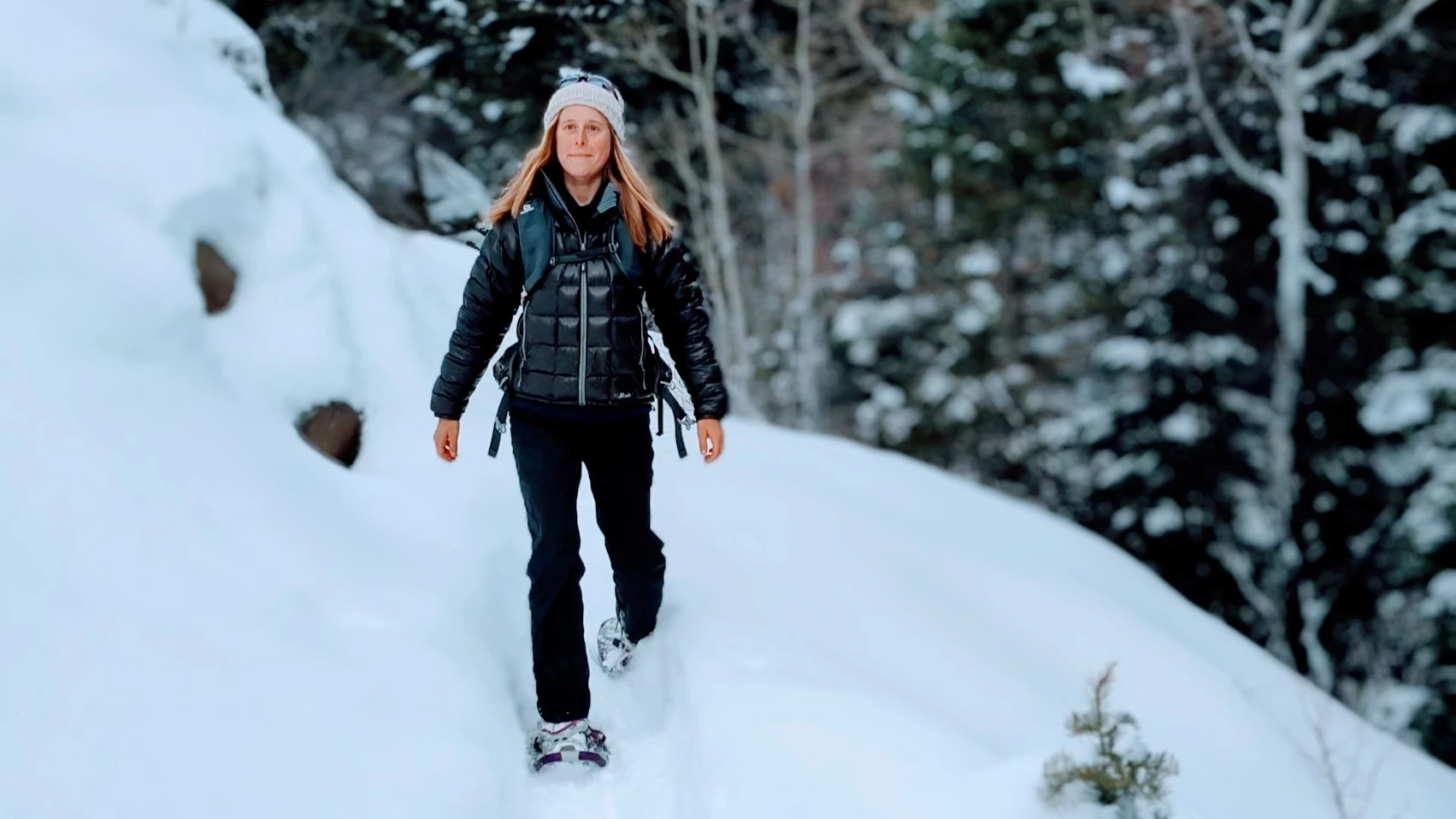
When you understand how to choose women's snowshoes, you realize it is about load displacement. Because women often have a lower center of gravity and a different hip-to-knee alignment compared to men, the placement of the binding over the crampon is adjusted to maximize leverage. This ensures that every ounce of energy spent pressing down into the snow results in maximum grip and stability.
The 3 Types of Women's Snowshoes by Terrain
Selecting the right gear requires an honest assessment of where you plan to hike. Professionals divide snowshoes into three primary categories based on snowshoe terrain types. Each category offers a different balance between weight, traction, and price.
1. Flat Terrain (Recreational)
These are ideal for beginners or those who stick to groomed trails and flat meadows. They feature simple, easy-to-use bindings and modest traction. If your goal is a casual walk through a local park or a flat forest service road, these offer the best value. The best women's snowshoes for flat groomed trails prioritize comfort and ease of entry over aggressive climbing features.
2. Rolling Terrain (Trail/All-Mountain)
This is the "sweet spot" for most winter hikers. These shoes are designed for off-trail exploration where you might encounter moderate slopes and variable snow conditions. They generally offer more aggressive toe crampons and side rails for better lateral stability. They are versatile enough for both a morning on a packed trail and an afternoon breaking through light powder.
3. Mountainous (Technical)
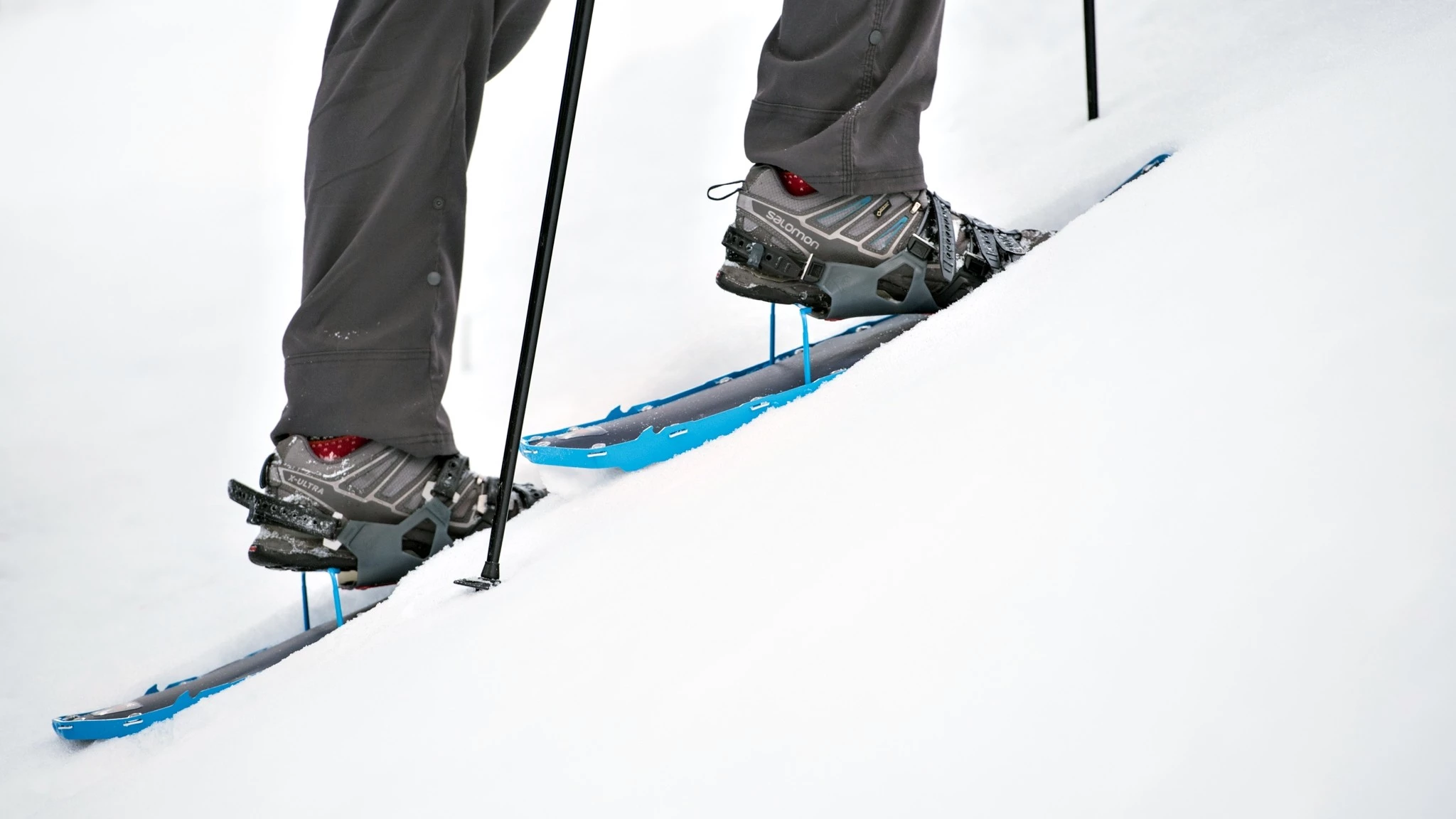
When selecting women's snowshoes for mountain backcountry climbing, you are looking for the peaks of engineering. These models are built for icy, technical alpine terrain. They feature rugged aluminum frames or high-impact plastic unibodies designed to withstand extreme cold and rocky outcrops. The defining feature here is the inclusion of televators or heel lifts, which flip up under the heel to make steep ascents feel more like walking up a staircase.
For a specialized niche, we must also mention lightweight snowshoes for women's winter trail running. These are much smaller and narrower than traditional shoes, featuring a highly reactive pivot rotation system that allows for high-cadence movement on packed snow.
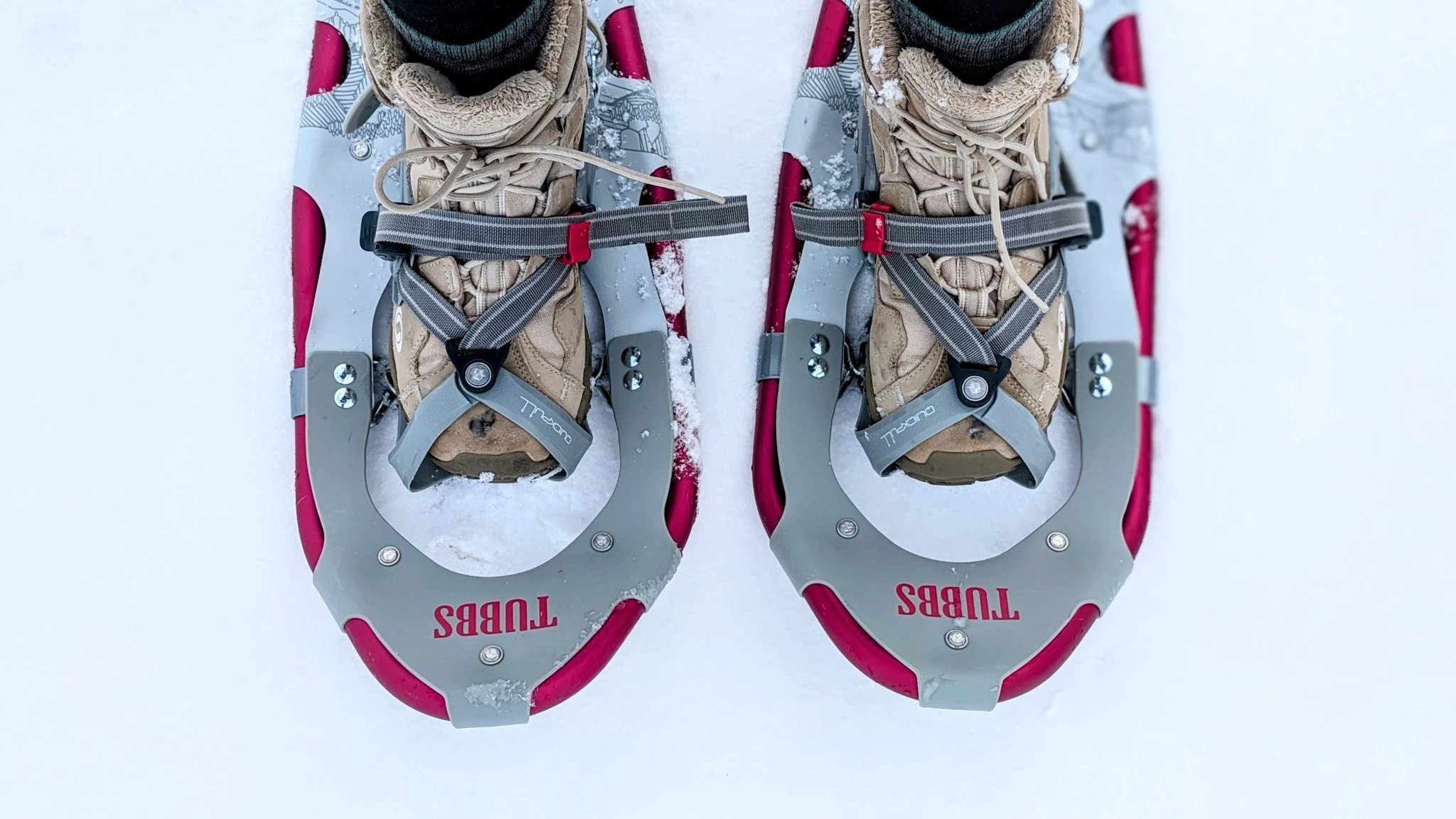
Terrain Comparison Table
| Terrain Type | Traction Level | Best For | Key Features |
|---|---|---|---|
| Flat | Basic | Groomed trails, park walking | Simple bindings, lightweight |
| Rolling | Moderate | Day hiking, moderate hills | Lateral traction, robust bindings |
| Mountain | Technical | Steep ascents, icy summits | Televators, aggressive crampons |
| Running | Speed-focused | Groomed winter running | Tapered tails, minimal weight |
Sizing & Flotation: Calculating the Total Load Weight
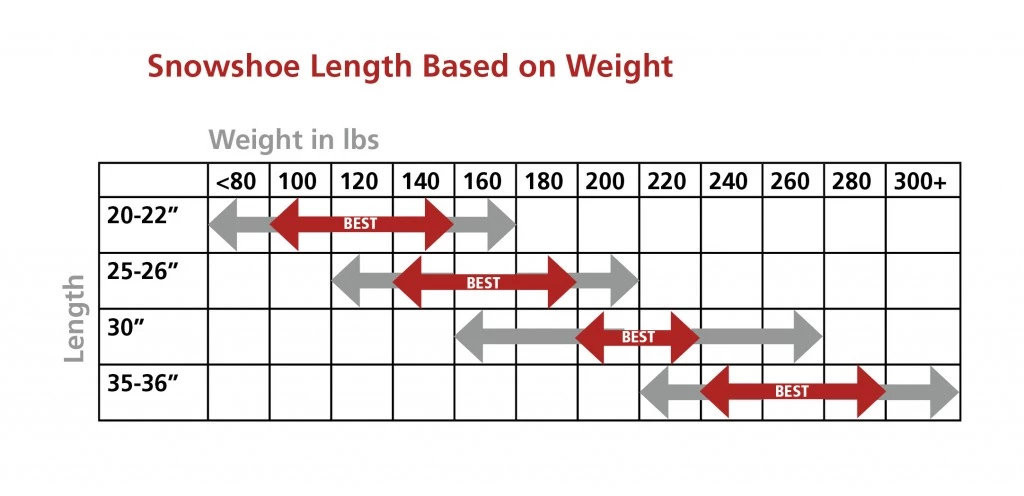
The most common mistake beginners make is sizing snowshoes based on their height. In the world of winter sports, height is irrelevant; flotation is entirely dependent on weight and the density of the snow. To find the right fit, you must apply the snowshoe sizing for weight principle.
Flotation capacity refers to the snowshoe’s ability to keep you on top of the snow rather than sinking. This is a direct result of surface area. A larger snowshoe (e.g., 25 or 27 inches) provides more surface area but is harder to manuever. A smaller snowshoe (e.g., 21 or 22 inches) is agile but may sink in deep, fresh powder.
To find your ideal size, you must use a formula to determine how to determine snowshoe size based on total load weight:
The Total Load Formula Body Weight + Winter Clothing (approx. 5 lbs) + Backpack/Gear (5–20 lbs) = Total Load Weight
If your total load weight is 150 lbs, a 22-inch shoe might suffice on packed trails. However, if you are carrying a 30 lb pack for an overnight trip in fresh powder, you might need a 25-inch shoe to maintain flotation.
For hikers who want the best of both worlds, some high-end models offer the option of increasing flotation with removable snowshoe tail extensions. These are small modular pieces that can be clipped onto the back of the shoe for deep days, then removed for better maneuverability on packed trails.
Essential Tech: Bindings and Traction Features
The binding is your connection to the snowshoe; it needs to be secure but easy to manipulate when your fingers are cold. Modern designs have moved away from complex nylon straps toward more intuitive systems.
The BOA closure system has become a favorite in our field tests. It uses a micro-adjustable dial and stainless steel cables to provide even pressure across the foot. With one hand, you can tighten or loosen the binding, even while wearing thick mittens. Traditional ratchet straps are still common and highly durable, but they can be finicky if ice builds up in the teeth.
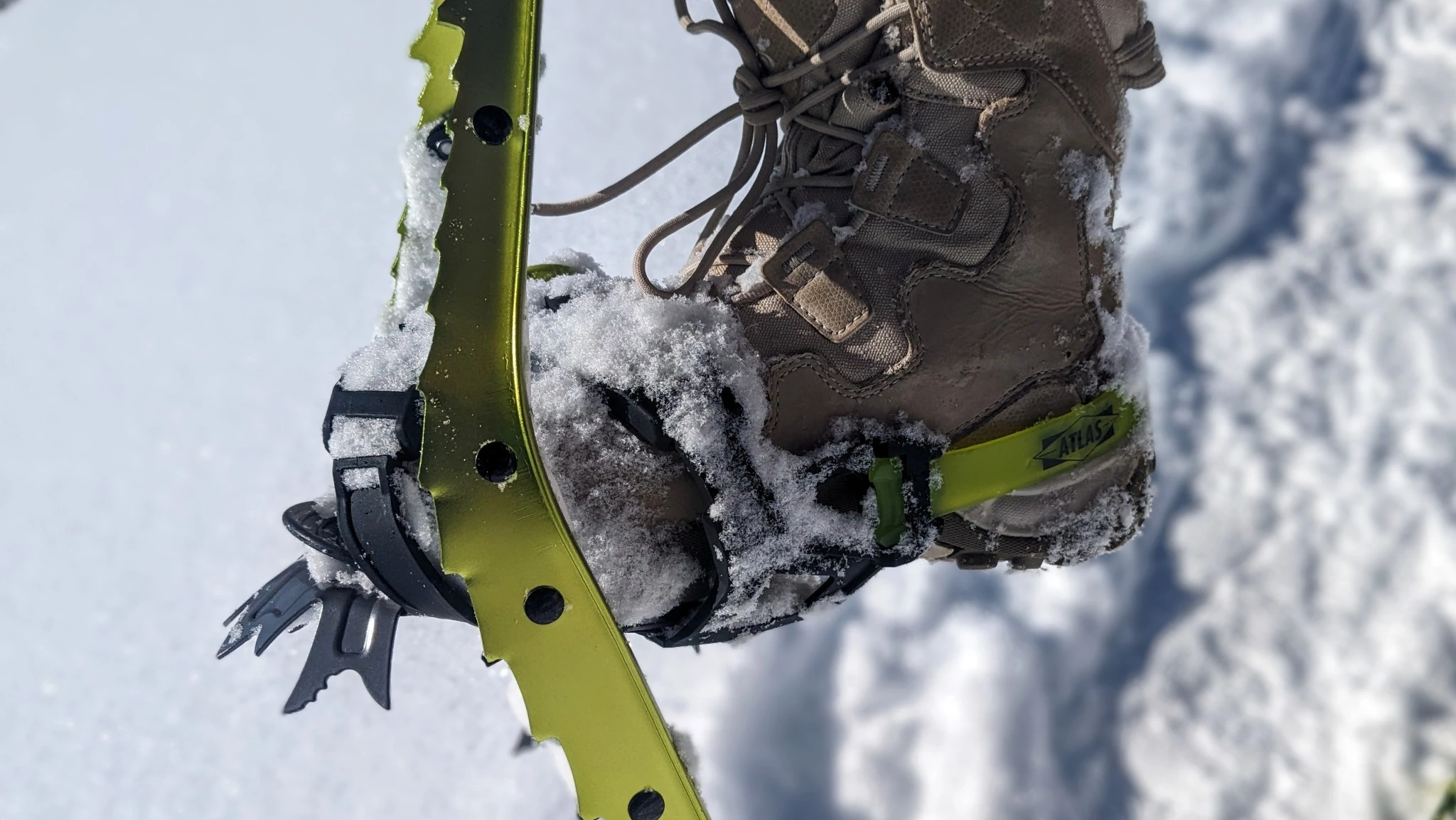
Beyond the bindings, you must inspect the underside of the shoe for top snowshoe traction features for icy and uneven terrain. Look for:
- Toe crampons: These are the primary teeth under the ball of your foot that bite into the snow when you move forward.
- Serrated side rails: These run along the length of the frame to provide grip when you are traversing a slope sideways.
- Braking bars: Located near the heel, these prevent the shoe from sliding forward or backward on descents.
Frame material also plays a role in performance. Aluminum frames provide a classic, lightweight feel and more flex, which can be comfortable on long walks. Plastic unibody frames, on the other hand, are incredibly durable and often feature integrated traction rails molded directly into the deck, making them the preferred choice for rocky, icy mountain expeditions.

FAQ
How do I choose the right size snowshoes for women?
Choosing the right size depends primarily on your total weight and the snow conditions. Most women find that a length between 21 and 25 inches is ideal for general use. If you plan to hike mainly on packed trails, go smaller for agility. If you are venturing into deep powder, opt for a larger frame or a model that accepts tail extensions to increase surface area.
How do you determine the weight limit for snowshoes?
The weight limit, or flotation capacity, is calculated by adding your body weight to the weight of everything you are carrying, including boots, heavy coats, and your backpack. Manufacturers usually provide a weight range for each shoe size. Staying within this range ensures the snowshoe stays on the surface of the snow rather than "post-holing" (sinking deep into the snow).
Do I need specific boots for snowshoeing?
You do not need specialized snowshoeing boots, but you do need waterproof, insulated footwear with good ankle support. Standard waterproof hiking boots or dedicated winter boots work best. The key is ensuring the boot fits securely within the snowshoe binding without pinching or causing cold spots.
Are poles necessary for snowshoeing?
While not strictly required for flat trails, trekking poles are highly recommended for almost all snowshoeing adventures. They provide essential balance on uneven terrain, help you power up hills, and can be used to test the depth and stability of the snow in front of you. Ensure your poles have snow baskets attached to prevent them from sinking.
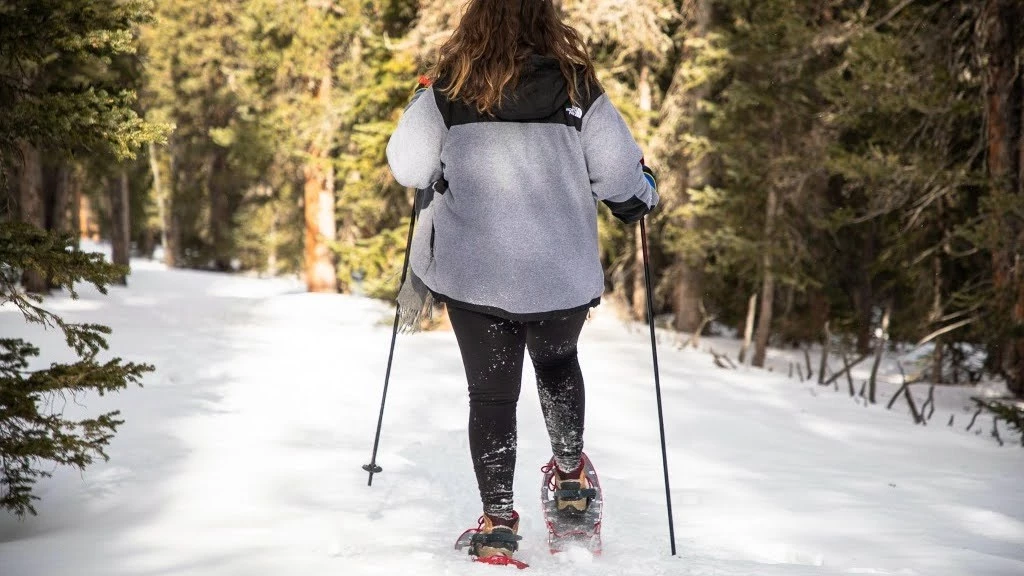
Exploring the winter wilderness is one of the most rewarding ways to spend the colder months. With the right women's snowshoe guide at your side, you can confidently choose gear that matches your ambition. Whether you are seeking the serenity of a groomed forest trail or the thrill of a technical mountain ascent, the right pair of snowshoes will ensure every step you take is steady, comfortable, and full of wonder.