Our Top Picks
The Big Agnes Bunk House 4 is a premier family car camping tent featuring a 70-inch standing height and a massive front vestibule. While marketed for four, it is ideally a high-luxury shelter for 2-3 people. 2026 updates focus on PFAS-free construction and improved ventilation components, making it a sustainable choice for enthusiasts who value vertical space and weather protection.
The Big Agnes Bunk House 4 review process reveals a shelter that prioritizes livability over weight, making it a top-tier choice for family car camping recommendations. While its floor can accommodate four sleeping pads, the arrangement is very tight, making it more effective as a spacious luxury shelter for smaller groups.
Big Agnes Bunk House 4 Technical Specifications
| Feature | Details |
|---|---|
| Capacity | 4 Person (Optimized for 3) |
| Floor Area | 58 square feet |
| Peak Height | 70 - 72 inches |
| Vestibule Area | Combined 47 - 49 square feet |
| Trail Weight | 14 pounds 4 ounces |
| Packed Weight | 15 pounds 8 ounces |
| Pole Material | DAC aluminum poles |
| Fabric | PFAS-free fabrics (2025/2026 models) |
Interior Living: Standing Height and Realistic Capacity
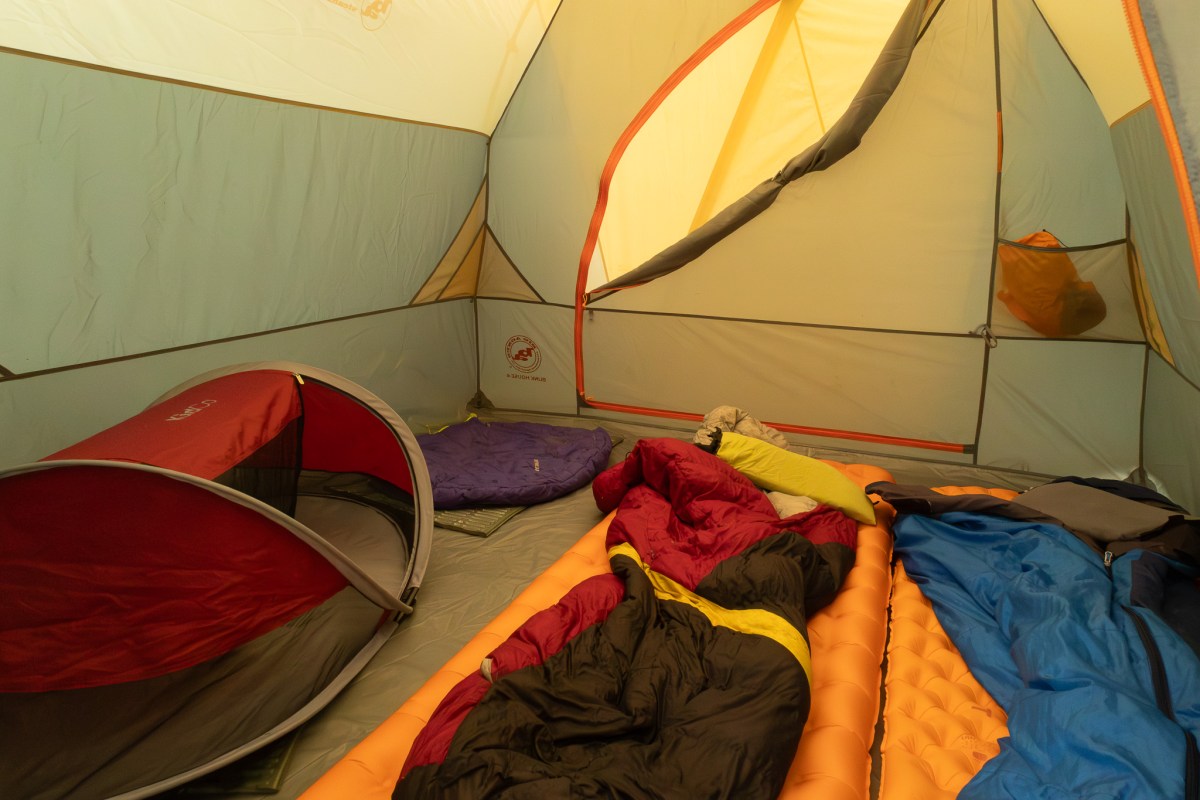
In our testing, the standout feature of the Big Agnes Bunk House 4 is undoubtedly the cavernous interior. Unlike many competitive models that offer a peak height only at the center point, the Bunk House utilizes a ridge-pole architecture. This design pulls the side walls toward verticality, creating a rectangular living volume rather than a pyramid. For an adult standing 6 feet tall, the ability to walk from one end of the tent to the other without hunching over is a game-changer for long-weekend comfort.
The Big Agnes Bunk House 4 offers a total of 58 square feet of floor area and a peak height of 70 to 72 inches, allowing most campers to stand upright inside the tent. However, we need to talk about the "4-person" label. In the world of outdoor gear, capacity ratings are based on standard sleeping pads aligned side-by-side with zero gap. To help you plan your next trip, we have developed a comfort tracker to compare the technical capacity against the reality of a comfortable campsite.
Comfort Tracker: Capacity vs. Reality
| Configuration | Comfort Level | Gear Storage Capability |
|---|---|---|
| 2 Adults | Ultra-Luxury | Massive space for cots, bags, and chairs inside. |
| 2 Adults + 1 Child | High Comfort | Plenty of room for a "living area" and sleep setup. |
| 2 Adults + 2 Children | Cozy/Manageable | Tight; gear must live in the vestibules. |
| 4 Full-Sized Adults | Backpacking-Style | Very cramped; shoulder-to-shoulder sleeping only. |
The interior space for families is further enhanced by the stargazing mesh ceiling. On dry nights, leaving the fly off allows for incredible ventilation and a clear view of the night sky, while the steep walls prevent that "closing in" feeling often found in smaller dome tents.
The Vestibule: Transforming Your Campsite
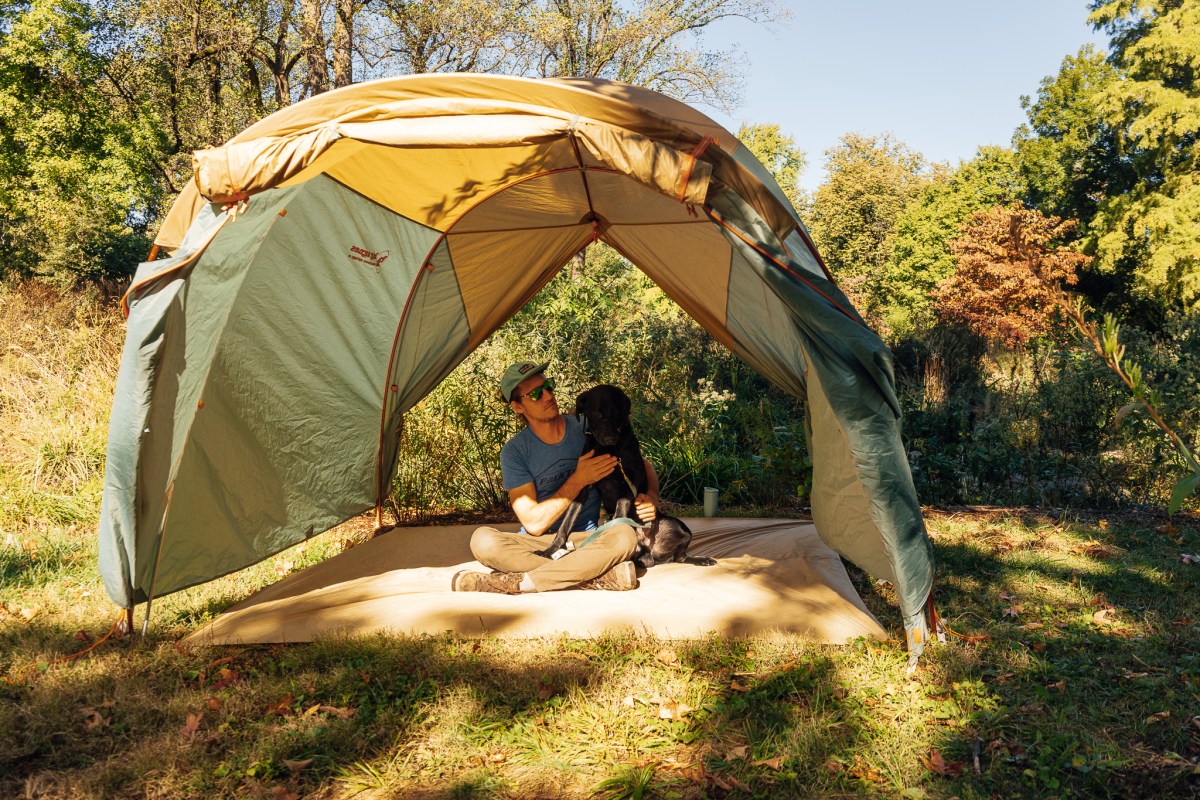
What truly separates this model from a standard cabin tent are the Big Agnes Bunk House 4 vestibule features. This tent includes two doors and two vestibules that provide a combined protected storage space of approximately 47 to 49 square feet. The rear vestibule is standard for gear storage, but the front vestibule is a transformative architectural element.
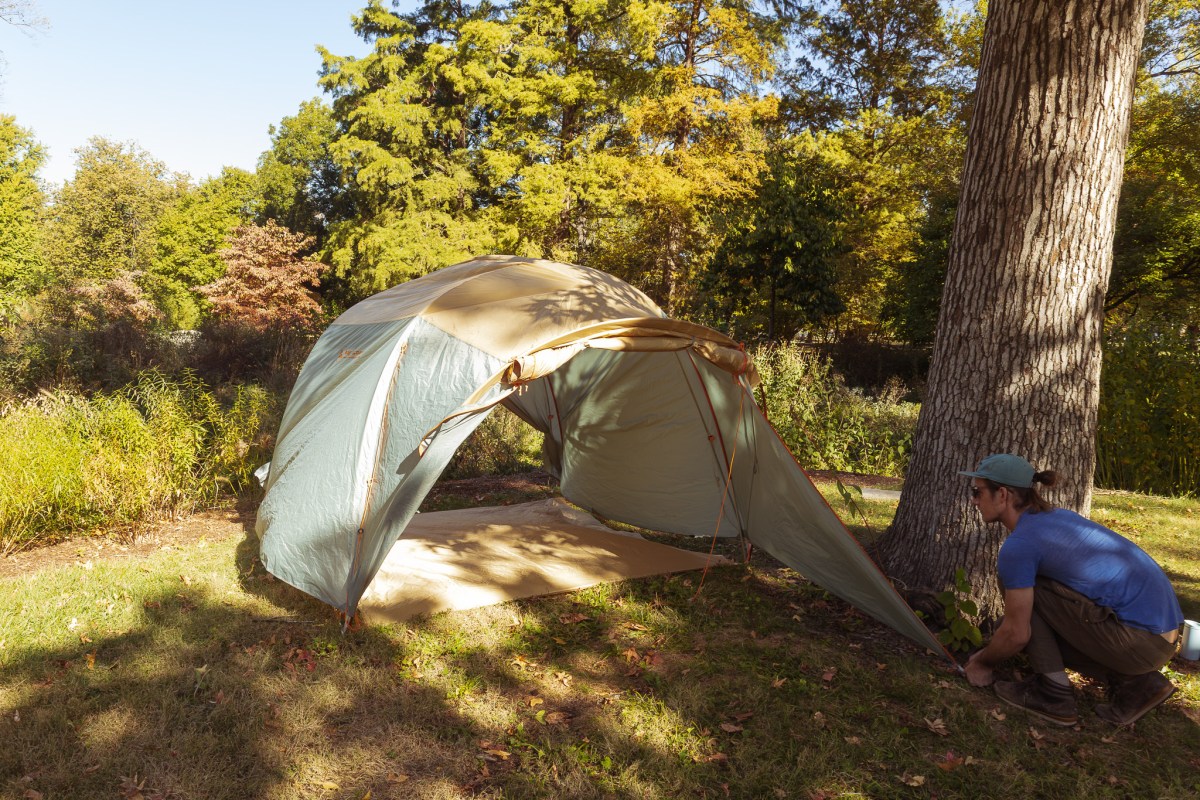
By utilizing your own trekking poles or a separate set of accessory poles, the front vestibule door can be pitched out to create an awning doors setup. This creates a shaded "front porch" or a mudroom where you can pull off wet boots before entering the sleeping quarters. For those camping with dogs, this area provides enough coverage to serve as a protected pet sleeping area or a spot to sit in a camp chair while waiting out a light drizzle. This shelter mode configuration adds a layer of versatility that most five-person tents lack, allowing you to create a basecamp atmosphere rather than just a place to sleep.
Setup and Portability: The Hub-and-Pole System
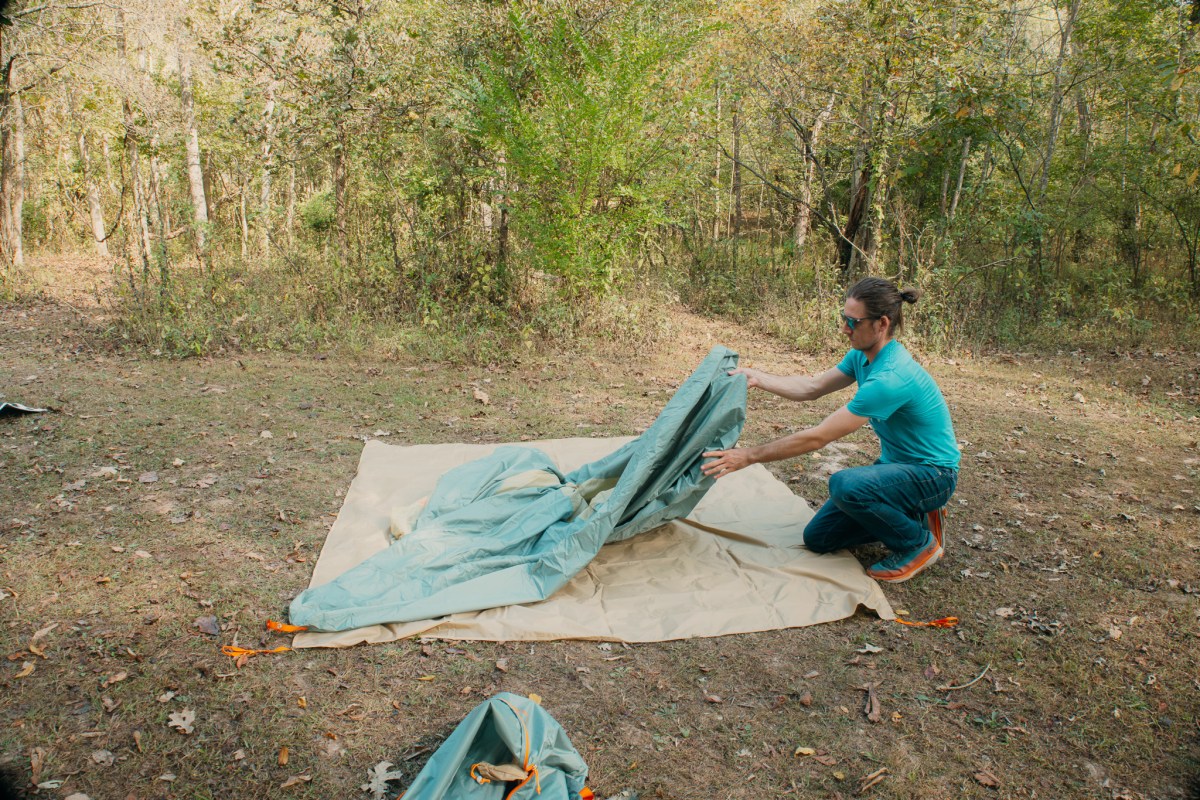
Large tents are notorious for high-stress setup experiences, but the Big Agnes Bunk House 4 setup is refreshingly intuitive. Big Agnes utilizes a high-quality hub-and-pole system featuring DAC aluminum poles, which are renowned in the industry for their strength-to-weight ratio. The entire frame is essentially one interconnected piece, which eliminates the "which pole goes where" guesswork common with budget brands.
To further simplify the process, the tent uses color-coded webbing. You simply match the orange webbing on the tent body to the orange tips of the poles. While one person can certainly manage the setup in about 10 minutes, having two people allows you to reach a 3 to 5-minute target with ease.
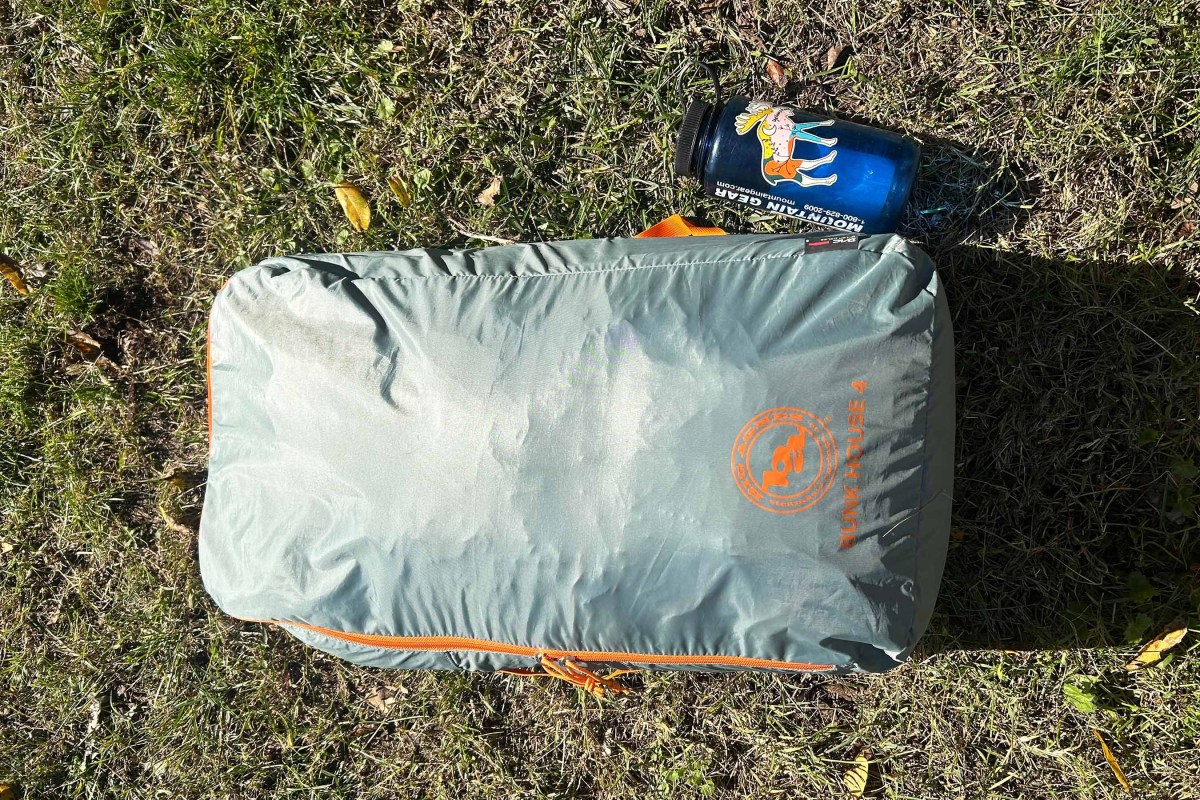
One detail we appreciated during our Big Agnes Bunk House 4 setup tips for two people sessions was the backpack-style carry bag. At a packed weight of roughly 15 pounds 8 ounces, lugging a tent from the car to the site can be a chore. The integrated straps allow you to wear the tent like a pack, keeping your hands free for coolers or kids. This emphasis on portability for families shows that the designers understand the logistical chaos of a Friday evening arrival at a campground.
Weather Performance: Rain, Wind, and Condensation
A luxury tent is only as good as its performance when the weather turns. The Bunk House is designed for three-season versatility, and its Big Agnes Bunk House 4 wind and rain performance is bolstered by a full-coverage rainfly. Many "standing room" tents use a partial fly that leaves the lower walls exposed, but this model wraps the entire structure in a 1,500mm waterproof polyurethane coating.
During heavy downpours, the double-walled construction ensures that moisture stays on the outside fly rather than soaking into your sleeping bags. However, with the 2025/2026 update to PFAS-free fabrics, users should be diligent about condensation management. The full-fly design is great for warmth, but it requires you to utilize the integrated fly vents to keep air moving. Without airflow, the interior can become stuffy if four people are breathing inside overnight.
The stability in wind is equally impressive. The tent features 8 guy lines that, when properly staked, allow the DAC aluminum poles to flex and shed wind rather than collapsing. We found that even in gusts up to 25 mph, the structure remains quiet and stable, provided you use the ground sheet compatibility to its full advantage.
Buying Guide: Bunk House 4 vs 6 and Critical Accessories
When contemplating this purchase, many families face the Big Agnes Bunk House 4 vs 6 person tent comparison. If you have older children or require more than 58 square feet of floor space, the 6-person model jumps up to approximately 90 square feet. However, for a couple or a young family of three, the 4-person model hits the "Goldilocks" zone—it is large enough for comfort but small enough to fit on standard 10x10 campsite pads.
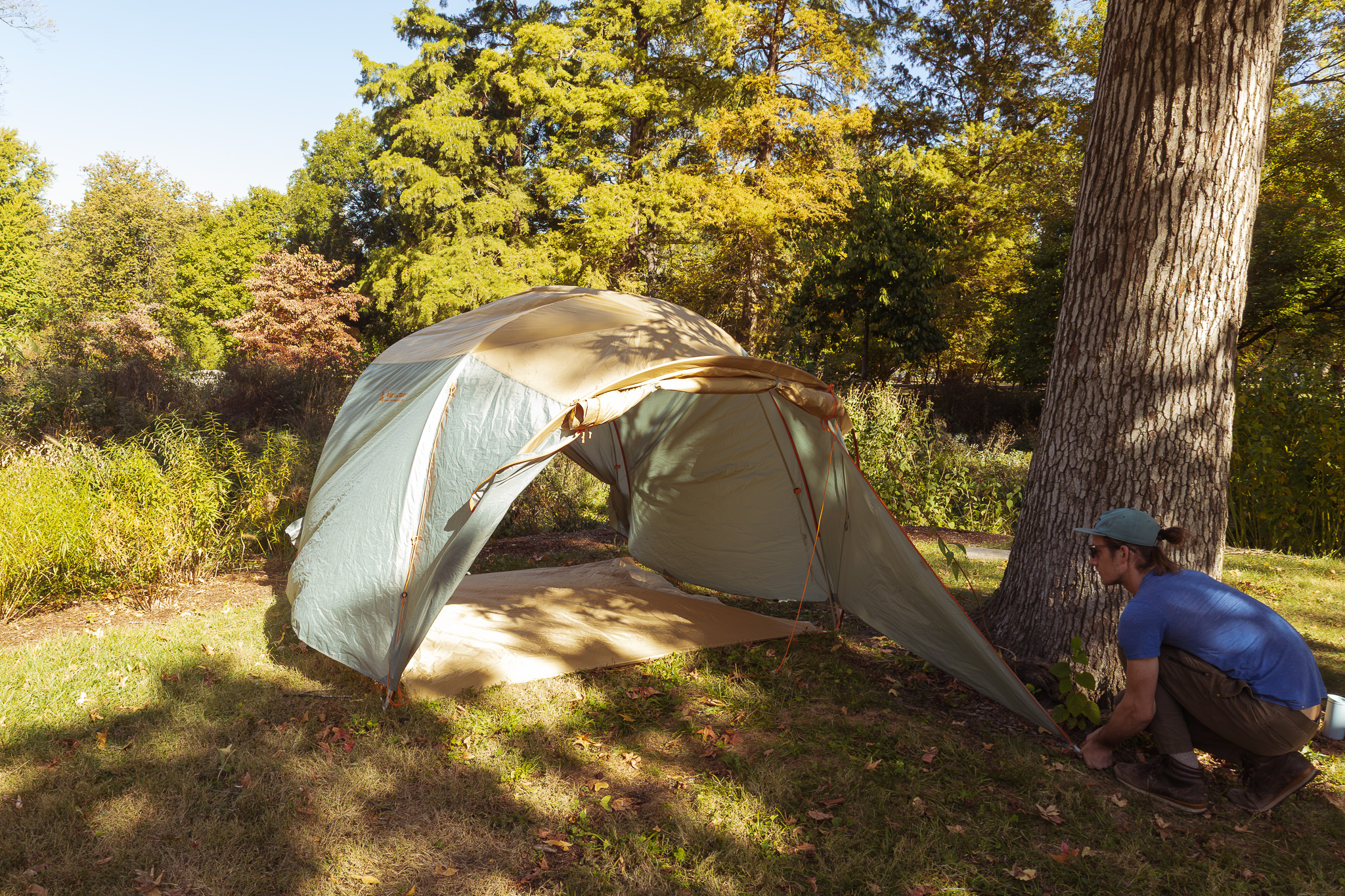
There is one "hidden" cost to factor into your budget: the footprint. While the 75D floor is durable, we consider the separate footprint mandatory for two reasons. First, it protects your investment from sharp rocks and roots. Second, it enables the "Fast-Fly" or shelter mode configuration. This allows you to pitch only the fly and the poles (with the footprint) to create a lightweight sunshade or beach shelter without the inner tent body.
Editor's Note: Expect to pay an MSRP of around $649 for the tent, plus an additional $75 for the footprint. While the price is high, the longevity of materials like DAC aluminum poles often makes this a "buy once, cry once" investment for frequent campers.
FAQ
Is the Big Agnes Bunk House 4 worth the money?
Yes, if you prioritize durability and standing room. Unlike budget tents that may last only two or three seasons, the high-quality materials and PFAS-free fabrics in this model are designed for long-term use. The incredible vestibule space and ease of setup provide a level of "campsite sanity" that is hard to put a price on for families.
How easy is it to set up the Big Agnes Bunk House 4?
It is remarkably simple for its size. The hub-and-pole system prevents poles from getting separated, and the color-coded webbing ensures you aren't guessing where each corner should be anchored. A two-person team can typically have the main structure standing in under five minutes.
Is the Big Agnes Bunk House 4 waterproof?
Absolutely. With a full-coverage rainfly and a 1,500mm waterproof rating on the fly and floor, it is built to handle heavy rain. The double-wall construction and taped seams provide professional-grade protection against sideways rain and damp ground conditions.
What is the standing height inside the Big Agnes Bunk House 4?
The peak height is approximately 70 to 72 inches. Because of the ridge-pole architecture, this height is maintained across a significant portion of the ceiling, rather than just at a single center point, allowing most adults to walk around comfortably.
Does the Big Agnes Bunk House 4 come with a footprint?
No, the footprint is sold separately. While the tent can be pitched without it, we highly recommend purchasing it to protect the tent floor and to enable the lightweight shelter mode configuration.