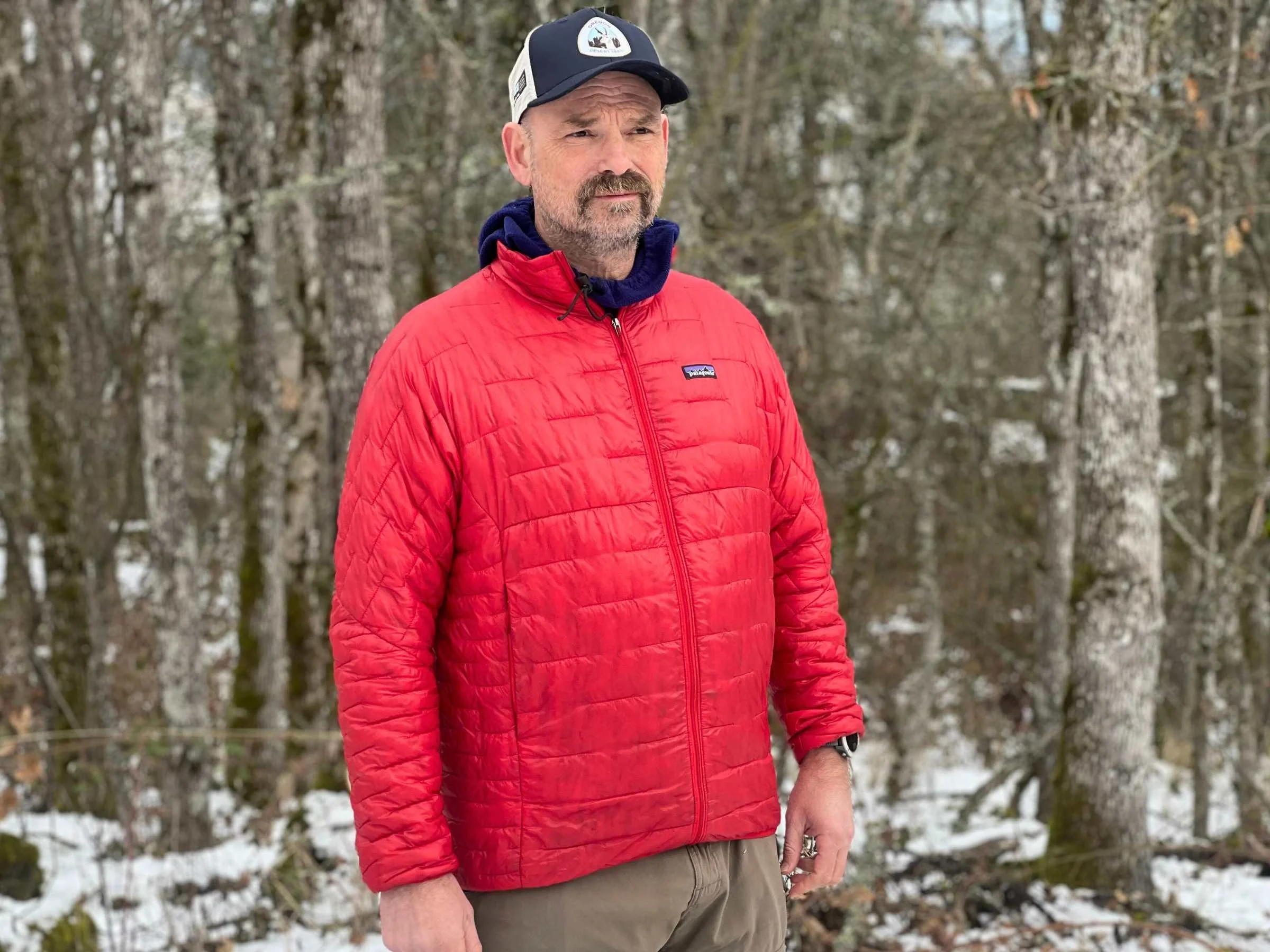
Our Top Picks
- Best Overall Synthetic Jacket: Patagonia Micro Puff Hoody — Unrivaled warmth-to-weight ratio using PlumaFill insulation that mimics the structure of down.
- Best for High-Exertion Activities: Arc'teryx Atom Hoody — The gold standard for breathable active insulation jackets, featuring Coreloft Compact for temperature regulation.
- Best for Ultralight Backpacking: Enlightened Equipment Torrid — A minimalist favorite for hikers who need packable synthetic puffer jackets that weigh next to nothing.
- Best Static Insulation for Cold Clips: Patagonia DAS Parka — A high-loft sanctuary designed to provide a massive thermal barrier during low-output activities.
- Best Budget Option: Decathlon Forclaz MT100 Synthetic — Proven durability and solid warmth for those seeking the best budget friendly synthetic insulated jackets under 200 dollars.
Discover the best synthetic insulated jackets for 2026, offering thermal efficiency that rivals down while staying warm when wet. Whether you need a breathable active insulation jacket for skiing or a packable synthetic puffer for backpacking, our field-tested picks cover every category. Synthetic insulation offers a critical performance advantage over down by retaining its ability to trap heat even when damp. Because synthetic fibers are naturally hydrophobic and resist clumping when wet, they continue to provide warmth during heavy rain or high-exertion activities that cause sweating. This makes these jackets superior for humid environments, wet-weather hiking, and stop-and-go winter sports where moisture management is essential.
| Jacket Model | Weight (Men's M) | Insulation Type | Best For | Warmth Rating |
|---|---|---|---|---|
| Patagonia Micro Puff | 298g | PlumaFill | Ultralight Versatility | ?????? |
| Arc'teryx Atom | 370g | Coreloft Compact | High-Output Movement | ????? |
| EE Torrid | 235g | Climashield APEX | Long-Distance Hiking | ?????? |
| Patagonia DAS Parka | 556g | PrimaLoft Gold Eco | Alpine Belays/Static | ????????? |
| TNF Casaval Hybrid | 340g | Ventrix | Technical Climbing | ??? |
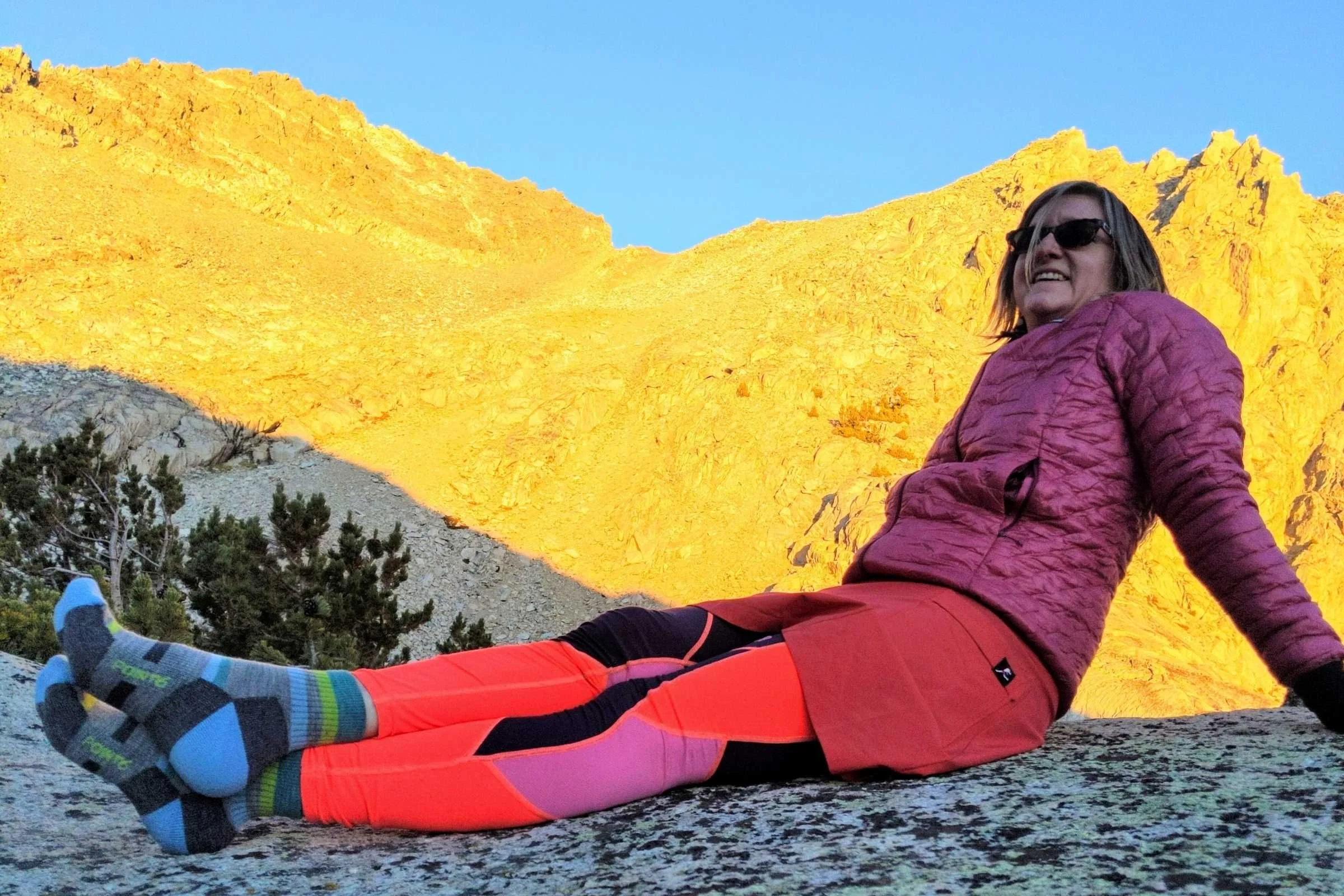
The Synthetic Advantage: Why it Trumps Down in 2026
For decades, the outdoor industry viewed synthetic fill as the "budget" alternative to goose down. In 2026, that narrative has officially flipped. The global insulated jacket market is expected to reach an estimated valuation of 10.15 billion USD by 2026, supported by a shift toward high-performance synthetic alternatives that offer durability and environmental benefits. Today's technical fills are engineered to replicate the loft of down while solving its greatest weakness: moisture.
When down clusters get wet, they lose their structure and collapse into a soggy clump, stripping away your insulation. Synthetic fibers like PrimaLoft Gold Eco and Coreloft are non-absorbent. Even when the shell is saturated, the fibers maintain their three-dimensional structure, trapping air pockets that keep you warm. This is why the synthetic down segment within the insulated outerwear market is projected to hold a 35.6% market share by 2025, generating approximately 10.1 billion USD in revenue due to its superior performance in wet conditions.
Sustainability is the other half of the story. Major outdoor apparel brands are significantly increasing their use of sustainable materials for 2026, with 94% of the polyester and nylon used in Patagonia's spring 2026 collection sourced from recycled content. By choosing the best synthetic insulated jackets, you are often opting for a product that uses recycled polyester fill and a PFC-free DWR finish, reducing your environmental footprint without sacrificing alpine performance.
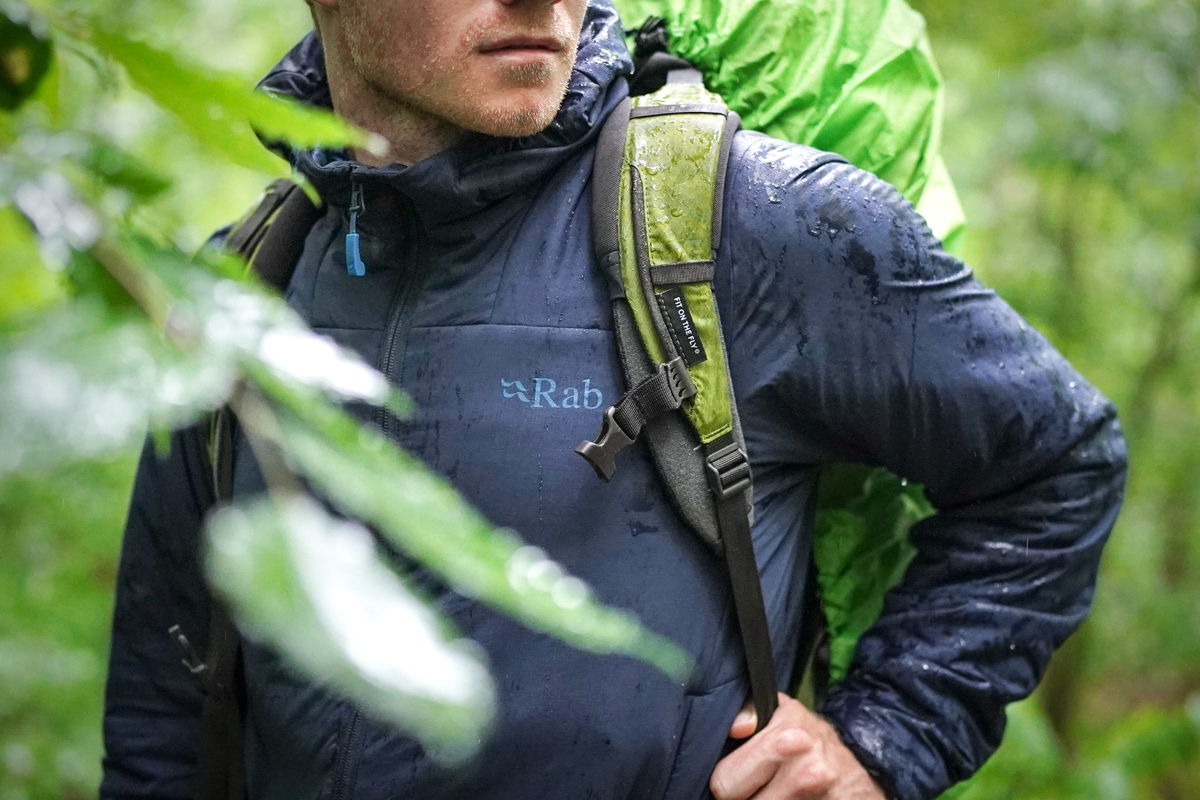
Active vs. Static: Finding Your 2026 Thermal Strategy
One of the biggest mistakes we see in the field is using a "static" jacket for "active" work. To choose the right gear, you must understand your high-exertion output levels. When choosing between synthetic jackets, it is important to distinguish between active and static insulation.
Active insulators, like the Arc'teryx Atom and the TNF Casaval Hybrid, are designed with air permeability in mind. They often utilize Pertex Quantum Air or other stretch-knit fabrics that allow air to flow through the garment. This helps dump excess heat and moisture while you are moving, preventing the "trash bag" effect where you sweat out your layers from the inside. These are the best synthetic insulated jackets for high output skiing or fast-paced winter hiking.
Static pieces, on the other hand, focus on loft retention and blocking the wind. The Patagonia DAS Parka is a prime example. It uses a thicker, more durable shell to trap every bit of body heat. These are essential for rest stops, camp life, or standing at a cold belay. Attempting to hike uphill in a DAS Parka will lead to instant overheating, but putting on an air-permeable active layer while standing still in a 20-mph wind will leave you shivering.
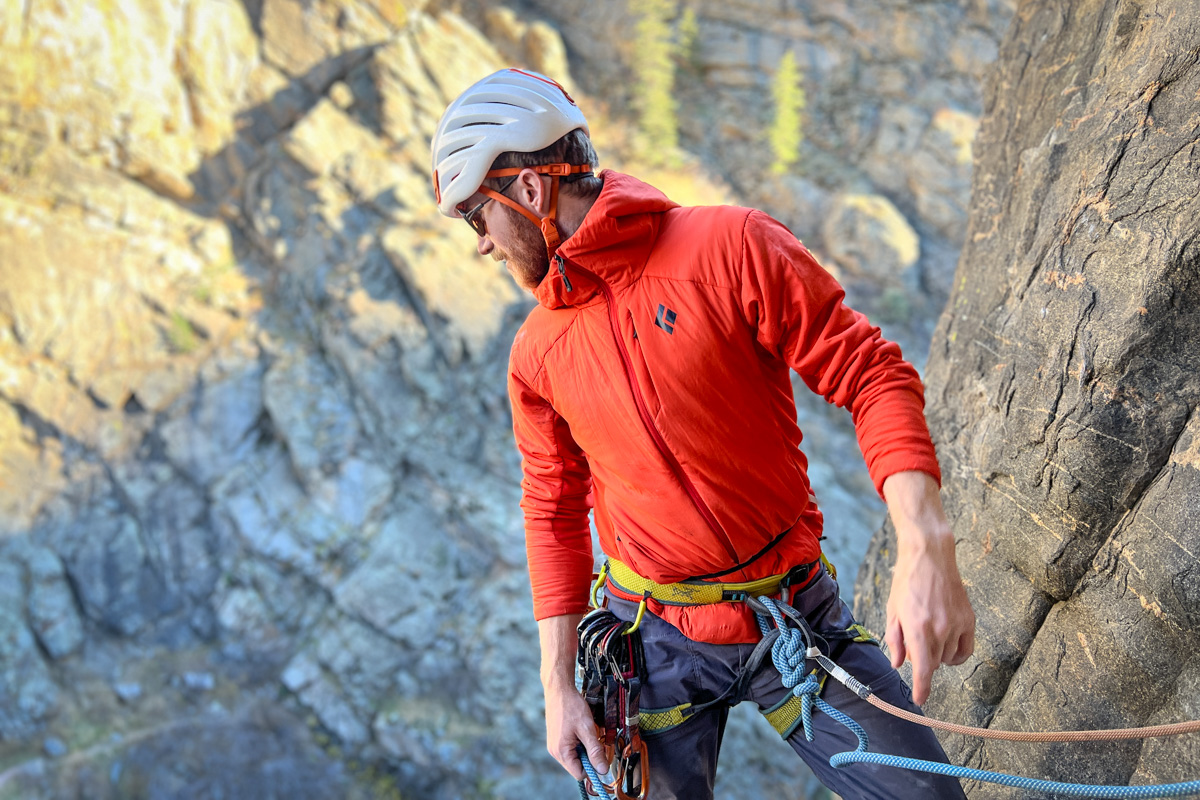
Product Deep Dive: Best Synthetic Insulated Jackets for 2026
Patagonia Micro Puff Hoody
The Micro Puff continues to dominate the "best overall" category because it solves the synthetic vs down insulation for hiking dilemma better than almost any other jacket. By using PlumaFill, Patagonia has created a continuous strand insulation that won't shift or clump, allowing them to use offset quilting patterns that maximize loft.
Technical Specs:
- Shell: 10D Pertex Quantum GL
- Insulation: 65g PlumaFill (100% recycled polyester)
- Weight: 298g
- Warmth Rating: 6/10
In our testing, we found the Micro Puff to be incredibly windproof, making it a stellar outer layer for cool, breezy days. It lacks the breathability of a true active layer, but for pure warmth-to-weight, it is the best synthetic insulated jackets choice for those looking to shave grams without sacrificing safety.
Arc'teryx Atom Hoody
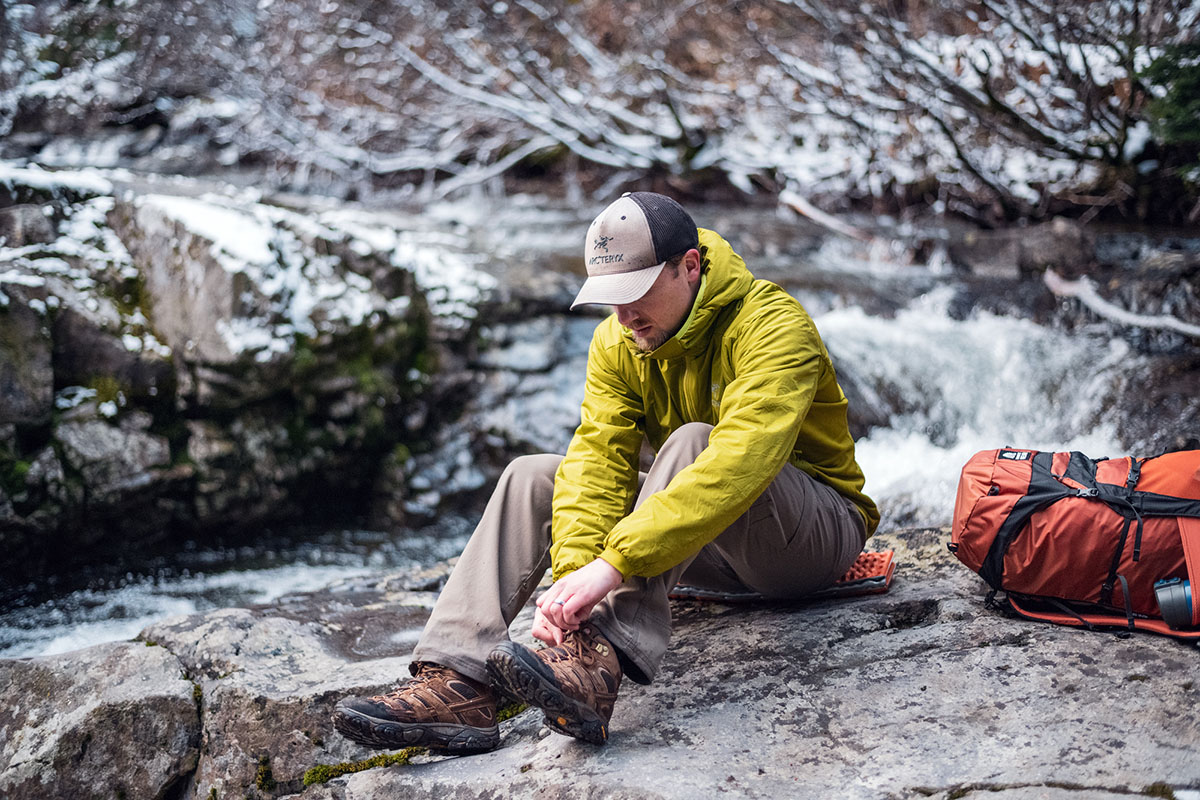
If you can only own one jacket for 2026, this is it. The Arc'teryx Atom is the definitive breathable active insulation jackets for high output skiing and climbing. It features Coreloft Compact insulation, which is more durable than previous iterations, retaining its loft even after years of being stuffed into a pack.
Technical Specs:
- Shell: Tyono 20 (20 denier)
- Insulation: 60g Coreloft Compact
- Weight: 370g
- Warmth Rating: 5/10
The side panels are made of stretch fleece, which provides two benefits: it improves the fit and massively increases breathability. Our team found that even during steep winter ascents, we didn't feel the need to strip this layer off. It is arguably the best women's synthetic insulated jackets for cold weather hiking due to its tailored fit and versatile temperature range.
Enlightened Equipment Torrid
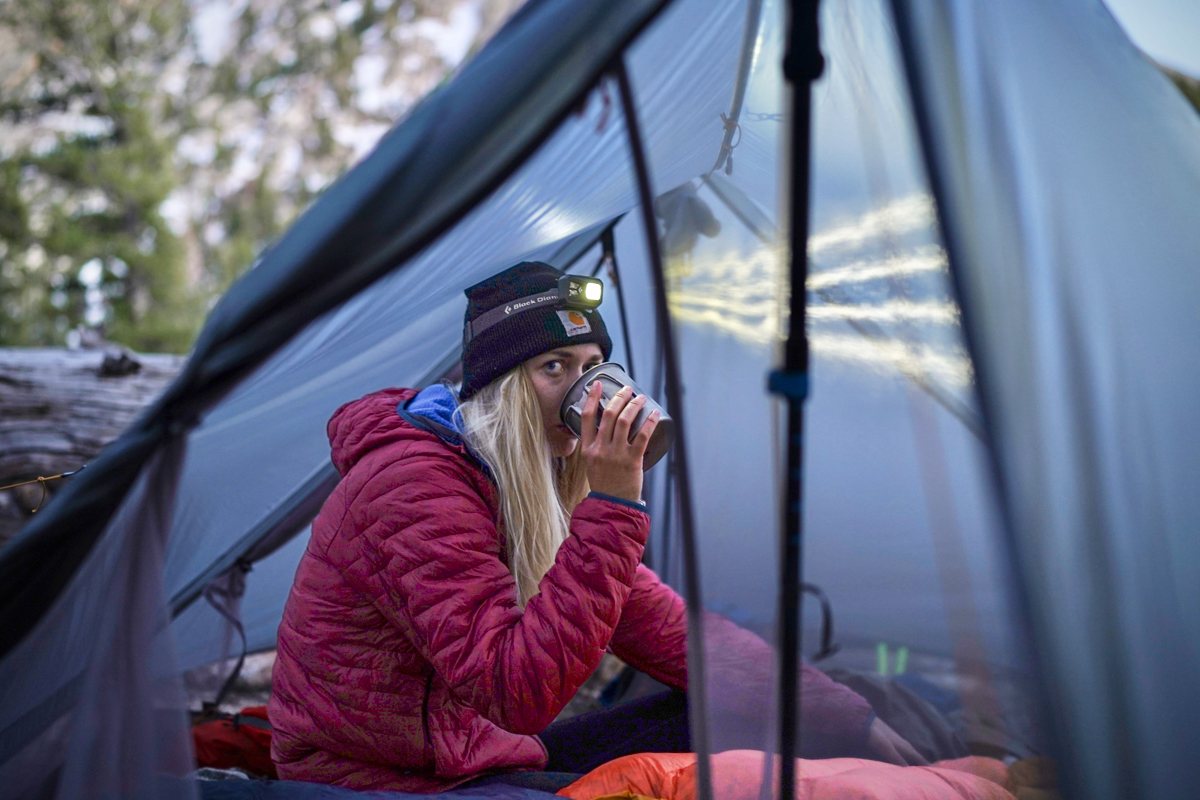
For the thru-hiking community, the Torrid has become a cult classic. It is one of the most packable synthetic puffer jackets for ultralight backpacking on the market. Unlike many mainstream brands, Enlightened Equipment uses Climashield APEX, a continuous filament insulation that doesn't require as much quilting, which reduces cold spots and hardware weight.
Technical Specs:
- Shell: 7D or 10D Nylon
- Insulation: 2oz/sq yd Climashield APEX
- Weight: 235g
- Warmth Rating: 6/10
The Torrid is unashamedly built for the trail. Its 7D shell is thin, so it requires care around blackberry bushes, but its hydrophobic properties are legendary. We've worn this through three days of Appalachian mist and stayed perfectly warm. It is truly the best synthetic insulated jackets for hikers who prioritize weight above all else.
Black Diamond Belay Parka
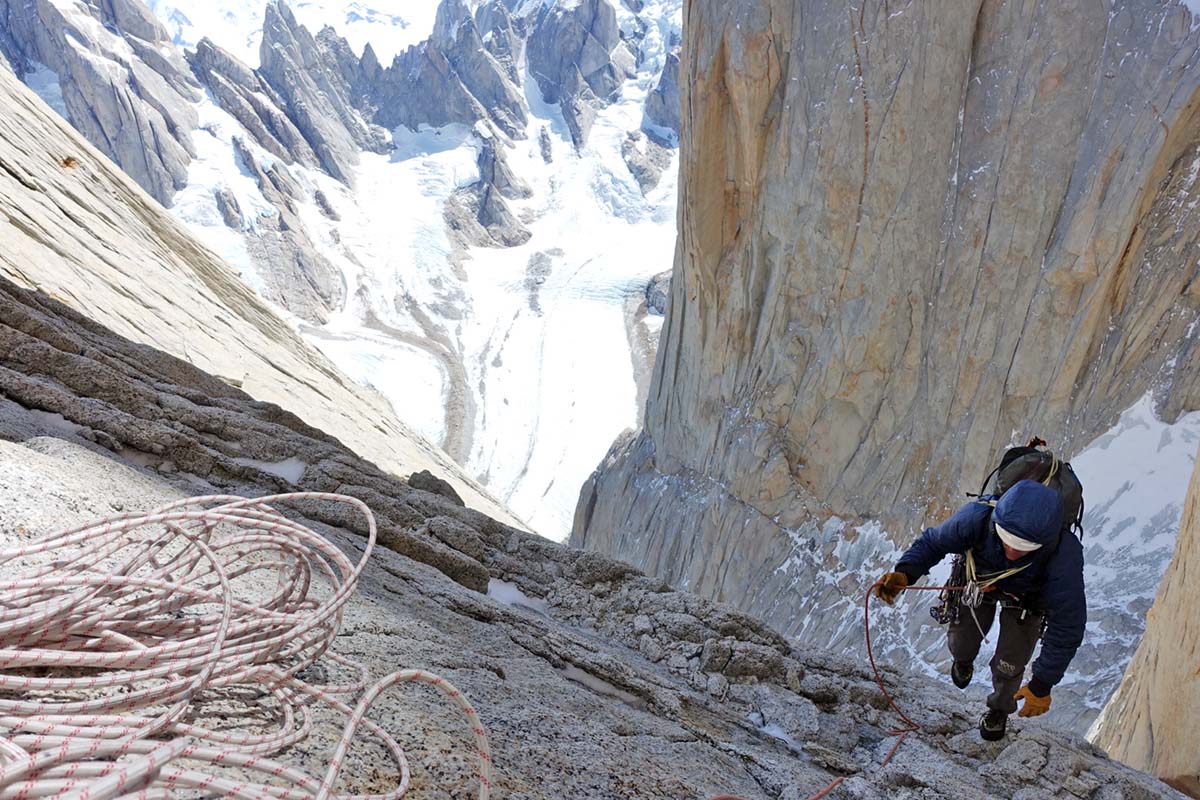
When the temperature drops below zero and you are stationary, you need bulk. The Black Diamond Belay Parka is one of the most durable synthetic insulated jackets for rock climbing and scrambling. It is heavily insulated with two layers of 100g PrimaLoft Silver Hi-Loft.
Technical Specs:
- Shell: 50D Ripstop
- Insulation: 200g (double-layered)
- Weight: 845g
- Warmth Rating: 9/10
This isn't a jacket you hike in; it's a jacket you survive in. The 50-denier shell can handle the abrasion of granite chimneys, and the oversized hood fits easily over a climbing helmet. While it isn't the most packable, its loft retention and sheer thermal mass make it the best synthetic insulated jackets for extreme alpine conditions.
Tested and Dismissed: What Didn’t Make the List
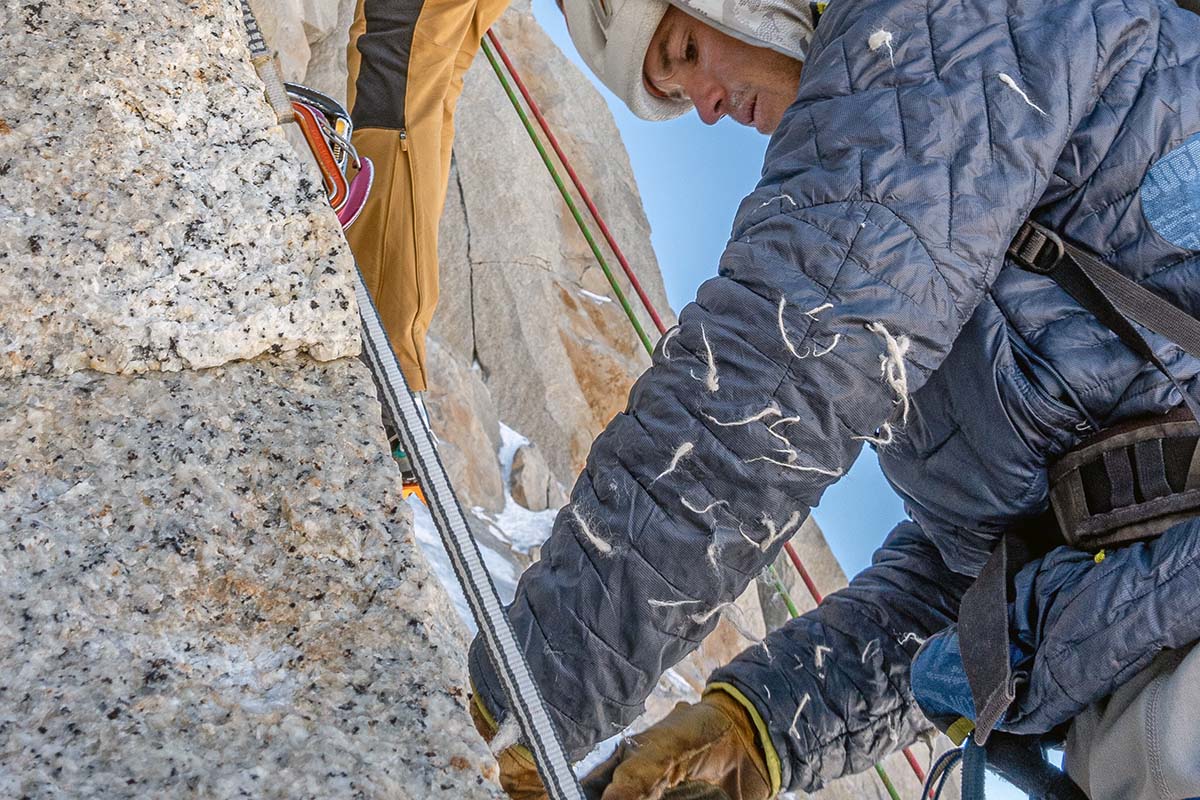
Our testing process for 2026 was rigorous, and several popular models failed to make the cut. We dismissed the "Ultrabright 400" because of its extremely noisy fabric—the constant swishing sound made it distracting during quiet forest hikes. Another high-profile release from a major brand was rejected due to zipper slippage; the main zipper would slowly creep down during high-exertion activities.
Furthermore, we looked closely at warmth-to-weight ratios. Some older "classic" synthetic puffers are still using heavy, non-recycled fills that offer poor thermal efficiency compared to modern PrimaLoft Gold Eco or Coreloft Compact. If a jacket in 2026 weighs over 500 grams but only offers the warmth of a light mid-layer, it didn't meet our standards for the best synthetic insulated jackets. We also penalized jackets that lacked a PFC-free DWR finish, as environmental responsibility is now a non-negotiable metric for top-tier gear.
FAQ
What are the benefits of synthetic insulation over down?
The primary advantage of synthetic insulation is its performance in wet weather. Unlike down, which loses its loft and warmth when damp, synthetic fibers are hydrophobic and maintain their structure. This makes synthetic jackets more reliable in humid environments, rain, or during high-output activities where you might sweat. Additionally, synthetic jackets are generally easier to wash and more affordable.
How long does a synthetic insulated jacket last?
Modern synthetic jackets are more durable than their predecessors, but they still have a shorter lifespan than down. On average, a high-quality synthetic jacket will maintain its peak loft for 5 to 7 years of regular use. Over time, the fibers will eventually compress and lose some of their springiness, which reduces warmth. However, using newer fills like Coreloft Compact helps extend this lifespan significantly.
Is synthetic insulation as warm as down?
Weight for weight, high-quality down is still warmer than synthetic. However, the gap is closing. Jackets like the Patagonia Micro Puff use specialized fills that very closely mimic the warmth-to-weight ratio of 700-fill-power down. For most users in 2026, the performance benefits of synthetic in wet conditions far outweigh the slight weight penalty compared to down.
Is synthetic insulation better for hiking in the rain?
Yes, synthetic insulation is much better for hiking in the rain. Even with a waterproof shell, moisture can find its way into your insulation through the neck, cuffs, or through condensation from sweat. Synthetic fibers will continue to trap heat in these conditions, whereas a down jacket would become a flat, heavy layer that provides almost no insulation.
Is synthetic insulation more breathable than down?
Standard synthetic puffers are not necessarily more breathable than down, but a specific category called active insulation is. Jackets designed with air-permeable shells and specialized non-migrating fills allow much more air to circulate than traditional down-proof fabrics. This makes active synthetic layers far superior for high-exertion activities where moisture management is critical.
Whether you are an ultralight enthusiast or an alpine climber, the best synthetic insulated jackets of 2026 provide the reliability you need for unpredictable mountain weather. For the best all-around performance, we recommend the Patagonia Micro Puff, but if your winter involves high-output movement, the Arc'teryx Atom remains the unbeatable choice for your layering system.