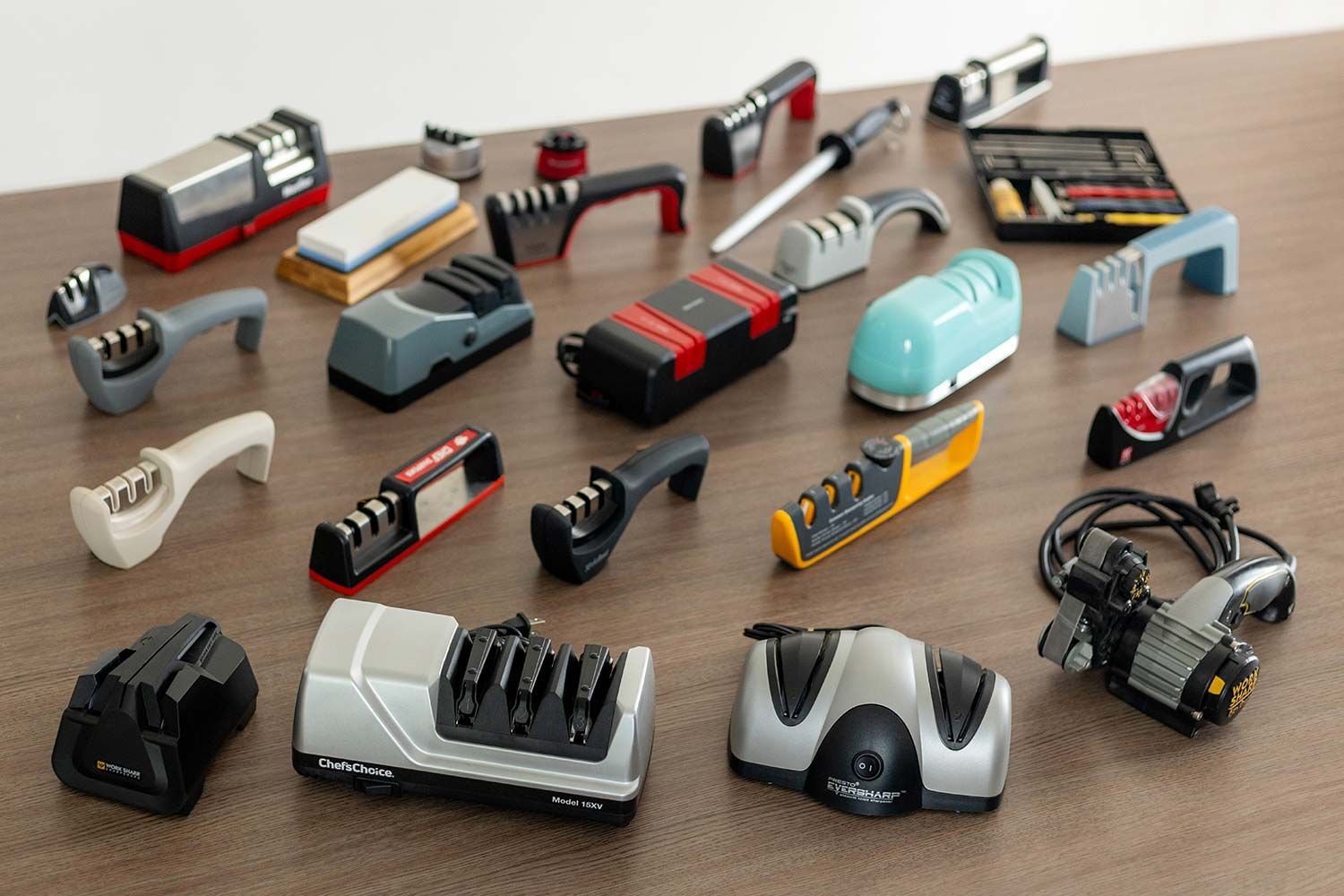
Our Top Picks
Choosing the right tool for your cutlery maintenance depends on the specific geometry of your blades. For high-end kitchen work, the Chef’s Choice Trizor XV Edge Select is the premier choice, converting standard 20-degree edges into ultra-sharp 15-degree profiles. If your gear includes heavy-duty outdoor equipment, the Work Sharp Knife & Tool Sharpener MK.2 offers unmatched versatility with its adjustable belt system for hunting and survival tools. For those seeking a balance of performance and value, a standard 20-degree multi-stage sharpener provides the durability needed for traditional European cutlery.
The best electric knife sharpener for 2026 depends on your tool's requirements and factory edge profile. For hunting and outdoor gear, the Work Sharp Knife & Tool Sharpener MK.2 is highly recommended for its ability to handle 25-degree angles and versatile abrasive belts. In contrast, professional kitchen cutlery often requires a 15-degree angle, making models like the Chef’s Choice Trizor XV Edge Select ideal for refining Santoku and high-end cooking blades.
| Feature | Chef's Choice Trizor XV | Work Sharp MK.2 | Presto Professional |
|---|---|---|---|
| Primary Angle | 15 Degrees | 20 or 25 Degrees | 20 Degrees |
| Sharpening Stages | 3 Stages | Variable Belt Speeds | 3 Stages |
| Best For | Professional Kitchen & Santoku | Hunting Knives & Outdoor Gear | Home Cooks & Budget Gear |
| Abrasive Type | Diamond Abrasives | Flexible Abrasive Belts | Sapphire Stones |
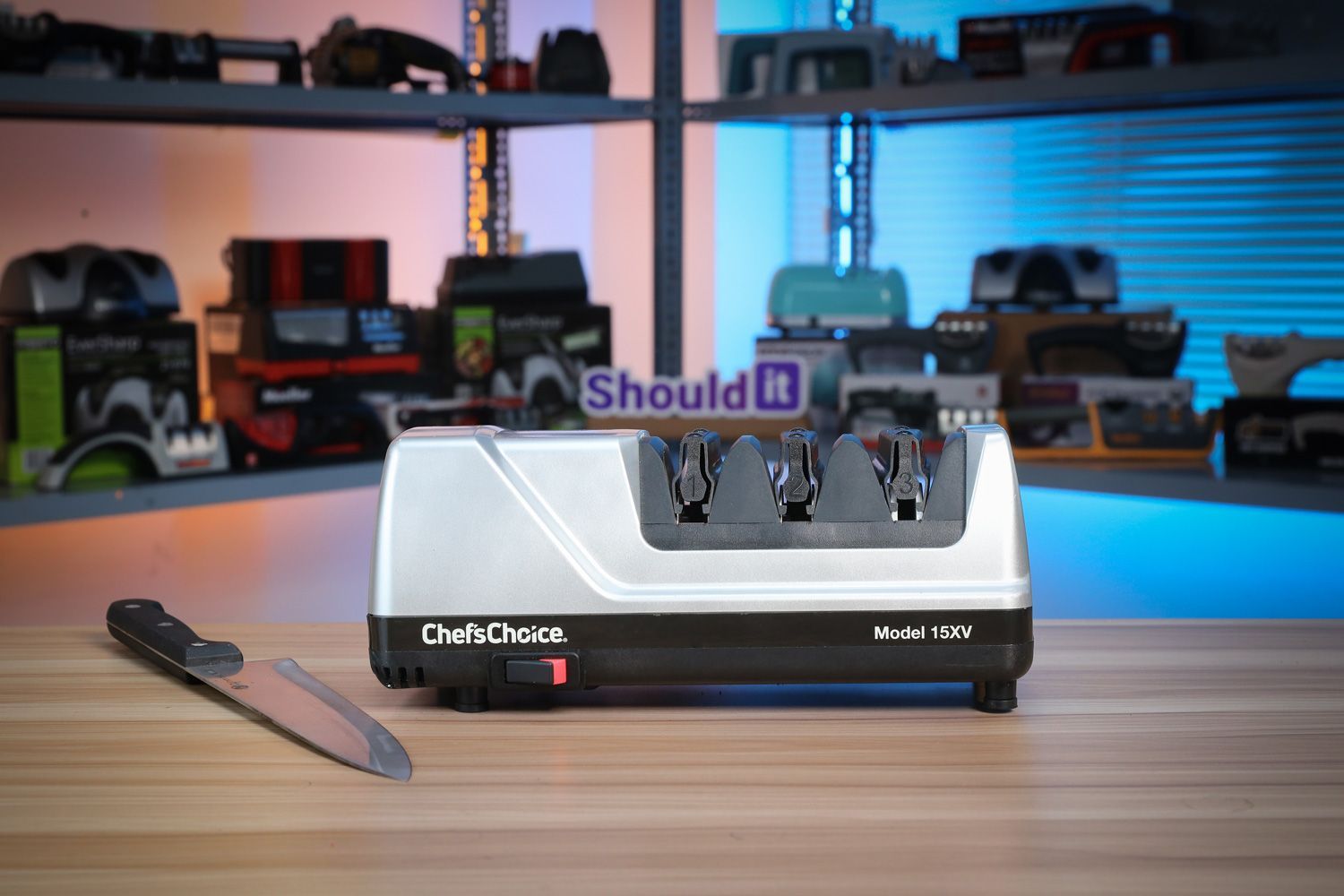
Understanding the Edge: Knife Blade Sharpening Angles Explained
Navigating the world of home cutlery maintenance starts with understanding the geometry of the blade. The factory edge profile determines how a knife interacts with the material it is cutting. Historically, European and American knives were manufactured with a 20-degree angle on each side. This created a durable, robust edge capable of hacking through bone or dense root vegetables without chipping. However, as the global culinary scene shifted recently toward precision, the 15-degree angle—pioneered by Japanese manufacturers—became the gold standard for sharpness.
When we look at knife blade sharpening angles 15 vs 20 explained, the trade-off is between precision and durability. A 15-degree edge is thinner and cuts with less resistance, which is why it is preferred for Santoku knives and fine slicing. A 20-degree edge provides more metal behind the point, making it less likely to roll or chip under heavy stress. Modern electric sharpeners are now designed with precision guides that remove the guesswork, ensuring that whether you are honing a delicate pairing knife or a rugged field tool, you maintain the correct bevel geometry every time.
The market for these devices is expanding rapidly as more consumers invest in high-quality steel. The electric knife sharpener segment accounted for approximately $307 million in revenue in 2023 and is projected to grow at a compound annual growth rate of 4.8% through 2032. This growth is driven by the realization that even the most expensive steel is useless if the user cannot maintain the intended knife blade sharpening angles explained by the manufacturer.
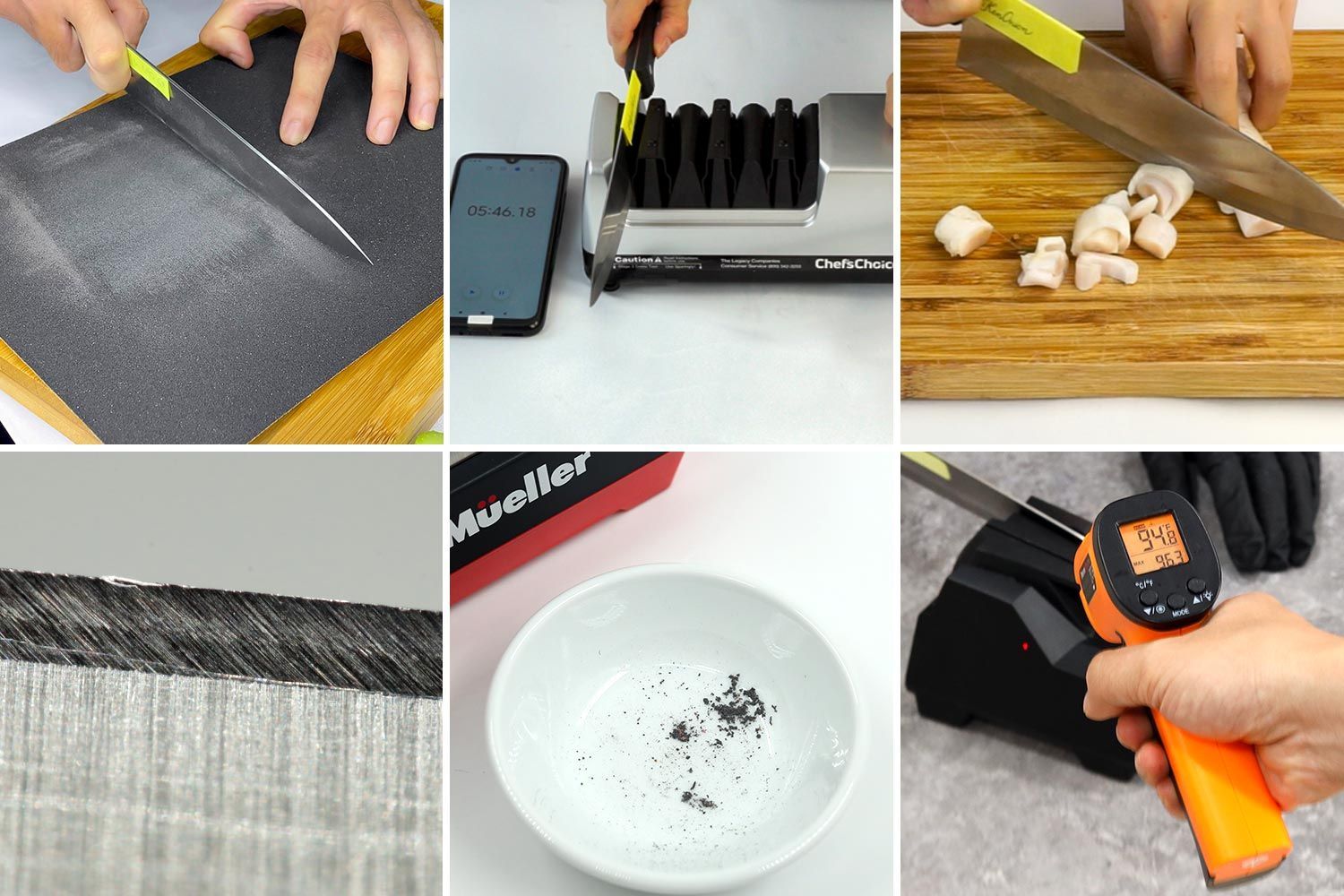
The Advanced 3-Stage Electric Knife Sharpening Process
Achieving a professional-grade edge is not a one-step affair. A 3 stage electric knife sharpening process is the industry standard for transforming a dull, damaged blade into a razor-sharp instrument. Each stage serves a specific mechanical purpose in re-aligning and refining the metal.
- Stage One: Re-profiling and Coarse Sharpening. In this initial phase, the machine uses coarse diamond abrasives to grind away old, fatigued metal. This is the stage where you fix chips or reset a 20-degree knife to a 15-degree profile. It creates the primary bevel.
- Stage Two: Refining the Edge. Once the shape is established, the blade moves to a medium grit. This stage refines the bevel, removing the deep scratches left by the coarse grit and beginning the burr removal process.
- Stage Three: Stropping and Polishing. The final stage often uses ultra-fine abrasives or flexible disks for stropping. This removes the microscopic burr (a thin sliver of metal) and polishes the edge to a mirror finish.
The 3 stage electric knife sharpening process explained here ensures that the blade geometry is optimized for longevity. By using multiple sharpening stages, the machine minimizes the amount of material stripped from the blade. If you were to only use a coarse stone, your knife would quickly disappear after a few years of maintenance. The final honing and stropping phases ensure that the actual cutting edge is as thin as possible while the shoulder of the blade remains strong.
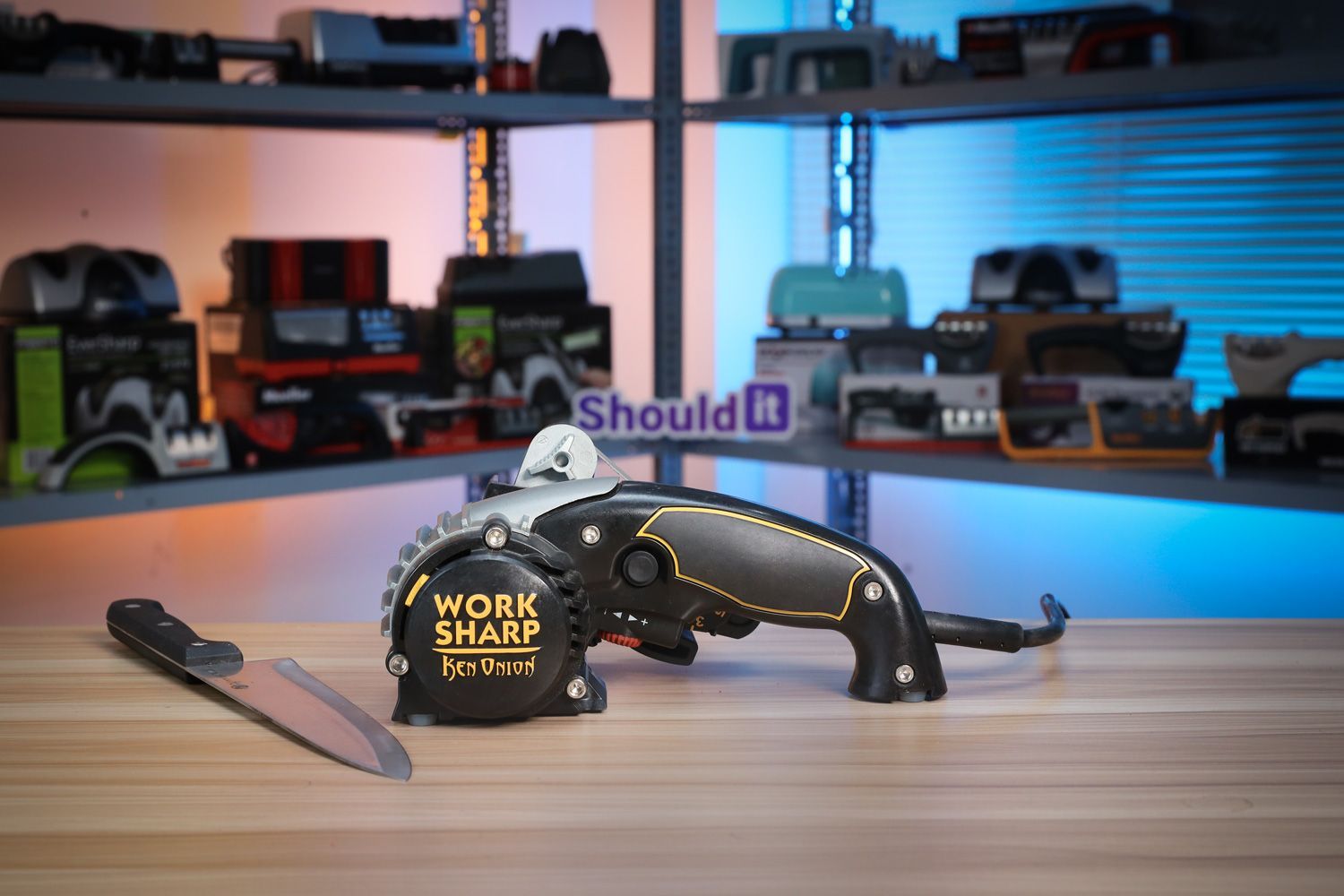
Best Electric Sharpener for Hunting Knives and Outdoor Gear
Hunters and survivalists have vastly different needs than home chefs. A kitchen sharpener often struggles with the thick spines and aggressive belly curves of a skinning knife. For these users, the Work Sharp MK.2 stands out because it utilizes flexible abrasive belts rather than fixed wheels. This design allows the abrasive to conform to the blade material, preventing the rounding of the tip which is a common failure in cheaper devices.
When searching for the best electric sharpener for hunting knives and field dressing, portability and angle flexibility are key. Hunting knives often require a 25-degree angle to withstand the rigors of field dressing and bone contact. The MK.2 offers precision guides that can be toggled between 20 and 25 degrees, making it the best electric knife sharpener for gear that lives in a rucksack rather than a kitchen drawer.
Furthermore, outdoor gear often utilizes tougher steels like S30V or D2, which can be exceptionally difficult to sharpen by hand. The high-speed belts of an electric sharpener for hunting knives provide the torque and friction necessary to reset these hard steels efficiently. This saves hours of manual labor with a stone, allowing you to spend more time in the field.
Buying Guide: Professional Models vs. Manual Whetstones
The debate of electric knife sharpener vs whetstone for high end cutlery is one of the most persistent in the enthusiast community. Purists argue that manual stones provide the ultimate control and remove the least amount of metal. While this is technically true for an expert, the learning curve for a whetstone is steep. For the average user, the risk of holding an inconsistent angle on a stone often leads to more damage than good.
Modern electric sharpeners bridge this gap by including precision guides that hold the blade at a perfect 15 or 20 degrees. This makes them the best professional electric knife sharpener for serrated blades and standard cutlery alike, as they provide repeatable results in minutes rather than hours. In the United States, convenience is winning the market; electric sharpeners represent 54% of total unit sales, while manual devices account for 46% of the market share by volume.
If you are wondering how to use an electric knife sharpener safely for beginners, the key is light pressure. Let the diamond abrasives do the work; pressing down too hard can cause the motor to hobby or overheat the steel, which ruins the temper. Professional models like the Chef's Choice or the Work Sharp also include a honing rod or stropping stage that provides a finish nearly identical to what a pro can achieve on a stone.
Maintenance and Safety Tips
Even the best electric knife sharpener requires regular upkeep to perform at its peak. As you sharpen, the machine accumulates metal shavings and steel dust. Most high-end models feature a magnetic collection bin or a clean-out port. Neglecting to empty these can lead to the dust being pulled back into the motor or onto the abrasive wheels, which can scratch your blade's finish.
For effective cutlery maintenance, follow this checklist:
- Empty the metal shavings tray every 5-10 sharpening sessions.
- Wipe down the precision guides with a microfiber cloth to remove residual grit.
- Monitor motor heat; if sharpening more than 5 knives at once, let the machine cool for 15 minutes to prevent damaging the internal components.
- Avoid using the machine on extremely dirty or greasy knives, as this will clog the diamond abrasives and reduce their effectiveness.
In terms of frequency, you should not be using the coarse stage every week. For daily users, a quick pass through the stropping or honing stage every 2-4 weeks is usually enough to maintain the factory edge profile. Reserve the 3 stage electric knife sharpening process for when the blade truly fails the paper-cut test.
FAQ
Are electric knife sharpeners worth it?
Yes, for the majority of knife owners, an electric sharpener provides the best balance of speed and precision. While a whetstone offers more control, the steep learning curve often results in uneven edges for novices. An electric device ensures a consistent angle and saves significant time, making it a worthwhile investment for maintaining expensive cutlery.
Do electric sharpeners damage your knives?
If used incorrectly, any sharpening tool can damage a knife. However, modern electric sharpeners with precision guides and multi-stage abrasives are designed to be extremely safe. The primary risk is overheating the blade by pressing too hard, which can be avoided by using light, consistent strokes as described in most user manuals.
What is the difference between a 2-stage and 3-stage sharpener?
A 2-stage sharpener typically only offers coarse sharpening and basic honing. A 3-stage sharpener adds an additional ultra-fine stropping or polishing stage. This third stage is crucial for burr removal and results in a much smoother, longer-lasting edge that feels like it came straight from the factory.
Can you sharpen serrated blades with an electric knife sharpener?
Many professional electric sharpeners include a specific stage designed for serrated blades. Usually, this is the final stropping stage, which hones the tips of the serrations and removes burrs without grinding away the teeth. Always check your specific model's manual to ensure it is compatible with serrated gear.
Can electric sharpeners handle high-end Japanese knives?
Modern units like the Chef’s Choice Trizor XV are specifically designed for high-end Japanese cutlery. They use a 15-degree angle guide and fine diamond abrasives that are gentle enough for the harder, more brittle steel typical of Japanese blades. Just ensure the sharpener you choose supports the 15-degree angle profile.