Quick Facts
- Safety Priority: Satellite Communicators always come first, followed by Navigation Phones and then Headlamps.
- The Sweet Spot: Maintain all gear between 40% and 80% charge to maximize lithium-ion battery efficiency and lifespan.
- Usable Energy: Always expect only 65-75% of stated mAh actual usable capacity due to voltage conversion and energy conversion loss.
- Weight Winner: The Nitecore NB10000 Gen 4 (5.0 oz) is the gold standard for weight-conscious hikers.
- Cold Defense: Keep batteries against skin or inside internal pockets when temperatures drop below 32°F.
- Redundancy: Carrying two 10,000 mAh banks is often safer than one 20,000 mAh bank in case of hardware failure or moisture.
A proactive backpacking battery strategy prioritizes safety devices like satellite messengers and navigation phones to ensure you are never left vulnerable. Instead of waiting for gear to die, establish a nightly charging routine to keep batteries between 40% and 80%, which ensures essential tools remain functional and helps you identify when power reserves are running low before an emergency occurs.
Imagine you are standing at a trail junction as the sun dips below the horizon. The wind is picking up, and your digital map shows two possible paths. You reach for your phone, only to see the dreaded 5% battery warning before the screen goes black. This isn't just a minor inconvenience; in the backcountry, it is a safety crisis. When we are on the trail, our electronics are our lifelines. Treating power management as an afterthought is a risk we simply cannot afford. By shifting our mindset from reactive charging to a proactive backpacking battery strategy, we treat electricity like water or food—a finite resource that must be managed with precision.
The Hierarchy of Life-Safety Power
When we talk about backcountry battery management, not all devices are created equal. We must rank our gear by survival criticality. If your camera dies, you lose a memory. If your satellite messenger dies, you lose your connection to search and rescue.
Our first priority should always be the SOS Reserve. This means ensuring your satellite communicator, such as a Garmin inReach, is never sacrificed to top off a phone for social media. We recommend a strict hierarchy:
- Satellite Messengers: These are the ultimate insurance policy. They require very little power but must be functional 24/7.
- Navigation Phones: Running navigation apps with GPS enabled is energy-intensive. Even in airplane mode, your phone is a primary tool for staying on the trail.
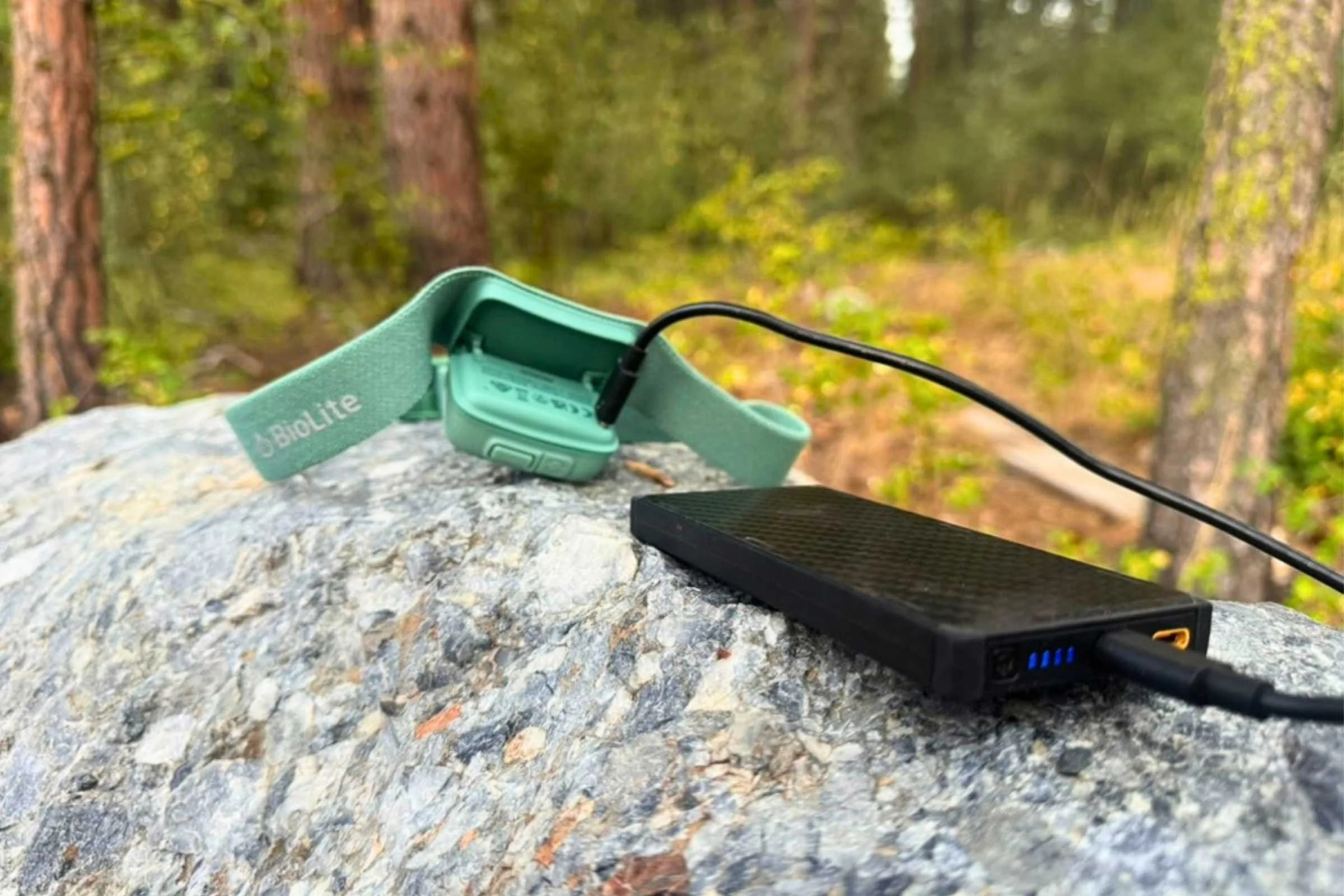
- Emergency Lighting: A dead headlamp makes even the simplest camp tasks dangerous and turns a night hike into a nightmare.
- Secondary Devices: Cameras, smartwatches, and rechargeable lighters occupy the bottom of the list.
By prioritizing emergency device power while hiking, we ensure that if our power bank hits zero, the devices that can save our lives are the last ones to fail. Many veteran hikers keep their Garmin inReach on a dedicated small battery or ensure it stays above 50% at all times, regardless of what other gear needs a charge.
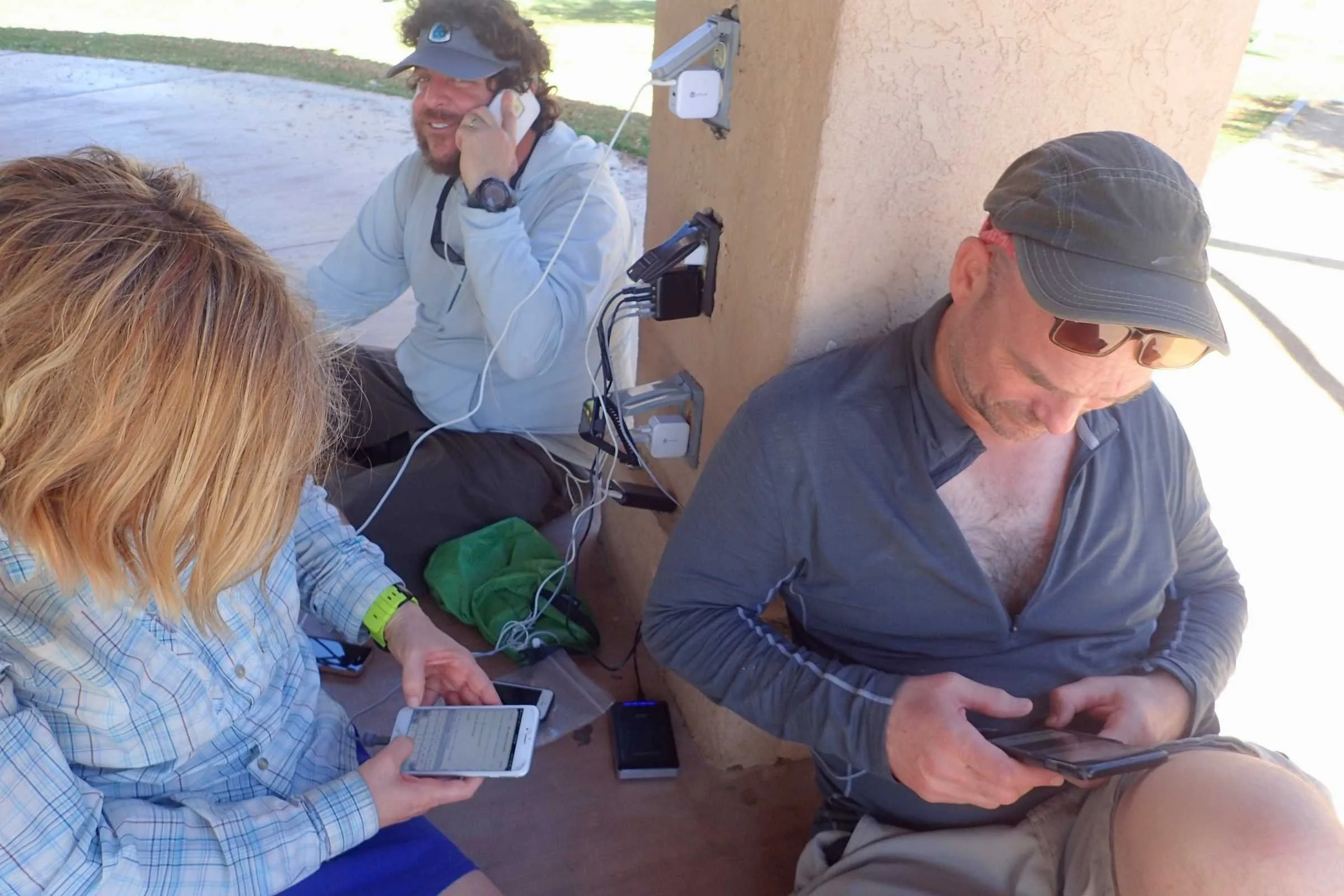
The Proactive Routine: The 40-80 Rule
Most of us are used to plugging in our phones when they hit 10% and leaving them until they reach 100%. In the wilderness, this is inefficient. To master charging electronics while backpacking, we need to understand lithium-ion battery efficiency. Lithium-ion batteries are under the least amount of chemical stress when they are between 40% and 80% charge.
Repeatedly letting your gear drop to 0% or pushing it to a full 100% can degrade the battery cells over a long through-hike. More importantly, charging from 80% to 100% is slower and generates more heat, leading to energy conversion loss. Instead, adopt a proactive charging routine for backcountry hikers. Every evening at camp, or during a long lunch break, top off your devices to the 80% mark.
This routine also provides an early warning system. If you notice your power bank is draining faster than expected during a routine top-off, you have time to adjust your usage. Waiting until a device is dead to charge it means you might discover a cable failure or a depleted power bank exactly when you need that device most. To further save power, utilize airplane mode power saving and turn off all background app refreshing. We find that charging while devices are turned completely off is the best way to minimize phantom battery drain and ensure every milliamp goes directly into the battery cell.
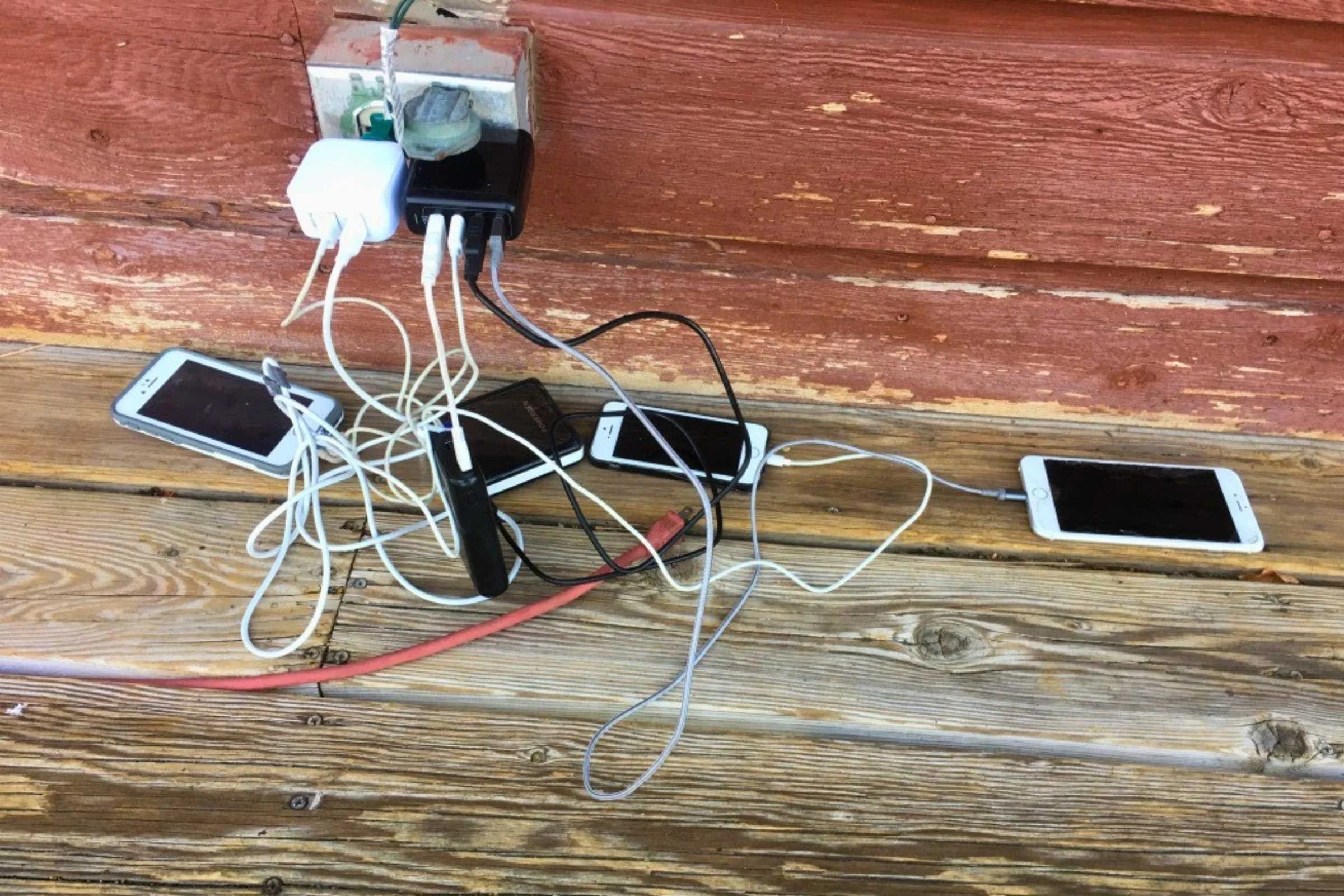
Hardware Logistics: 10k vs 20k and the Redundancy Rule
Choosing between a 10k vs 20k power bank for hiking is one of the most debated topics in the ultralight community. The choice usually comes down to trip duration and your specific gear list. A 10,000 mAh bank is generally ideal for 1–3 day trips, providing about 2 to 2.5 full phone charges. On the other hand, a 20,000 mAh bank is better for trips lasting 4–7 days or for hikers who are heavily reliant on high-drain devices like cameras or tablets.
However, when choosing between 10k and 20k power banks for hiking, we often advocate for carrying two 10,000 mAh units instead of a single 20,000 mAh brick. This is the Redundancy Rule. If your single 20k bank falls in a creek or suffers an internal short, your entire power system is dead. With two 10k units, you have a backup. Furthermore, two banks allow you to charge two devices at their maximum USB-C Power Delivery speeds simultaneously, or charge both banks at once when you finally reach a town outlet.
| Capacity | Est. Weight | Best For | Typical Full Phone Charges |
|---|---|---|---|
| 10,000 mAh | 5.3 - 6.5 oz | 1-3 Day Trips | 2 - 2.5 |
| 20,000 mAh | 10.5 - 13 oz | 4-7 Day Trips | 4.5 - 5 |
| Dual 10,000 mAh | 11 - 13 oz | Redundancy/Long Trips | 4 - 5 |
Remember to account for mAh actual usable capacity. A 10,000 mAh sticker does not mean you get 10,000 mAh of power. Due to the conversion from the internal battery voltage (3.7V) to the USB output (5V), you typically only get about 6,300 to 6,800 mAh of usable energy. When planning your best ultralight power bank setup for hikers, always calculate your needs based on this 65% usable energy rule rather than the manufacturer’s marketing specs.
The Cold Weather Protocol
Cold is the silent killer of batteries. As temperatures drop, the chemical reactions inside lithium-ion cells slow down. This increases internal resistance and can lead to a sudden voltage drop, causing your device to shut off even if it showed a 40% charge moments ago. High-stakes safety data shows that battery failure is the leading cause of emergency power system failures, accounting for more than 50% of all uninterruptible power supply breakdowns. In a backcountry context, this risk is magnified by the environment.
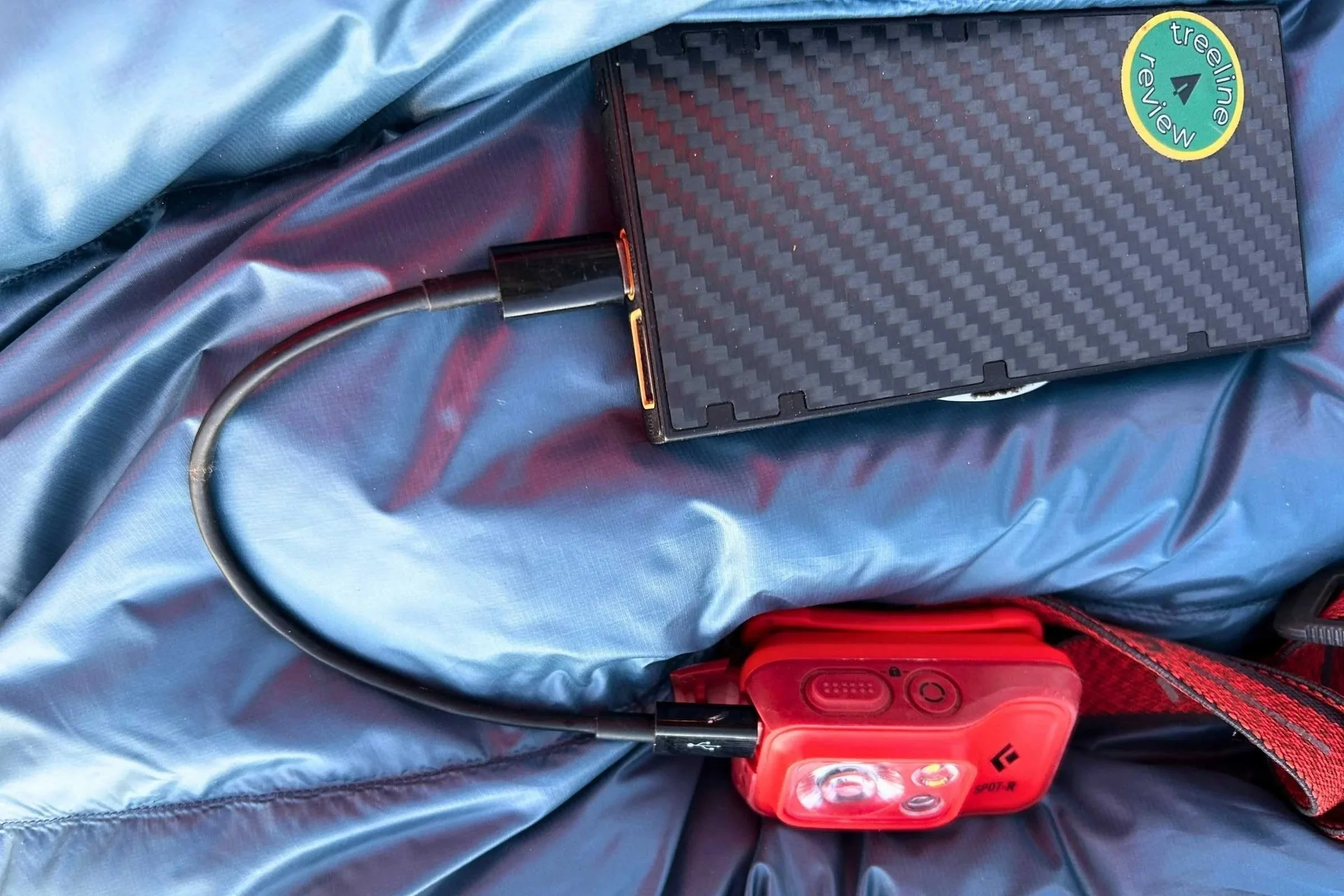
When temperatures dip below freezing, you must change how you carry your gear. For backpacking battery management for long trips in the winter, keeping your electronics close to your body heat is non-negotiable. During the day, store your power bank and phone in internal pockets close to your core. At night, never leave your electronics in the vestibule or hanging from your tent ceiling. Instead, tuck them into the foot of your sleeping bag.
Proper cold weather insulation can be as simple as a wool sock or a dedicated thermal pouch, but body heat is your most reliable tool. Transitioning to a proactive maintenance strategy—one that includes keeping batteries warm—has been shown in industrial safety settings to reduce equipment breakdowns by 35% and decrease the duration of downtime. In the woods, that 35% improvement could be the difference between making a call for help and being stranded in the dark.
Cold Weather Warning: Never attempt to charge a battery that is below freezing. Charging a frozen lithium-ion battery can cause permanent physical damage to the cells, leading to "plating" which makes the battery unstable and potentially dangerous. Warm the battery against your body for at least 30 minutes before plugging it in.
Well-maintained standby systems achieve a reliability rate of 99.15%, whereas poorly maintained systems—those exposed to the elements or left to discharge fully—fall to approximately 80.5%. By treating your portable power with the same care as a critical infrastructure manager, you drastically increase your safety margins.
FAQ
How do you keep your phone charged while backpacking?
The most effective way is to use a high-quality power bank and keep the phone in airplane mode with low-power settings enabled. Minimize screen brightness and close all background apps. By using a proactive charging routine and topping off the battery whenever it hits 40%, you ensure the phone stays within its most efficient operating range.
What size power bank do I need for a multi-day hike?
For a 1–3 day trip, a 10,000 mAh power bank is usually sufficient for most hikers. For trips lasting 4–7 days between resupplies, a 20,000 mAh bank or two 10,000 mAh banks is recommended. This covers navigation, occasional photos, and emergency satellite communication.
Is a solar charger better than a power bank for backpacking?
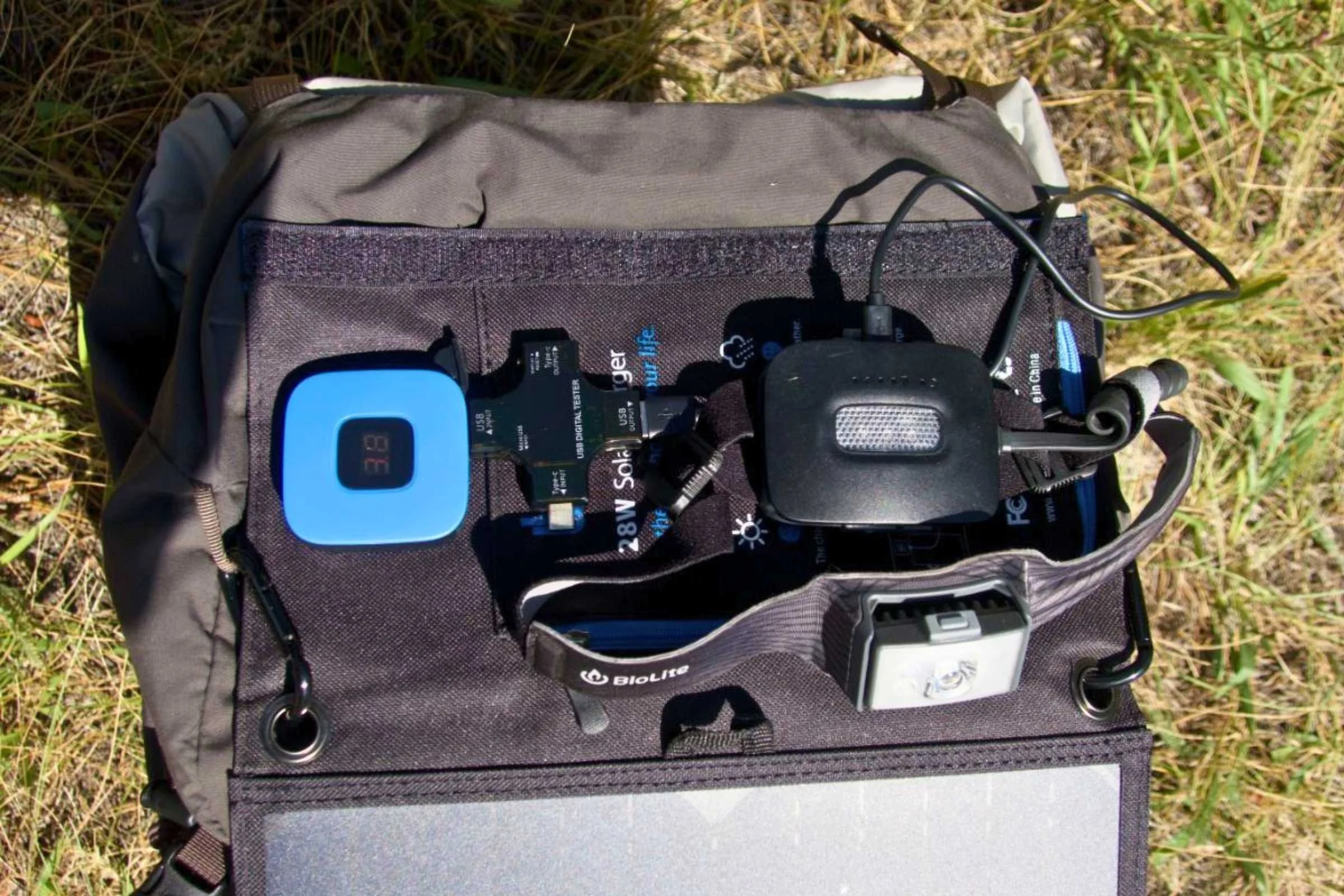
In most cases, no. Small solar panels integrated into power banks are generally too inefficient to provide a meaningful charge. Large, folding solar panels can work for stationary base camps in high-sun areas, but for moving hikers, a dedicated power bank offers more reliable energy per ounce and works regardless of the weather or canopy cover.
How do I save phone battery life while hiking in the backcountry?
Enable airplane mode as soon as you leave the trailhead to prevent the phone from wasting energy searching for a cellular signal. Turn off Bluetooth and Wi-Fi, lower your screen brightness, and use offline maps. Additionally, avoiding 4K video recording and keeping the phone warm in cold weather will significantly extend each charge.
How should I store batteries to prevent them from dying in the cold?
During the day, keep batteries in a pocket close to your core to utilize your body heat. At night, store all batteries, including your phone and headlamp, inside your sleeping bag. This prevents the chemical reactions from slowing down and prevents the sudden voltage drops that lead to premature device shutdown.