Our Top Picks
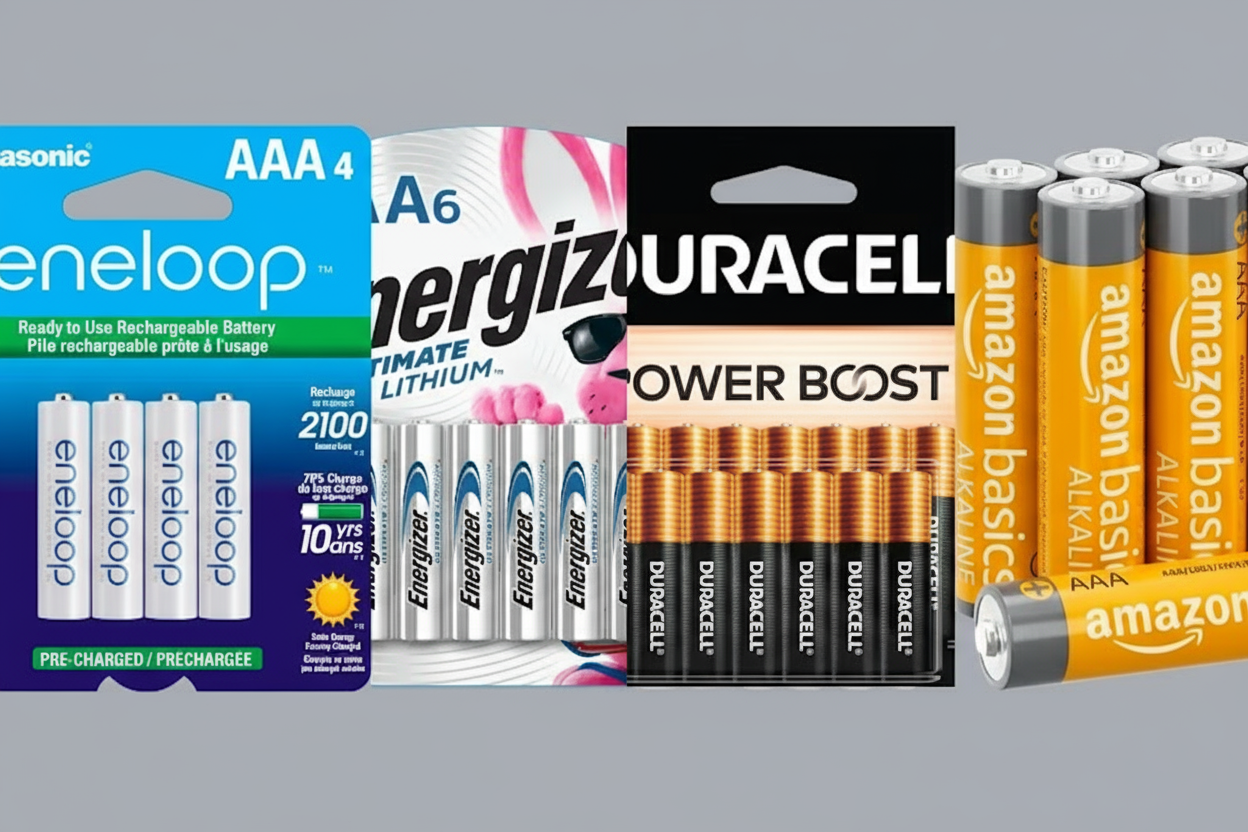
- Best Overall Performance: Energizer Ultimate Lithium maintains its status as the leader for high-drain hardware and emergency kits due to its massive 25-year shelf life and extreme temperature tolerance.
- Best Household Alkaline: Duracell CopperTop remains the gold standard for low-drain devices like TV remotes and wall clocks, offering reliable 10-year storage stability.
- Best Budget Bulk Buy: AmazonBasics Alkaline provides the highest value for high-volume users in households with many toys or basic electronics that consume batteries quickly.
- Best Rechargeable Choice: Panasonic Eneloop stands unmatched for sustainable power, offering up to 2,100 recharge cycles while retaining most of its capacity over a decade of storage.
Selecting the best AAA batteries for your specific needs requires a balance between device power requirements, environmental conditions, and long-term cost goals. For high-drain devices and professional gear, Energizer Ultimate Lithium is the top choice, while Duracell and AmazonBasics offer excellent everyday utility for low-drain household electronics.
The Selection Matrix: AAA Lithium vs Alkaline
The choice between lithium and alkaline chemistry is more than just a matter of price; it is about matching energy density to the mission at hand. The primary difference lies in how these cells store and release energy. Alkaline batteries use a zinc and manganese dioxide chemistry that is affordable and reliable for low-intensity tasks. However, they are prone to leaking if left in a device for years and can struggle in freezing temperatures.
In contrast, lithium batteries utilize a different internal construction that allows for a much higher energy density. A standard alkaline cell might struggle to reach 1 watt-hour of total energy, whereas a lithium AAA cell significantly exceeds this benchmark. This disparity is most evident when conducting a AAA lithium vs alkaline shelf life comparison. While a standard alkaline battery is rated for 10 years of storage, lithium cells routinely hit the 20 to 25-year mark.
Perhaps the most critical advantage for power users is the performance of AAA lithium batteries in cold weather. While alkaline batteries see their internal resistance skyrocket and their voltage drop when the thermometer hits freezing, lithium chemistry remains stable. These cells are rated to operate reliably from -40°F to 140°F. For this reason, they are widely considered the best AAA batteries for outdoor trail cameras and emergency flashlights stored in vehicle gloveboxes.
Quick Specs Comparison Table
| Battery Model | Chemistry | Shelf Life | Ideal Use Case | Capacity (Est. mAh) |
|---|---|---|---|---|
| Energizer Ultimate Lithium | Lithium | 25 Years | High-drain / Extreme Cold | 1250 mAh |
| Duracell CopperTop | Alkaline | 10 Years | Household / Low-drain | 1150 mAh |
| AmazonBasics Alkaline | Alkaline | 10 Years | Budget / Bulk Needs | 1100 mAh |
| Panasonic Eneloop | NiMH (Rechargeable) | 10 Years (70% Ret.) | High-use / Long-term savings | 800 mAh |
Best Overall Alkaline: Duracell vs. Energizer vs. AmazonBasics
When we look at the global AAA battery market size, which was valued at approximately 9.73 billion USD in 2024, it is clear that alkaline batteries still command the lion's share of consumer interest. Within the 4 billion USD consumer electronics application segment, the battle for the best AAA batteries usually comes down to three names: Duracell, Energizer (Alkaline series), and AmazonBasics.
Duracell CopperTop Duracell has built its reputation on the CopperTop brand. These batteries are designed with a leak-proof construction that provides peace of mind when placed inside an expensive thermostat or a vintage TV remote. In our tests, they maintained consistent voltage stability throughout their discharge cycle, making them the top rated AAA batteries for household smoke detectors where reliability is the absolute priority.
- Pros:
- Extremely reliable 10-year shelf life.
- Widely available in almost every retail outlet.
- Superior leak protection compared to generic brands.
- Cons:
- Higher price point than store brands.
- Performance drops significantly in high-drain devices like motorized toys.
AmazonBasics Alkaline For those looking for the best budget AAA batteries for bulk purchasing, Amazon’s house brand is difficult to beat. While they may not have the same specialized internal seals as premium brands, their performance in low-to-moderate drain electronics is surprisingly close to the leaders. We observed that in devices like computer mice or wireless keyboards, the difference in runtime between AmazonBasics and more expensive alkaline competitors was negligible.
- Pros:
- Lowest cost-per-unit in bulk packs.
- Consistent discharge rates for low-drain electronics.
- Cons:
- Shorter effective life in high-drain applications.
- Slightly higher risk of leakage if stored in devices past their expiration.
Best for Performance: Longest Lasting AAA Batteries for High Drain Devices
If you are a professional photographer or a dedicated hobbyist, the term longest lasting AAA batteries for high drain devices refers almost exclusively to lithium. The Energizer Ultimate Lithium stands in a category of its own. Unlike alkaline batteries, which see their voltage dip steadily as they are used, lithium cells maintain a high, flat voltage curve. This means high-drain electronics like digital flashes or handheld GPS units operate at peak efficiency until the battery is nearly exhausted.
Recent reviews and lab tests show that Energizer Ultimate Lithium AAA batteries feature a shelf life of up to 25 years. More impressively, they provide up to 9 times the runtime of standard alkaline batteries in high-drain devices such as digital cameras. This efficiency is due to their light weight—roughly 33% less than an alkaline cell—and their superior internal resistance characteristics.
Safety Warning: While lithium AAA batteries are excellent for most electronics, always check your device's manual. Some very old or sensitive low-drain devices may experience issues with the slightly higher initial voltage (1.7V-1.8V) of a fresh lithium cell compared to the 1.5V of an alkaline cell.
Best Rechargeable: The Long Term Savings Leader
For the environmentally conscious consumer or the high-volume user, the best rechargeable AAA batteries for long term savings are a game-changer. The initial investment in the cells and a charger is reclaimed quickly if you are powering gaming controllers, children’s toys, or portable radios.
The Panasonic Eneloop AAA rechargeable batteries are the industry standard for NiMH technology. They are rated for up to 2,100 recharge cycles and can maintain 70 percent of their charge after being stored for 10 years. This low self-discharge rate is what sets them apart from cheaper rechargeable options that often go flat after just a few weeks of sitting in a drawer.
When conducting a rechargeable AAA batteries comparison, it is important to look at the cycle life and capacity retention rather than just the initial mAh rating. An Eneloop cell might have a lower rated capacity (800 mAh) than some generic lithium-ion rechargeables, but the Eneloop will outlast them by hundreds of cycles and offer better voltage stability over the life of the battery.
- Pros:
- Massive long-term cost savings compared to disposables.
- Environmentally friendly, reducing landfill waste.
- Excellent performance in high-drain toys and gaming gear.
- Cons:
- Requires the purchase of a dedicated charger.
- Initial voltage is 1.2V, which can trigger "low battery" sensors in some devices prematurely.
How We Test: Measuring Capacity vs. Rated Labeling
As a laboratory-focused editor, I emphasize data over marketing claims. To find the best AAA batteries, we utilize specialized battery analyzers to measure the actual milliampere-hour capacity under varied loads. We test for two specific scenarios: a constant low-drain discharge (simulating a remote control) and a pulsed high-drain discharge (simulating a camera flash or a motorized toy).
Our findings often reveal that the numbers on the packaging are aspirational rather than guaranteed. While a brand might claim a high mAh rating, the internal resistance of the cell can cause the voltage to drop below the "cutoff" point of the device long before the total energy is used. We use a Price-per-minute metric to determine value, dividing the total runtime by the retail cost per battery. This creates a clear picture of which brands provide true performance and which are simply coasting on name recognition.
FAQ
Which AAA batteries last the longest?
For storage and high-drain performance, Energizer Ultimate Lithium lasts the longest, offering up to a 25-year shelf life and significantly more runtime in power-hungry devices like digital cameras. For low-drain household items, alkaline batteries like Duracell CopperTop provide the longest-lasting value.
Are rechargeable AAA batteries better than alkaline?
Rechargeable batteries are better for high-use devices because they can be used hundreds of times, leading to significant cost savings and less waste. However, for low-drain emergency devices that sit unused for years, such as smoke detectors, alkaline or lithium disposables are generally preferred due to their lower self-discharge rates.
What is the difference between lithium and alkaline AAA batteries?
Lithium batteries have a higher energy density, weigh less, work better in extreme temperatures, and have a much longer shelf life. Alkaline batteries are more affordable and are perfectly suited for common household electronics that do not require high bursts of power.
What are the best AAA batteries for high-drain electronics?
The best AAA batteries for high-drain electronics are lithium-based disposables like the Energizer Ultimate Lithium or high-quality NiMH rechargeables like Panasonic Eneloop. These chemistries handle the rapid power draw of motors and flashes without the sharp voltage drops seen in alkaline batteries.
Are expensive AAA batteries worth the extra cost?
If you are powering an emergency trail camera in the woods or an expensive camera on a shoot, the safety and longevity of premium lithium batteries are absolutely worth the cost. However, for a simple TV remote or a child's nightlight, budget-friendly alkaline options like AmazonBasics are a more sensible financial choice.
How do I know when a AAA battery is dead?
The most accurate way is to use a multimeter or a dedicated battery tester to measure the voltage; an alkaline AAA is considered dead when it drops below 1.0V to 1.1V. In everyday use, signs include a sluggish response from electronics, dimming lights on a toy, or a device failing to power on entirely.