Quick Facts
- Safety Standard: Industry experts recommend that a vehicle's winch should have a pulling capacity rated at least 1.5 times the gross vehicle weight for safe extraction.
- Core Materials: Nylon components are used for kinetic stretching; Polyester is preferred for static towing and tree protection.
- The Essential List: A complete kit requires traction boards, kinetic ropes, soft shackles, a portable compressor, a tire repair kit, a high-lift jack, and a shovel.
- Risk Factor: Survey data shows approximately 29 percent of recreational off-highway vehicle riders experience at least one crash within a single year.
- Economic Trend: The United States off-road vehicle market is projected to grow to over 17 billion dollars by 2034.
- Mechanical Physics: Understanding the difference between Working Load Limit (WLL) and Minimum Breaking Strength (MBS) is critical for preventing gear failure.
An essential off-road recovery kit includes high-traction recovery boards, kinetic ropes or tow straps, and rated shackles. Vital accessories like a portable air compressor, a tire repair kit, a sturdy shovel, and a hydraulic jack with a wide base are also necessary to handle common trail obstacles like mud, sand, and punctures while ensuring your off-road recovery gear is prepared for any environment.
Kinetic Recovery Ropes & Soft Shackles
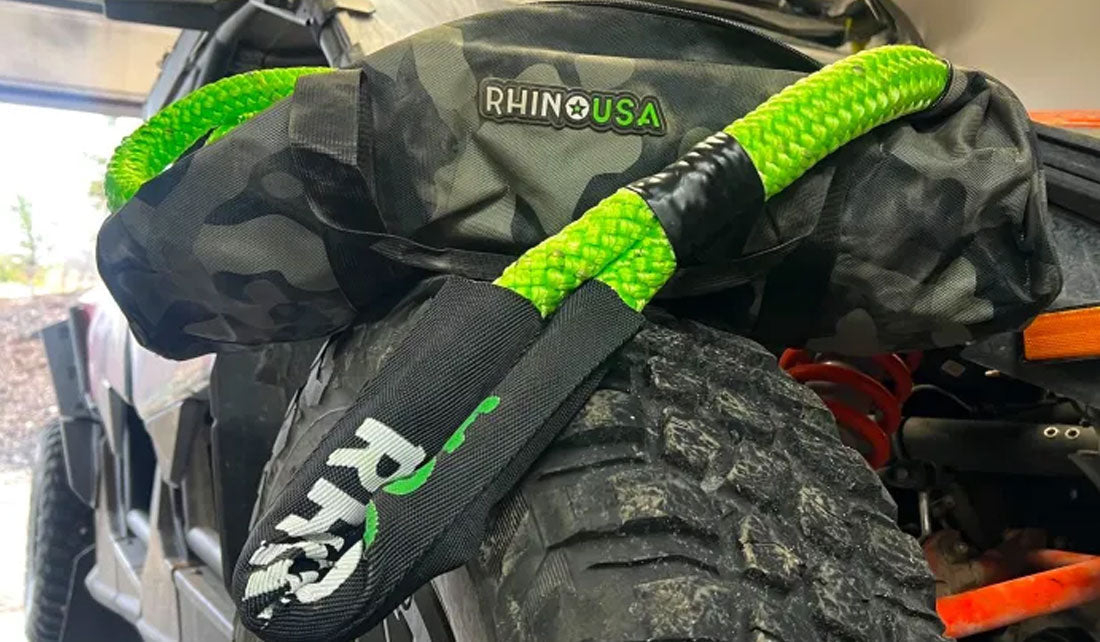
When we are stuck deep in the mud or buried in sand, physics becomes our best friend or our worst enemy. For modern vehicle extraction, the shift toward dynamic recovery has changed the game. Kinetic recovery ropes are engineered from high-quality Nylon, allowing them to stretch up to 30 percent of their length. This stretch stores potential energy, which is then released to help pull the stuck vehicle out with a smooth, linear force rather than a violent jerk.
In contrast, static tow straps are usually made of Polyester and have very little stretch. While these are excellent for stable, controlled towing on flat ground or as a tree trunk protector during winching, using them for a "snatch" recovery can damage vehicle frames or break recovery points.
One of the biggest safety upgrades we’ve seen in recent years is the transition to soft shackles and a synthetic winch line. Steel shackles are incredibly strong, but they act as heavy projectiles if a line snaps. Soft shackles, made from high-modulus polyethylene, are just as strong but much lighter and safer.
| Feature | Kinetic Recovery Rope (Nylon) | Static Tow Strap (Polyester) |
|---|---|---|
| Primary Use | Dynamic vehicle extraction (Stuck to Not Stuck) | Controlled towing (A to B) |
| Stretch Capacity | Approximately 20% to 30% | Minimal (0% to 5%) |
| Benefit | Reduces shock load on recovery points | Prevents "bouncing" during flat towing |
| Material | Double-braided Nylon | Woven Polyester |
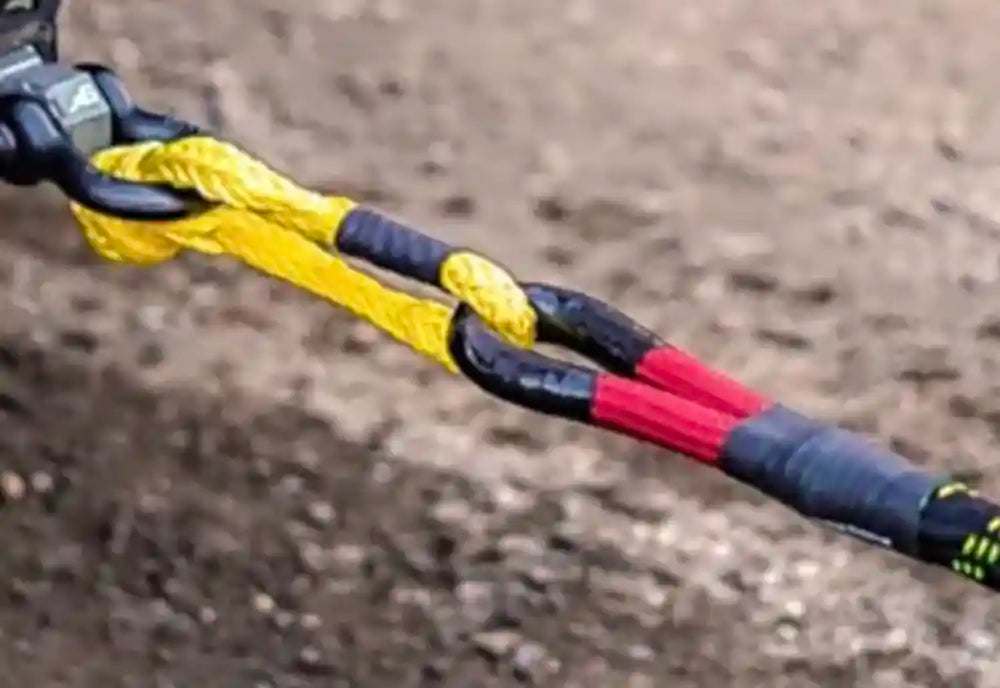
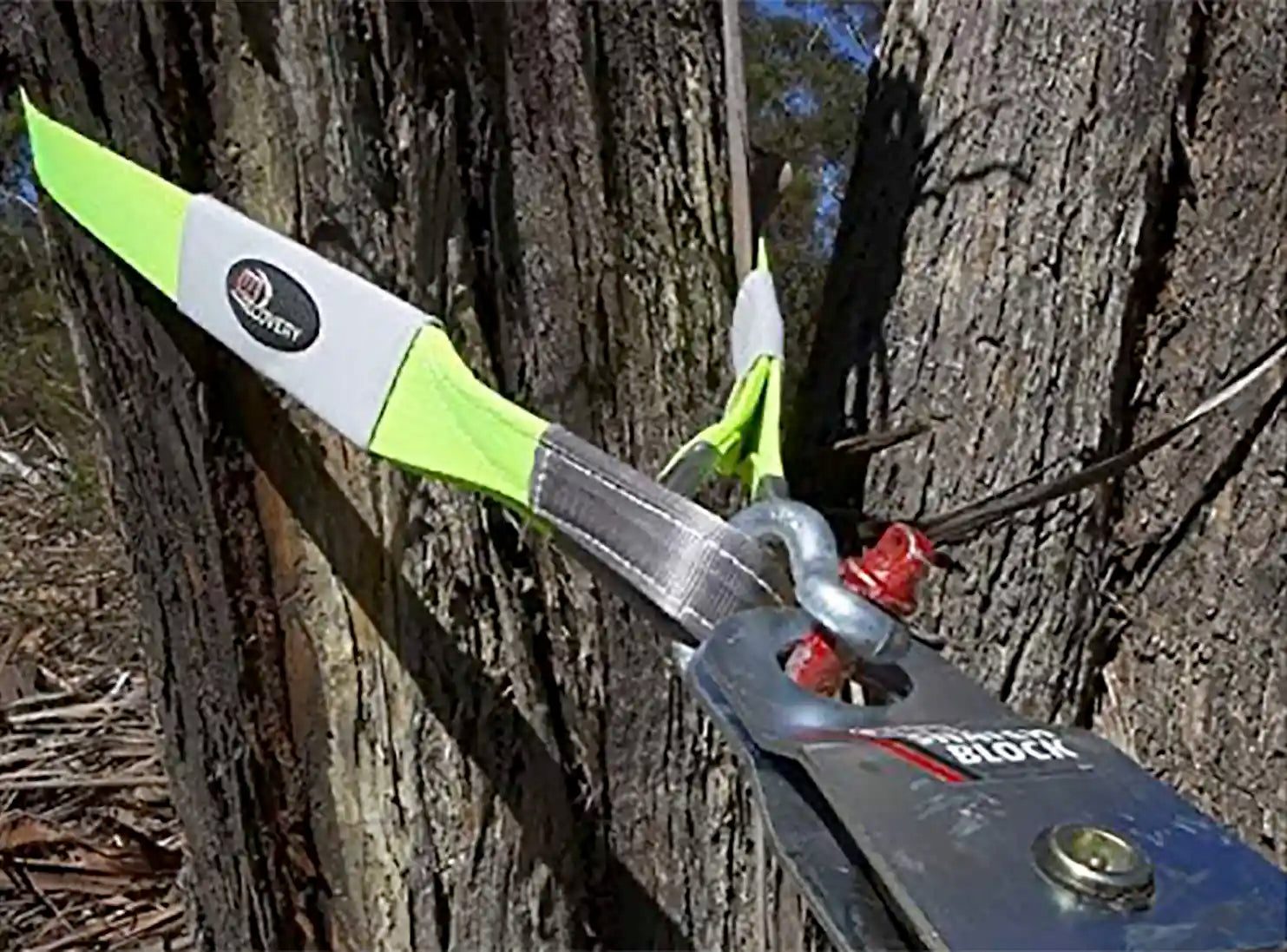
We always advise that any self-recovery gear for off-roading related to tension must be rated properly. Every piece of equipment should have a visible Working Load Limit (WLL). Using a snatch block can double the pulling power of your winch, but only if your rigging techniques and connection points can handle the increased load.
Heavy-Duty Traction Boards
Traction boards are perhaps the most essential recovery gear for solo off-roading. They represent a proactive approach to recovery; often, you can clear a path and drive right out without ever needing to unspool a winch line or rig a kinetic recovery rope vs static tow straps comparison in your head.
When shopping for overland recovery equipment, look for boards made from UV-stable, engineering-grade reinforced nylon. Budget boards often crack under the weight of a heavy 4x4 in freezing temperatures, making them unreliable must-have recovery equipment for winter overlanding. High-quality boards feature aggressive teeth that bite into the tire tread and a wide footprint to prevent the vehicle from sinking further.
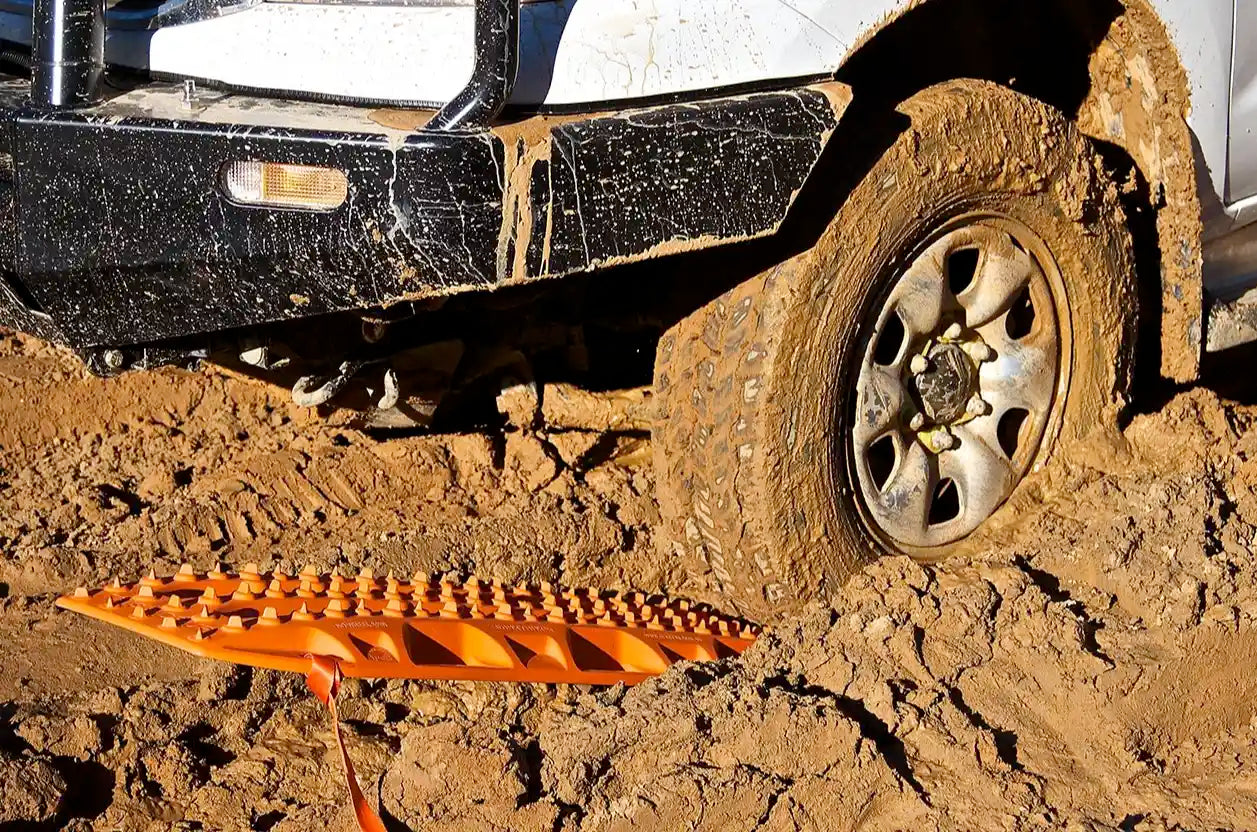
The best recovery boards for mud and sand also double as a base for your jack or a makeshift shovel to clear debris from under the chassis. Always remember to carry a set of leashes attached to the boards so you don't lose them when they get buried deep in the muck after a successful extraction.
High-Performance Portable Air Compressors
Tire pressure management is the most underrated aspect of trail safety. By "airing down"—reducing tire pressure to between 15 and 20 PSI—you significantly increase the tire’s footprint, allowing for much better flotation over soft surfaces. However, you cannot safely return to the highway without bringing those tires back up to their recommended pressure.
This is why high-performance portable air compressors for off-roading are non-negotiable. A high-volume compressor allows you to air up all four tires in a matter of minutes, rather than waiting half an hour for a cheap, store-bought pump to cool down. In extreme cases, a powerful compressor can even help re-seat a tire bead that has popped off the rim due to low pressure and heavy lateral force.
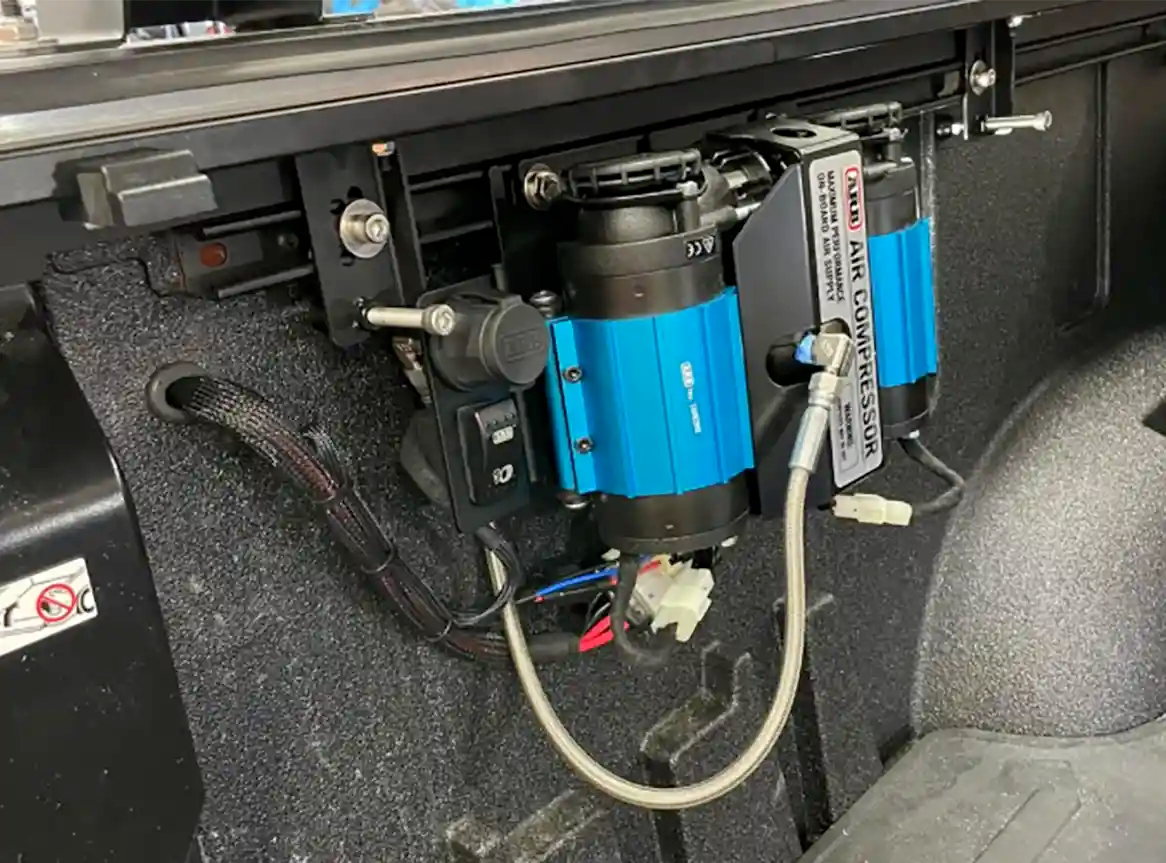
Beyond just the compressor, every 4x4 recovery kit essentials list should include tire deflators for speed and a comprehensive tire repair kit. Learning to plug a sidewall puncture can be the difference between driving home and waiting for an expensive remote tow.
Rated Recovery Points & Tree Trunk Protectors
We cannot stress this enough: factory tie-down loops are not rated recovery points. Using a tie-down point for a high-tension recovery is extremely dangerous. You must ensure your vehicle is equipped with aftermarket, frame-mounted points specifically designed for the stresses of off-road extraction.
When winching, a tree trunk protector is a semantic necessity for both safety and trail ethics. Wrapping a synthetic winch line or a steel cable directly around a tree will kill the bark and eventually the tree, while also damaging your expensive cable. A wide, static Polyester strap distributes the load across the trunk, providing a secure anchor point without harming the environment.
| Criteria | Steel Shackles | Soft Shackles |
|---|---|---|
| Weight | Heavy (can yield high kinetic energy) | Ultra-lightweight |
| Safety | High risk if broken under tension | Floats in air/water; low mass |
| Durability | Prone to rust; very abrasion resistant | Requires protection from sharp edges |
| Ease of Use | Can pin-lock or jam under load | Can be opened by hand after high load |
The industry recommends that a winch should have a pulling capacity rated at least 1.5 times the gross vehicle weight to ensure it can overcome the "suction" of deep mud. This mechanical advantage is useless if your anchor point fails.
Compact Jump Starters & Trail Tech
Being self-sufficient in the backcountry means planning for electrical failure. Traditional jumper cables require a second vehicle, which isn't an option if you are exploring solo. Modern compact car battery jump starters for remote travel use lithium-ion technology to pack enough punch to start a diesel engine multiple times on a single charge.
Furthermore, digital self-recovery gear for off-roading includes your navigation stack. We recommend using dedicated offline mapping tools like Gaia GPS or OnX Offroad. These tools allow you to download high-resolution satellite imagery and topographic layers, ensuring you can find an alternate route if a trail is washed out or blocked by fallen timber.
The Mechanical Lifter: High-Lift Jacks & Shovels
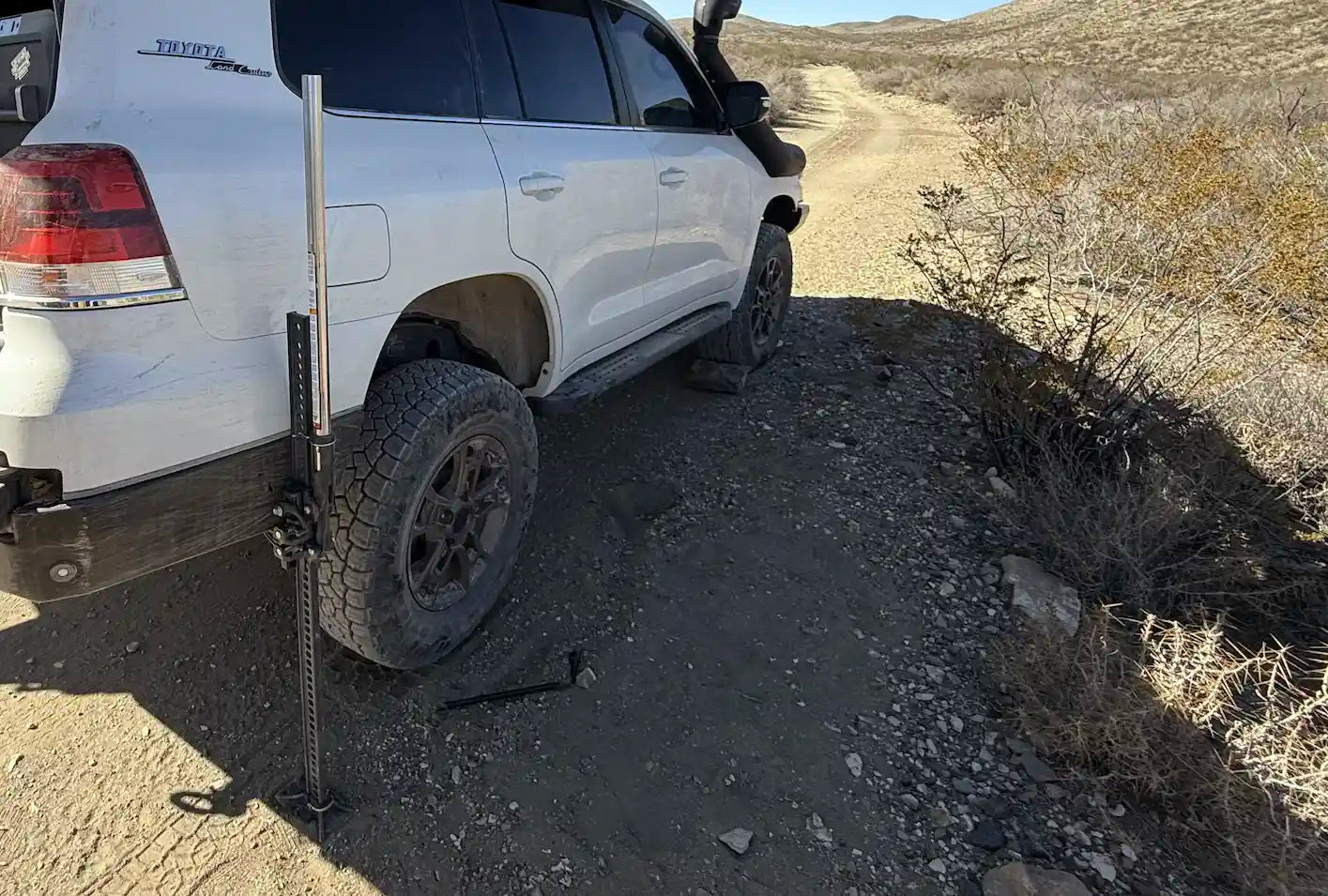
Manual tools are the backbone of any off-road recovery gear setup. A high-lift jack is a versatile, albeit dangerous, tool that can be used to lift a vehicle out of a rut, act as a manual winch, or even squeeze components back into place after a mechanical failure. Because of their height and narrow base, they must be used with extreme caution and always on a stable surface or a dedicated jack base.
A sturdy, long-handle shovel is often the most used tool in the kit. Before you ever reach for a winch controller, you should be digging out the excess mud or sand from in front of your tires. Reducing the resistance the vehicle has to overcome makes every other tool in your kit more effective.
FAQ
What is the most essential off-road recovery gear?
The most essential gear is a combination of traction boards and a high-quality tire pressure management system. Most trail obstacles can be overcome by simply increasing the tire's contact patch (airing down) or providing a high-friction surface (boards) to drive on.
What is the difference between a snatch strap and a tow strap?
A snatch strap, also known as a kinetic rope, is made of Nylon and designed to stretch, using stored energy to pull a stuck vehicle. A tow strap is made of Polyester, has very little stretch, and is used for pulling a vehicle that is already rolling or as a fixed anchor point.
Are soft shackles safer than steel shackles?
Yes, soft shackles are generally considered safer because they weigh significantly less than steel. In the event of a line failure, a soft shackle lacks the mass to become a lethal projectile, whereas a steel shackle can fly through a windshield or vehicle body with devastating force.
How much weight should my recovery gear be rated for?
Your recovery gear should ideally be rated for a Minimum Breaking Strength (MBS) that is 3 to 4 times your vehicle's Gross Vehicle Weight (GVW). For winches and kinetic ropes, the 1.5 to 2 times GVW rule is a standard baseline for safe operation.
Do I need a winch for off-roading?
While not strictly required for easy trails, a winch is the ultimate insurance policy for remote or technical travel. If you travel solo, a winch combined with a ground anchor provides the most reliable way to recover your vehicle without outside assistance.
What are recovery boards used for?
Recovery boards, or traction boards, are placed under the tires of a vehicle stuck in sand, mud, or snow. They provide an immediate high-friction surface for the tires to grip, allowing the vehicle to climb out of a hole and gain enough momentum to reach solid ground.