Quick Facts
- Deadliest Species: The Cape Buffalo, often called the Black Death, is responsible for the highest number of hunter fatalities in Africa.
- Wait Time: Always allow a 30 to 60 minute wait time after the initial shot before tracking to allow the animal to expire.
- Visual Indicator: Open eyes on a downed animal generally signify death, whereas closed eyes often indicate a nervous system still firing.
- The Grapefruit Rule: Use a mental model of a grapefruit-sized vital zone to ensure high-accuracy big game shot placement.
- Financial Risk: The blood is a purchase rule means hunters are often liable for trophy fees the moment an animal is wounded.
- Approach Protocol: Never approach from the front; always move in from behind and above the animal's head.
Hunting dangerous game animals requires more than just skill; it demands a deep understanding of hunting safety protocols and animal behavior. Dangerous game animals are defined by their potential for aggression and recovery difficulty. Whether it is the resilient Cape Buffalo or the elusive Leopard, mastering wounded game recovery and big game shot placement is critical for ethical dispatch and personal safety. In this guide, we break down the 7 most hazardous species every hunter must approach with extreme caution.
1. The Cape Buffalo: Africa’s ‘Black Death’
The Cape Buffalo is perhaps the most respected and feared member of the Big Five. Unlike many other species that flee when wounded, the buffalo is known for its extreme resilience and calculated aggression. It has earned a reputation for circling back on its own trail to ambush trackers, a behavior that requires unwavering adherence to hunting safety protocols for aggressive game.
Success begins with terminal ballistics. When facing an animal that can weigh up to 1,500 pounds and possesses a thick boss of horn, large-bore cartridges are non-negotiable. You need a setup with high muzzle energy to penetrate deep into the thoracic cavity. Even with a perfect hit, the buffalo is a resilient powerhouse that can charge after taking multiple hits.
Expert big game shot placement for buffalo emphasizes the shoulder. By breaking the front running gear and puncturing the lungs or heart, you minimize the animal's ability to mount a charge. If the buffalo manages to reach thick cover after the shot, the recovery process becomes one of the most dangerous scenarios in the hunting world. This is where the nickname Black Death becomes literal; Cape buffalo is responsible for more hunter fatalities in Africa than any other animal.
2. Leopard: The Ambush Predator
Hunting a leopard is a game of patience and nerves. These cats are masters of concealment, often residing in thickets where visibility is limited to a few yards. The primary danger with a leopard is not its size, but its speed and high adrenaline levels. A leopard can cover twenty yards in a heartbeat, and if it is wounded, it will almost certainly fight.
Because they are relatively small targets compared to buffalo or elephants, the room for error is slim. Identifying signs of wounded dangerous animals is critical here. If the leopard vanishes into the brush after the shot, do not rush in. Recovering wounded dangerous game safely in this context requires the assistance of a Professional Hunter and, where legal, tracking dogs to locate the cat before it can launch an ambush.
The risks of following a wounded leopard cannot be overstated. Unlike larger animals that try to stomp or gore, a leopard focuses on the face and neck with surgical precision. If you must enter the thicket, use a shotgun with buckshot or a large-bore rifle with a wide field of view, as the engagement will be at point-blank range.
3. Grizzly and Brown Bears: The Apex Threat
North America’s premier dangerous game animals are the grizzly and brown bears. These apex predators possess incredible bone density and thick layers of fat and muscle that can stop a light bullet in its tracks. Effective rifle selection for grizzly and brown bear hunting involves choosing a caliber that can punch through a heavy shoulder blade and still reach the vital zone.
When a bear is surprised or wounded, its charging behavior is explosive. Most bear encounters happen in dense brush or along salmon streams where noise is high and visibility is low. This environment makes terminal ballistics even more important; your projectile must stay together and penetrate straight, regardless of the angle.
A crucial part of your hunting safety protocols involves the backup shot. Even if the bear looks down, many guides recommend a second insurance shot into the vitals. Following the blood trailing of a grizzly into a willow thicket is a high-stakes endeavor that requires a teammate with one of several heavy stopping rifles at the ready.
| Animal | Average Weight | Recommended Minimum Caliber | Primary Danger |
|---|---|---|---|
| Cape Buffalo | 1,500 lbs | .375 Holland & Holland | Ambush / Charge |
| Leopard | 140 lbs | .300 Win Mag / Shotgun | Speed / Concealment |
| Grizzly Bear | 800 lbs | .338 Win Mag | Raw Power / Bone Density |
| Hippopotamus | 3,300 lbs | .375 H&H (Solid) | Bite / Surprise |
| Mountain Goat | 250 lbs | .30-06 / .300 WM | Terrain / Falling |
4. The Hippopotamus and 5. The Nile Crocodile
Often overlooked because they don't look like traditional trophies, the hippo and the croc are statistically more dangerous to humans than lions or leopards. Hippopotamuses are estimated to kill around 500 people annually, making them one of the deadliest large land mammals on the planet. They are highly territorial and can easily bite a small boat in half.
Near aquatic environments, crocodiles are responsible for approximately 1,000 human fatalities every year through opportunistic attacks. For a hunter, the danger lies in the recovery. A hippo shot in the water will sink and only surface hours later, forcing the hunting party to wait near the water's edge where crocodiles loiter.
Ethical dispatch for these species requires a brain shot or a precise neck shot to anchor them immediately. If a hippo or crocodile reaches deep water after a poor hit, wounded game recovery becomes nearly impossible and infinitely more hazardous. Always have a Professional Hunter spotting the water for movement before any member of the party approaches the shoreline.
6. Mountain Goat: The Terrain Hazard
Dangerous game animals are not always defined by their teeth or horns. The mountain goat is a prime example of an animal that is dangerous due to the terrain it inhabits. Hunting these animals takes you to high-altitude cliffs and unstable scree slopes where a single misstep can be fatal.
The challenge is often the physical act of recovering wounded dangerous game safely on a 60-degree incline. A mountain goat that is shot but not anchored may tumble hundreds of feet down a cliff, or worse, get stuck in an inaccessible "chimney." Hunters have lost their lives trying to reach a trophy in places where they should never have climbed.
Your big game shot placement must be impeccable to stop the animal where it stands. Because they are incredibly resilient, goats can carry a lot of lead. Aim for the high shoulder to disrupt the spine and keep the animal from launching off a ledge. In this environment, the danger is gravity, and your safety protocol is knowing when to let a trophy go if the recovery path is too treacherous.
7. The Eland: The High-Endurance Tank
The Eland is the world’s largest antelope, weighing up to 2,000 pounds. While not traditionally aggressive, its danger comes from its sheer size and its status as a marathoner. An Eland can travel for miles on a lung shot, leading hunters deep into the wilderness far from help or transport.
Using a dangerous game animal shot placement guide is helpful here to visualize the vital zone. Think of the grapefruit rule: your target is the center of the thoracic cavity, not just the skin. If you hit an Eland poorly, blood trailing can last for days. The physical exhaustion of tracking such a large animal across the African bush can lead to heatstroke or dehydration, which are their own forms of danger.
Always carry enough water and a first aid kit when following a wounded Eland. If the animal is still mobile after several hours, it may require a long-distance back-up shot to prevent it from suffering or becoming lost in the vast savanna.
Tactical Recovery: The ‘Approach Protocol’
Once the shot is fired, the most dangerous phase of the hunt begins. Many accidents occur during the approach because hunters assume the animal is dead when it is merely in shock. Following a strict approach protocol is the only way to ensure everyone returns home safely.
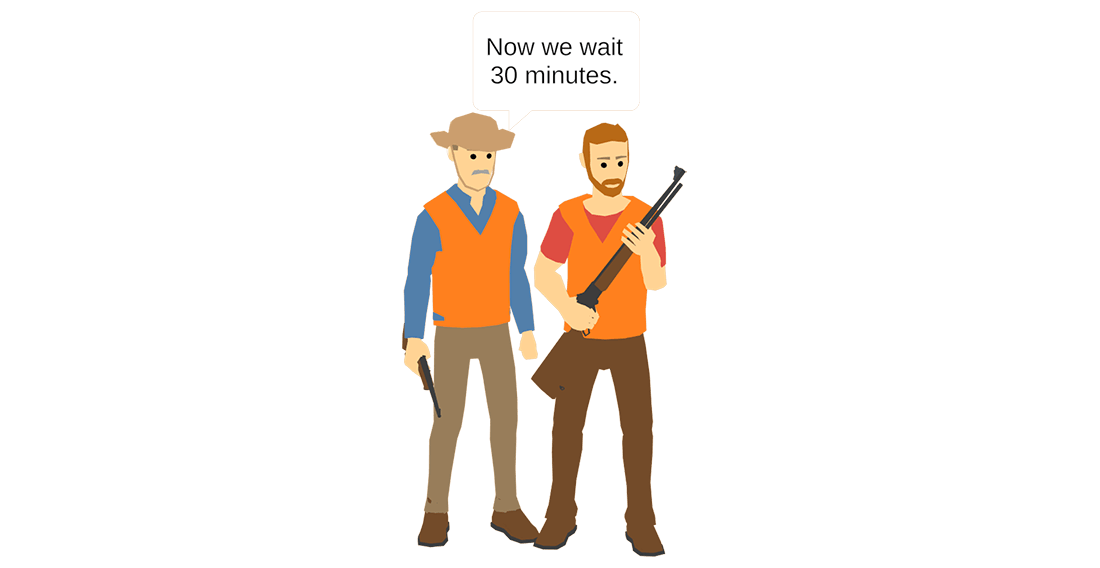
First, observe the 30 to 60 minute wait rule. This allows the animal’s blood pressure to drop and its muscles to stiffen, reducing the chance of a sudden, desperate charge. During this time, look for visual indicators. Use binoculars to check if the eyes are open and if there is any rhythmic movement in the chest or flank.
When you finally move in, apply the TABK rule:
- Treat every firearm as if it were loaded.
- Always point your muzzle in a safe direction.
- Be sure of your target and what’s beyond it.
- Keep your finger off the trigger until you are ready to shoot.
Approach from behind and above the animal's head. If the animal is still alive, it will struggle to turn its head to see or strike you from this angle. If you see the ears twitch or the eyes blink, perform an ethical dispatch shot immediately into the vital zone or the base of the skull to end the animal's suffering and secure the area.
FAQ
Which animal is considered the most dangerous game to hunt?
While subjectivity exists, many professional hunters consider the Cape Buffalo the most dangerous because of its tendency to hide in thick cover and actively hunt the people tracking it.
What are the Big Five dangerous game animals?
The Big Five consists of the African Elephant, the Black Rhinoceros, the African Lion, the African Leopard, and the Cape Buffalo. These were originally chosen because they were the most difficult and dangerous animals to hunt on foot.
Why is the Cape Buffalo often called Black Death?
The name stems from its dark hide and its lethal reputation. It is known for never forgetting a wound and being one of the few animals that will circle back to ambush its pursuer.
Which animal kills the most humans in Africa annually?
Outside of mosquitoes and snakes, the hippopotamus is the deadliest large land mammal, followed closely by the Nile crocodile in aquatic environments.
What minimum caliber is required for hunting dangerous game?
In many African countries, the legal minimum caliber for dangerous game is the .375 Holland & Holland Magnum. This ensures sufficient penetration and energy for large, thick-skinned animals.
Is hunting dangerous game more hazardous than standard hunting?
Yes. Dangerous game species possess the physical ability and, in some cases, the predatory instinct to fight back when threatened or wounded. This requires specialized equipment, training, and a higher level of situational awareness.