Our Top Picks
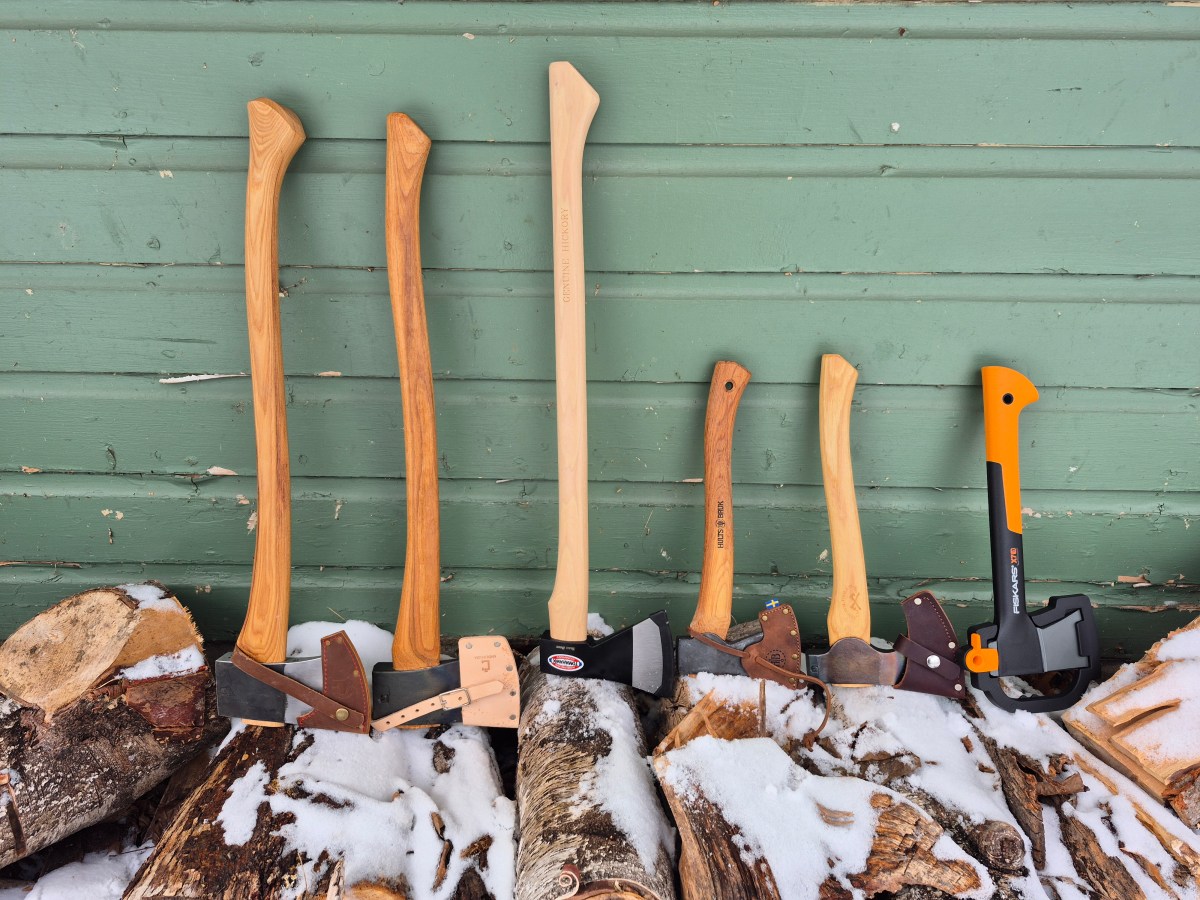
Choosing the right tool for your next trip doesn't have to be a guessing game. After extensive field testing in varied conditions, we've identified the standout performers for 2024. If you're looking for the best camping axes, here are our primary recommendations:
- Best Overall: Estwing Long Handle Camper’s Axe. This all-steel powerhouse is virtually indestructible and excels at both splitting wood and felling small trees.
- Best for Heavy Wood Prep: Fiskars X27 Super Splitting Axe. The specialized head geometry makes it the superior choice for processing large volumes of basecamp firewood.
- Best for Backpacking: Gerber 14-Inch Hatchet. A lightweight, compact option that packs easily without sacrificing the utility needed for smaller wood prep tasks.
Choosing the best camping axes requires understanding the balance between portability and splitting power. Whether you need a compact hatchet for backpacking or a long-handle axe for basecamp firewood, we've tested the top tools of 2024 to find the perfect match for your wood prep needs. A camping axe and a hatchet differ primarily in size and intended use. Hatchets are shorter tools, typically under 16 inches, designed for one-handed tasks like splitting kindling and carving. Camping axes are larger, often between 18 and 28 inches, and require two-handed use to generate the leverage needed for splitting logs and felling small trees.
Introduction to Camping Tools: Axe vs. Hatchet
We've all been there—standing over a pile of damp logs with a tool that feels either too small for the job or too heavy to swing safely. Selecting the right gear is the foundation of efficient wood prep and campsite safety. When choosing the best camping axes for beginners, it is essential to recognize that "bigger" isn't always "better." The choice depends entirely on your specific environment and the type of firewood you expect to encounter.
For basecamp operations, an axe with a handle length between 24 and 28 inches provides the optimal balance of swing leverage and portability for processing larger logs. These tools allow for two-handed use, which significantly increases safety by providing better control during the swing. Portable camping hatchets, on the other hand, are the most efficient option for backpacking due to their compact length and lightweight construction. The most packable models feature handles between 10 and 16 inches and weights under 2 pounds, allowing hikers to handle essential tasks like driving tent stakes and shaving tinder without adding excessive bulk to their gear.
Anatomy of the Perfect Camp Tool
A high-quality axe is more than just a piece of metal on a stick. It is a precision instrument where every curve and angle serves a purpose. Understanding these components will help you evaluate any tool you pick up.
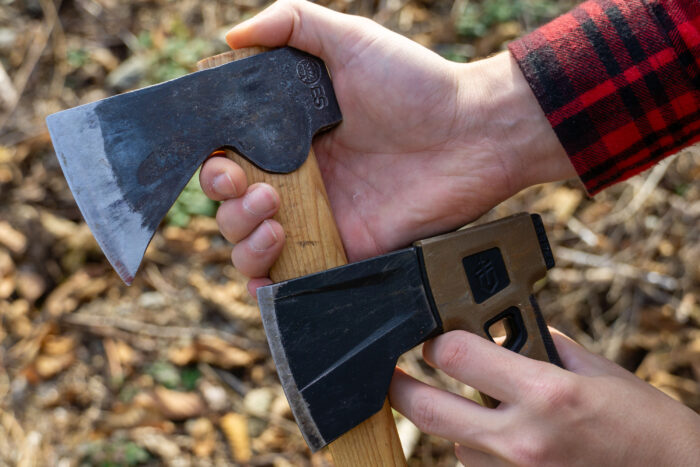
The Bit is the sharpened edge of the axe head, while the Poll is the flat back side, often used for light hammering tasks like driving plastic tent stakes. The Beard refers to the lower part of the bit that extends downward, providing a longer cutting surface without adding significant weight. Finally, the Haft is the handle itself, traditionally made of wood but increasingly featuring modern composites.
Material choice is just as critical. Many of the tools we recommend utilize Forged steel for the head. High Carbon steel is favored for its excellent edge retention, meaning you spend less time sharpening and more time working. However, in humid or coastal environments, tools treated for corrosion resistance are vital to prevent the steel from pitting and degrading over time.
1. Estwing Long Handle Camper’s Axe - Best Overall
The Estwing Long Handle Camper’s Axe is a legend in the outdoor world for a reason. Unlike traditional axes that feature a head pressed onto a handle, this tool is forged from a single piece of American steel. There is no head to come loose and no wooden handle to snap, making it one of the most durable all steel camping axes for harsh weather available today.
| Metric | Specification |
|---|---|
| Weight | 3.4 lbs |
| Length | 26 inches |
| Head Material | Forged Steel |
| Handle | Steel with Shock Reduction Grip |
In our testing, the standout feature was the comfort. The Estwing Sportsman's Axe and Camper's Axe series feature a patented Shock Reduction Grip that is designed to reduce impact vibration by up to 70%. This makes a massive difference during a long session of wood prep, as it significantly reduces hand and wrist fatigue.
Pros:
- Unmatched durability due to one-piece construction.
- Excellent swing leverage for splitting medium logs.
- Field & Stream's 2024 gear guide ranks it as the 'Best Overall' because of its versatility in felling and splitting.
Cons:
- Heavier than composite or wood-handled alternatives.
- The steel handle can feel cold in sub-zero temperatures without gloves.
2. Fiskars X27 Super Splitting Axe - Best for Heavy Wood Prep
If your camping style involves a large truck and a massive bonfire, you need wood splitting axes for camping that can handle serious diameter. The Fiskars X27 is specifically engineered for splitting. Its 36-inch handle is ideal for taller users or those who want maximum power, though Fiskars offers shorter versions for more compact needs.
The secret to the X27 is its head geometry. It features a pronounced wedge-shaped bit that forces wood fibers apart rather than just cutting into them. This design prevents the axe from getting stuck in the log—a common frustration with thinner blades.
Pros:
- Incredible power for processing basecamp firewood.
- Extremely lightweight FiberComp handle is stronger than steel.
- Low-friction coating on the head helps it slide through sticky wood.
Cons:
- Too long for backpacking or small car trunks.
- Not ideal for fine carving or shaving tinder.
3. Hults Bruk Aneby - Best Heirloom Quality
For those who view their camping gear as an investment to be passed down through generations, the Hults Bruk Aneby is a work of art. Hults Bruk has been operating out of the same foundry in Sweden since 1697, and that heritage is evident in every strike.
The Aneby is hand-forged from Swedish carbon steel and fitted with a premium American Hickory handle. Hickory is the gold standard for handles because its natural grain provides inherent shock absorption and a comfortable, organic feel that synthetic materials can't replicate. It comes with a high-quality Leather sheath to protect the hand-filed edge.
Pros:
- Exceptional edge retention and craftsmanship.
- Perfectly balanced for one-handed or light two-handed use.
- Beautiful aesthetic that develops a patina over time.
Cons:
- Significant price premium over mass-produced tools.
- Requires more maintenance (oiling the wood and steel).
4. Gerber 14-Inch Hatchet - Best for Backpacking
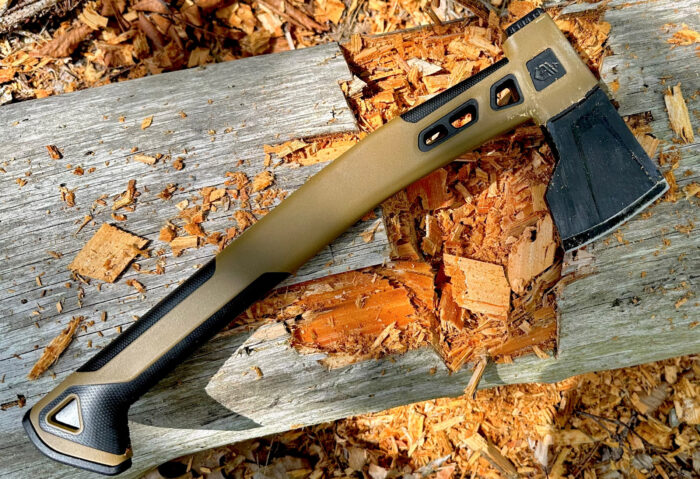
When every ounce matters, you need lightweight portable hatchets for backpacking. The Gerber 14-Inch Hatchet is a masterclass in utility-to-weight ratio. It is small enough to strap to the side of a pack but features a surprisingly sharp bit that handles kindling and light wood prep with ease.
We found this tool particularly useful for tasks beyond just wood. The flat poll is excellent for driving tent stakes, and the finger notch behind the beard allows you to "choke up" on the handle for fine tasks like shaving tinder or making feather sticks.
Pros:
- Ultra-portable at only 14 inches.
- Glass-filled nylon handle is nearly indestructible.
- Includes a slim, pack-friendly sheath.
Cons:
- Lacks the weight required for splitting large logs.
- Short handle offers limited swing leverage.
5. Husqvarna Carpenter’s Axe - Best for Bushcraft
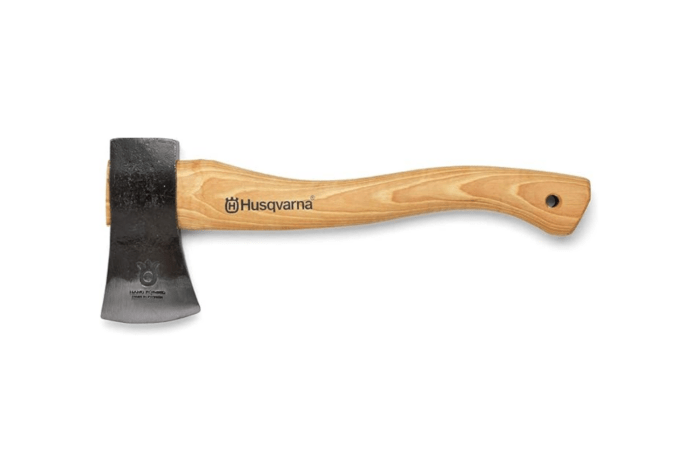
The Husqvarna Carpenter’s Axe is a secret weapon for bushcraft enthusiasts. While it is marketed as a carpenter's tool, its long, straight cutting edge and thin bit make it arguably the best bushcraft hatchets for creating kindling and carving camp furniture.
The head is hand-forged in Sweden, offering professional-grade steel at a fraction of the price of boutique brands. Because the edge is straight rather than deeply curved, it provides more contact with the wood when shaving, making it a dream for precision work.
Pros:
- Best value for hand-forged Swedish steel.
- Straight edge is superior for carving and detail work.
- Classic Hickory handle feel.
Cons:
- The straight edge can be more difficult for beginners to sharpen.
- Quality control on the handle grain can occasionally vary.
Buying Guide: How to Choose Your Tool
To choose the best camping axe for wood splitting, look for a tool with a heavier head weight, typically between 2 and 3 pounds, and a thicker, wedge-shaped bit designed to force wood fibers apart. However, weight is only one half of the equation; you must also consider the handle material and safety features.
Handle Materials: Hickory vs. Fiberglass vs. Steel
- Hickory handle: Offers the best shock absorption and feel but requires periodic maintenance with Boiled Linseed Oil (BLO) to prevent drying and cracking.
- Fiberglass/Composite: Extremely durable and weather-resistant. They are often molded around the head, ensuring it never flies off. They are the "set it and forget it" choice.
- All-Steel: The ultimate in durability but can be hard on the hands due to vibration. Look for models with specialized grips to mitigate this.
The 10-Yard Clearance Rule
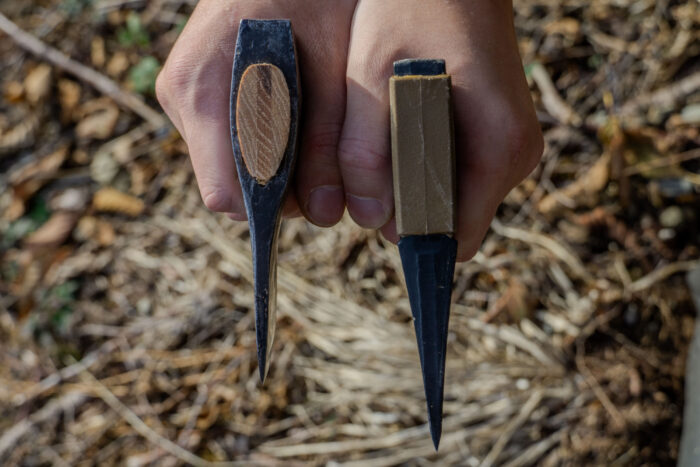
Safety is paramount. Before you swing any of the best camping axes, ensure you have a "blood bubble"—an area within your reach plus the length of the axe that is clear of people, pets, and gear. Additionally, never use a dull axe. A dull blade is more likely to glance off the wood and toward your legs than a sharp one.
Maintenance and Safety 101
A well-maintained tool is a safe tool. For traditional wood-handled axes, proper camping axe sharpening tips for beginners usually start with a fine-tooth file and a honing stone. Maintain a consistent angle (usually between 25 and 30 degrees) to ensure the edge stays strong.
To ensure long-term corrosion resistance, wipe down the steel with a light coat of oil after every trip. For wooden handles, applying Boiled Linseed Oil periodically will keep the wood supple and prevent it from becoming brittle. Always store your tool in its Leather sheath to protect both the edge and your other gear from accidental damage.
FAQ
What is the difference between a camping axe and a hatchet?
The primary difference is size and handle length. Hatchets are designed for one-handed use and are usually under 16 inches long. Camping axes are longer, generally between 18 and 28 inches, and are designed for two-handed use to provide more power for splitting and felling.
What should I look for when buying a camping axe?
Focus on your primary use case. If you are car camping and need to split large logs, look for a 24-28 inch axe with a wedge-shaped head. If you are backpacking, prioritize a lightweight hatchet under 2 pounds. Also, consider handle material based on how much maintenance you are willing to perform.
Are wood or fiberglass handles better for camping axes?
Wood, specifically hickory, provides better shock absorption and a classic feel, but it can break and requires oiling. Fiberglass or composite handles are virtually indestructible and immune to weather, making them better for hikers who don't want to worry about maintenance.
Is a hatchet or a folding saw better for camping?
They serve different purposes. A saw is safer and more efficient for cross-cutting thick branches into manageable lengths. A hatchet is essential for splitting those lengths into kindling and for tasks like driving stakes or carving. Integrated kits that include both are often the best solution.
Can you split firewood with a small camping axe?
Yes, but it requires more effort and better technique. You will likely need to use a "batoning" method where you place the axe on the wood and strike the poll with another log to force it through. For heavy splitting, a dedicated splitting axe with a wedge head is much more efficient.