Our Top Picks
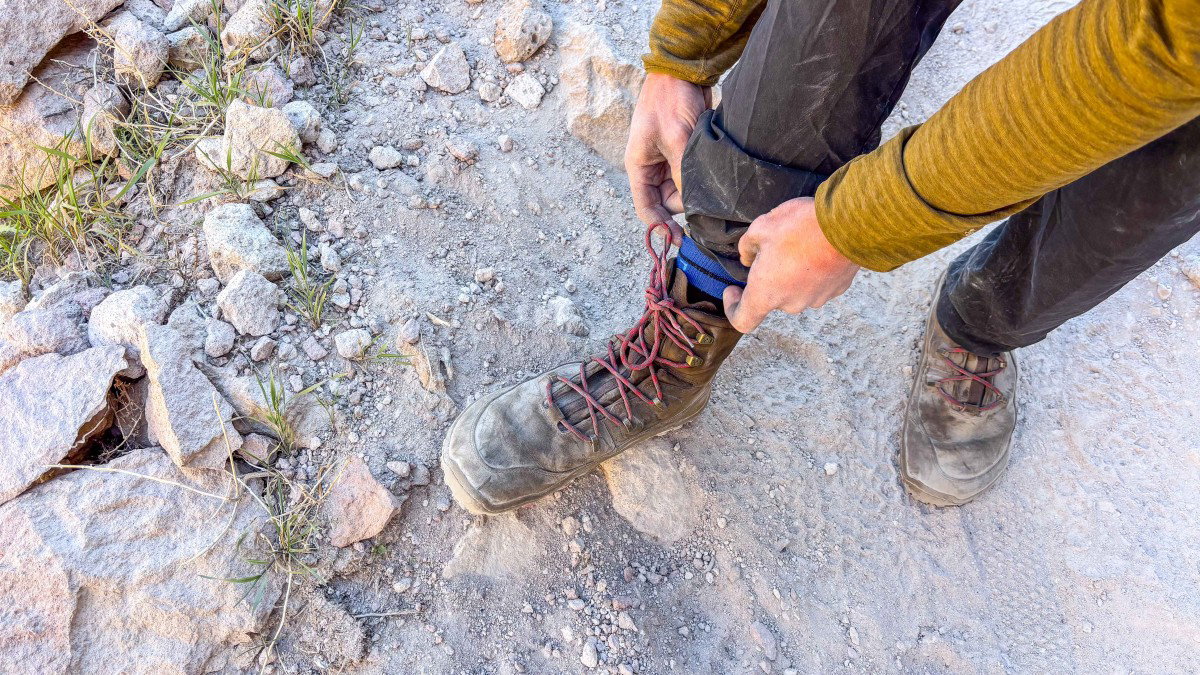
The Vivobarefoot Tracker AT II is the premier choice for hikers seeking maximum ground feel and sensory awareness. It utilizes a zero drop platform to align the kinetic chain while providing a high-top silhouette for debris protection. For hikers who prefer zero drop mechanics but require significant impact protection for high-mileage through-hikes, the Altra Olympus serves as the leading cushioned alternative.
The Vivobarefoot Tracker Textile AT II features a low 7mm stack height and a wide toe box, providing a ground-to-foot connection that enhances proprioception and natural alignment. Unlike traditional footwear, these zero drop hiking boots keep the heel and forefoot on the same plane for natural mechanics.
| Feature | Vivobarefoot Tracker AT II | Altra Olympus 5 |
|---|---|---|
| Stack Height | 7mm | 33mm |
| Weight (Pair) | 30.7 oz | 24.7 oz |
| Primary Material | Wild Hide Leather or Textile | Synthetic Mesh / TPU |
| Lug Depth | 4mm | 4mm (Vibram Megagrip) |
| Waterproofing | Thermal Insole & Leather Treatment | Gore-Tex models available |
| Best For | Ground feel and sensory feedback | Impact protection on long distance |
Why the Tracker AT II Dominates Minimalist Hiking
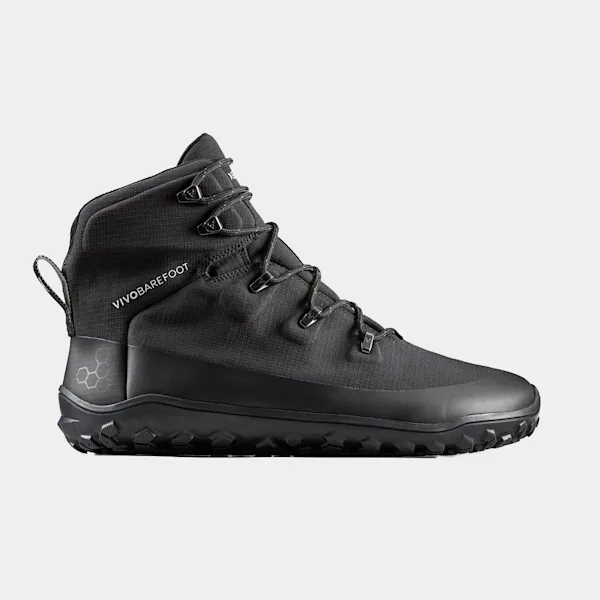
When we evaluate the landscape of minimalist hiking boots, the distinction between a simple boot and a functional medical-grade tool for movement becomes clear. The Vivobarefoot Tracker AT II is not just a light footwear option; it is a structural intervention for your gait. Most traditional hiking boots feature an 8mm to 12mm heel-to-toe drop, which shifts your center of gravity forward, shortens your Achilles tendon, and changes how your knees absorb shock. By moving to zero drop hiking boots, you are reclaiming your natural alignment.
The construction of the Tracker AT II is a testament to durability in a category often criticized for being flimsy. While many competitors rely on glued synthetic panels that delaminate under the stress of mountain terrain, Vivobarefoot uses a 100% Wild Hide leather upper. This leather is sourced from small-scale farmers whose cattle live outdoors, resulting in a naturally scarred and incredibly resilient material. What makes the AT II model superior to its predecessor is the updated flexibility of the leather rand. It moves with your foot rather than resisting it, ensuring that your sensory awareness remains uninhibited even when the leather is fully broken in.
A critical design element often overlooked by mainstream brands is the wide toe box. Traditional boots often taper at the front, squishing the hallux (the big toe) and preventing it from performing its primary job: stabilizing the foot. The Tracker AT II is specifically curated as one of the best zero drop hiking boots with wide toe box for wide feet, allowing for full forefoot splay. When your toes can spread naturally, you create a wider base of support, which is essential when navigating technical terrain where balance is the difference between a successful summit and a rolled ankle.
At a total weight of approximately 30.7 oz for a pair, these boots managed to shave off significant bulk without sacrificing the high-top protection needed for off-trail exploration. They offer the psychological security of a standard boot with the physiological benefits of being barefoot.
All-Terrain Performance: Mud, Snow, and Rock
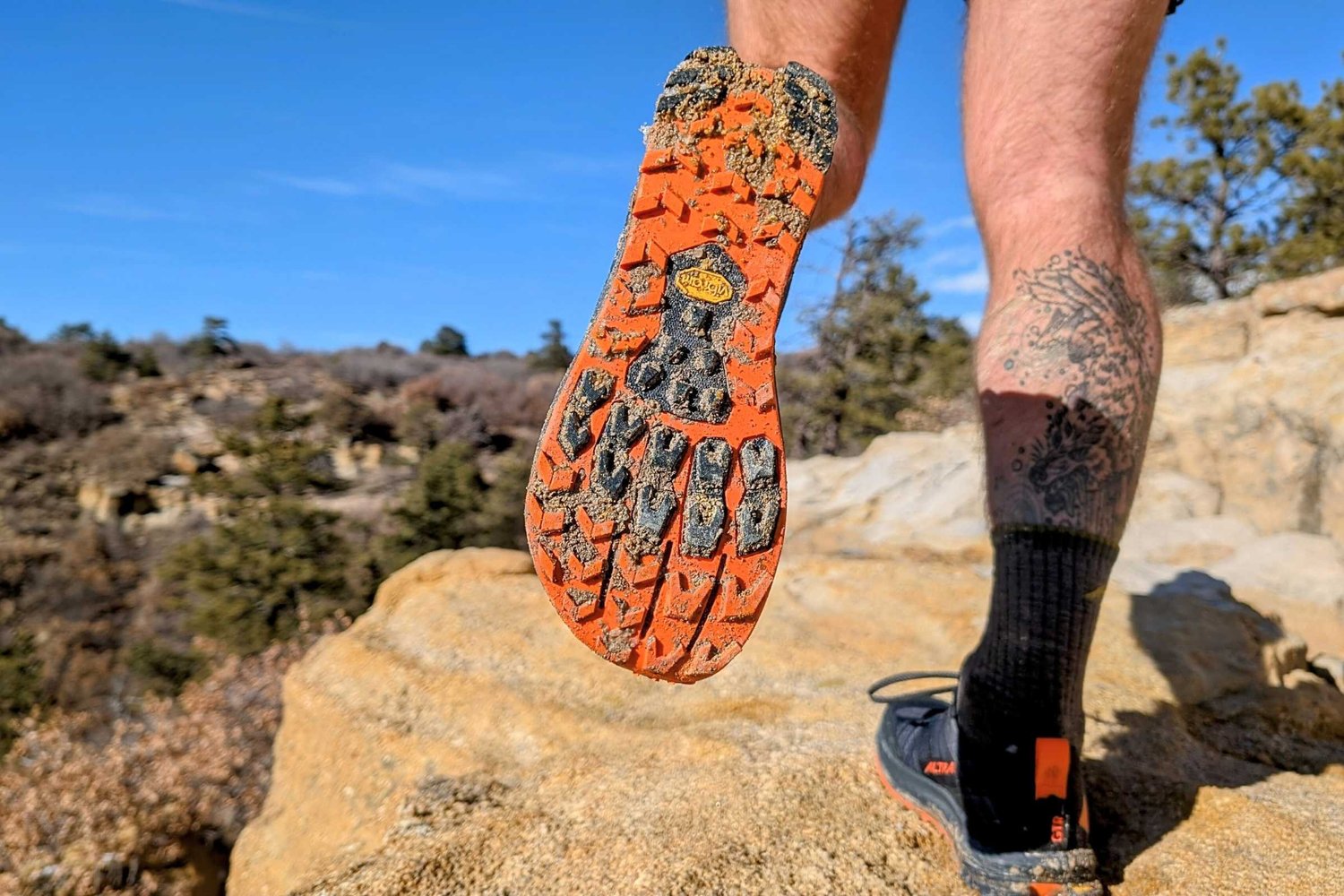
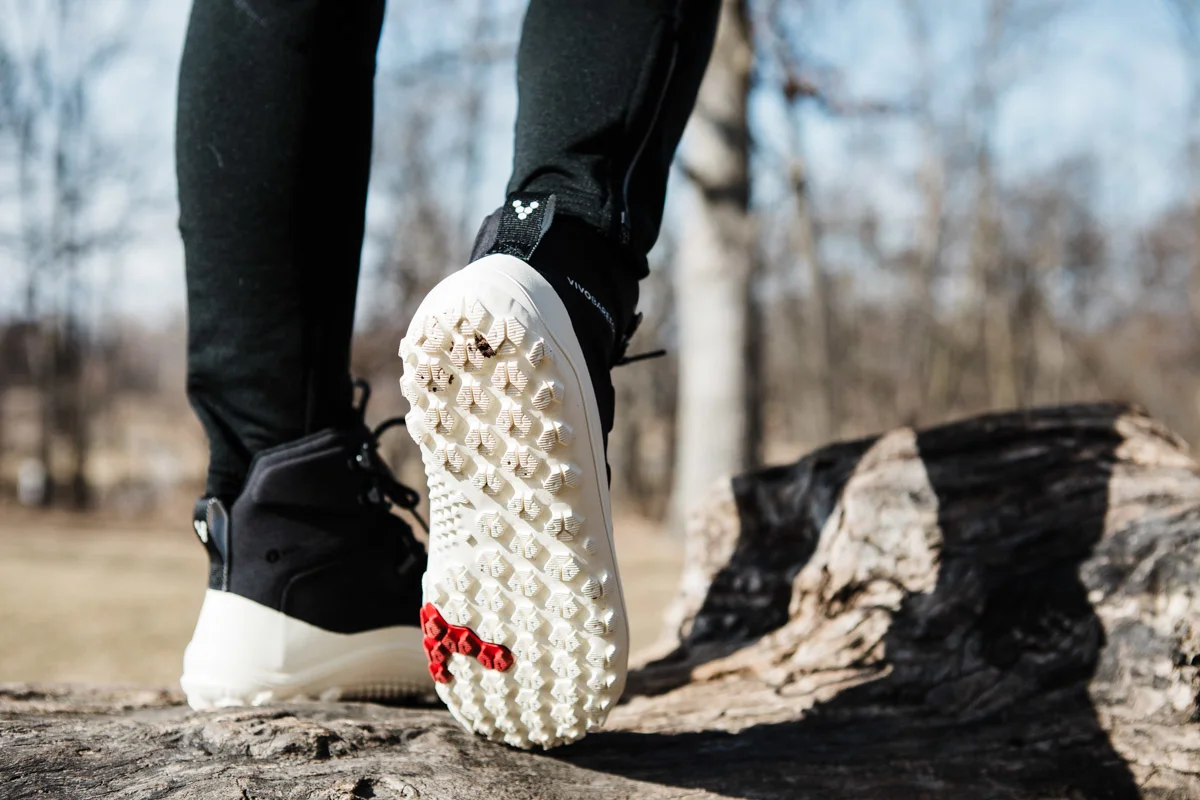
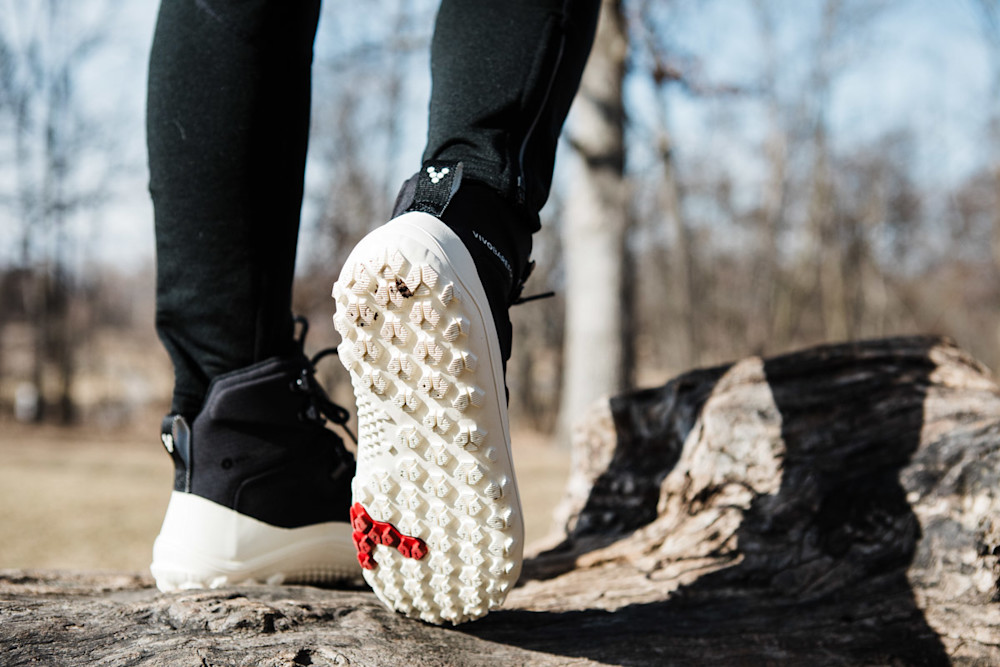
Testing the Vivobarefoot Tracker AT II in the field reveals its true versatility. The "AT" stands for All-Terrain, and for this iteration, the company significantly upgraded the outsole. The boot features a 2.5mm base with 4mm lugs, which is a 1.5mm increase in tread depth from previous versions. This change is palpable the moment you step onto a muddy incline or loose scree. The multi-directional traction pattern bites into soft soil while the low 6.5mm to 7mm stack height keeps your ankle close to the ground, virtually eliminating the lever effect that causes side-hill rolls.
Many hikers worry that minimalist hiking boots won't stand up to the cold. To address this, Vivobarefoot includes a removable thermal insole. This insole uses an integrated aluminum layer that reflects body heat back to the foot while wicking away moisture. During our vivobarefoot tracker textile at ii review for trail hiking in freezing temperatures, we found that this system provides surprising thermal regulation without adding the bulk of heavy insulation.
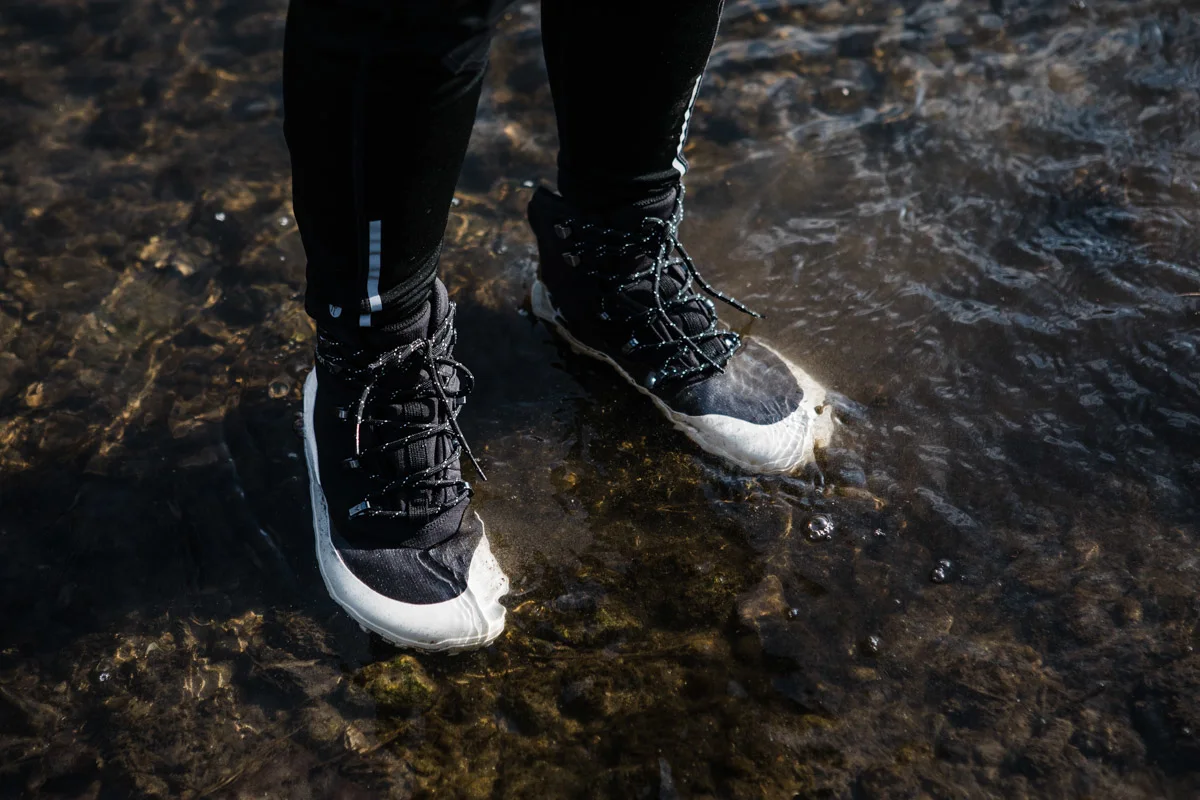
Wet conditions are handled by the combination of the treated leather and the inner lining. While no leather boot is a submarine, the Tracker AT II excels as a high-performance waterproof zero drop hiking boots for winter conditions. The high-top design and gusseted tongue keep mud and stream splashes out, while the breathability of the Wild Hide leather prevents the internal swampiness often found in heavy Gore-Tex boots.
Proprioception is the secret weapon of this boot. Because the sole is so thin, you can feel the textures of the trail—the difference between a rounded river stone and a sharp piece of granite. This sensory feedback allows your brain to adjust your gait mechanics in real-time, engaging the intrinsic foot strength that modern life often leaves dormant. The result is a more efficient kinetic chain and a more connected hiking experience.
The Professional Transition Guide: Safety First
If you are coming from traditional boots with a substantial heel lift, you cannot simply strap on a pair of minimalist hiking boots and head out for a twenty-mile trek. Your body needs time to adapt to the musculoskeletal demands of natural alignment. Transitioning to zero drop footwear is a marathon, not a sprint. Over years of wearing elevated heels, your calves may have shortened and your Achilles tendons may have lost some elasticity.
Podiatrists and footwear specialists emphasize a gradual approach. When you first receive your Tracker AT II, wear them around the house for ten minutes a day. This initial stage allows you to get used to the feel of the ground-to-foot connection without putting your joints under the stress of an incline. After a week, you can move to short neighborhood walks on flat surfaces.
Safe Transition Checklist
- Phase 1: Wear the boots for 10-20 minutes daily indoors to wake up the intrinsic foot muscle.
- Phase 2: Conduct "micro-hikes" on soft grass or flat trails for no longer than 30 minutes.
- Phase 3: Perform calf stretches and "towel curls" with your toes to build the strength needed for forefoot splay.
- Phase 4: Gradually increase mileage by no more than 10% per week, listening for any sign of calf pain or Achilles tightness.
The goal of learning how to transition to zero drop hiking boots safely is to avoid strain. When you remove the artificial forward tilt of a standard shoe, your posterior chain has to work harder. By taking it slow, you allow your gait mechanics to reset naturally. Over time, you will notice an increase in your balance and a reduction in knee impact, as your feet begin to function like the shock absorbers they were meant to be.
Vivobarefoot Tracker vs Altra Lone Peak: Which is Right for You?
One of the most common dilemmas for hikers looking to ditch the heel lift is the choice between vivobarefoot tracker vs altra lone peak hiking boots. Both belong to the zero drop family, but they offer vastly different experiences on the trail.
The Altra Lone Peak is the "entry drug" for the zero drop world. It features a wide toe box and a zero drop platform, but it includes a significant amount of EGO foam cushioning. This makes it an excellent choice for hikers who want the alignment of minimalist footwear but have sensitive feet or are carrying 40-pound packs on the Pacific Crest Trail. The foam absorbs the sharp edges of rocks, protecting the foot from fatigue on high-mileage days.
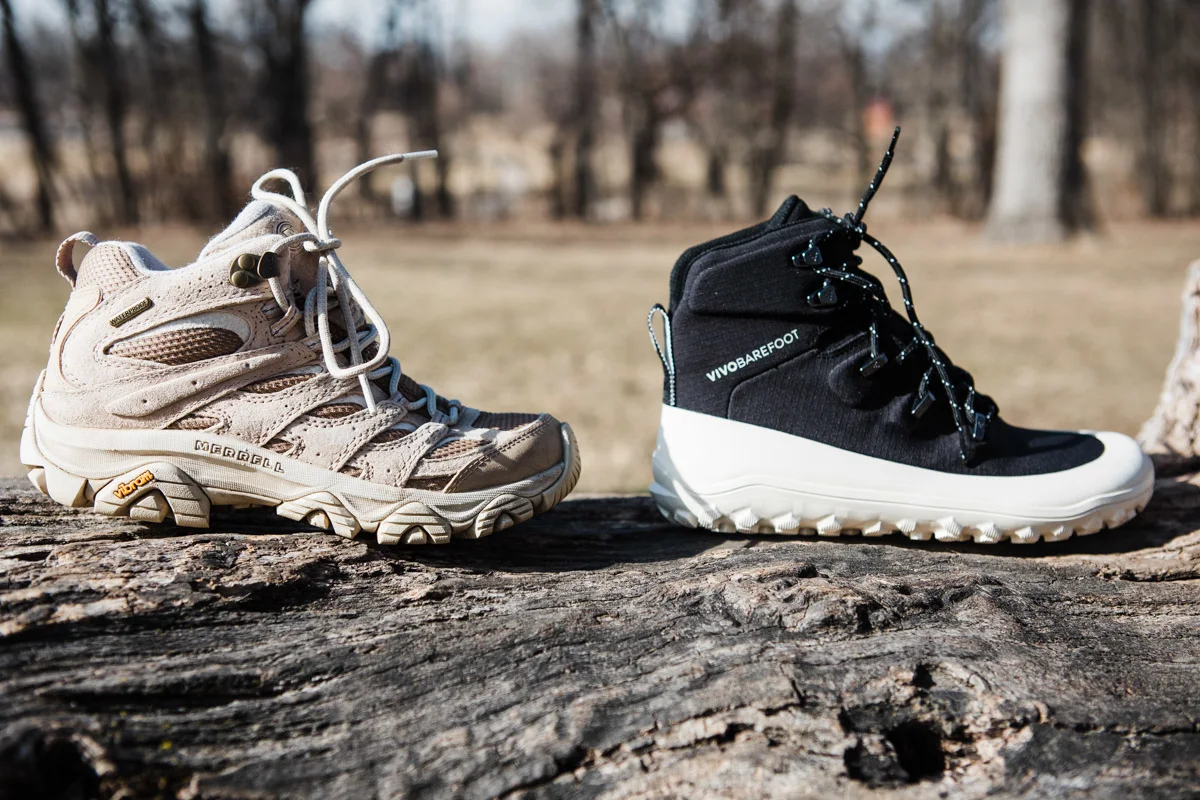
In contrast, the Vivobarefoot Tracker AT II is for the purist. It offers almost no cushioning. The 7mm stack height is designed to give you as much information about the ground as possible. While the Altra protects you from the trail, the Vivobarefoot connects you to it. If you prioritize sensory awareness and want to feel every root and pebble to improve your proprioception, the Tracker is the winner. However, on punishingly rocky terrain and stream crossings where the stones are jagged and large, the impact protection of an Altra might be more comfortable for the uninitiated.
Ultimately, it comes down to your hiker profile. If you are a minimalist who enjoys the feeling of being barefoot and wants a boot that will last years with proper leather care, the Tracker AT II is unrivaled. If you are a through-hiker who needs to bang out 25 miles a day on granite and doesn't mind replacing your shoes every 500 miles, the Altra's cushioning may be your best friend.
FAQ
What are the benefits of wearing zero drop hiking boots?
Wearing zero drop hiking boots encourages a more natural gait by placing the heel and forefoot on the same level. This alignment helps distribute body weight more evenly, reduces the shearing forces on the knees, and strengthens the muscles in the feet and calves. Over time, it can improve balance and proprioception because the brain receives better sensory feedback from the ground.
Are zero drop boots good for hiking long distances?
Zero drop boots are excellent for long distances once the wearer has successfully transitioned and built the necessary foot strength. Many through-hikers prefer them because the wide toe box allows for natural foot swelling that occurs over many miles. However, for those not used to minimalist footwear, long distances can lead to fatigue in the arches and calves if not approached gradually.
How long does it take to get used to zero drop hiking boots?
The transition period varies significantly from person to person, typically taking anywhere from six weeks to six months. It depends on your current foot health, the type of shoes you previously wore, and how consistently you perform foot strengthening exercises. Consistent, short-duration wear is more effective for adaptation than occasional long hikes.
Are zero drop boots better for your knees?
Many hikers find that zero drop boots reduce knee pain because they discourage a heavy heel strike. By shifting the impact to the midfoot or forefoot, the body’s natural suspension system—the calves and ankles—absorbs more of the shock, taking the pressure off the knee joint. This realignment of the kinetic chain can lead to long-term improvements in joint health.
Can zero drop boots cause calf pain?
Yes, if you transition too quickly, you may experience calf pain. Because zero drop boots require the calf muscles to lengthen more than traditional boots with a heel lift, those muscles and the Achilles tendon must work harder. This is why a slow progression and stretching routine are vital to avoid overuse injuries during the transition phase.
Do zero drop hiking boots provide enough protection on rocky terrain?
The level of protection depends on the specific model. Minimalist hiking boots like the Tracker AT II provide excellent puncture resistance but allow you to feel the shape of the rocks. If you are hiking on very sharp, jagged volcanic rock for long periods, you might prefer a zero drop boot with a higher stack height for more impact protection, though you will lose some of the sensory feedback that makes minimalist boots unique.