Our Top Picks
- Best Overall Performance: The Feathered Friends Hummingbird UL 30 is the gold standard for weight efficiency, utilizing 950+ fill power down to hit a 1 pound 5 ounce mark.
- Best Budget Option: The REI Co-op Magma 30 offers excellent 850-fill value without the boutique price tag, weighing approximately 1 pound 8 ounces.
- Best Minimalist Choice: For those who prioritize pure weight savings, the Zpacks Classic 20F hoodless design strips away unnecessary features to reach a featherweight status.
The Feathered Friends Hummingbird UL 30 remains a top choice for high-performance ultralight sleeping bags, utilizing premium 950-fill power down to provide a superior warmth-to-weight ratio. Deciding between ultralight sleeping bags and backpacking quilts depends on your need for draft protection versus weight savings, as traditional bags offer a full enclosure and integrated hoods ideal for cold alpine conditions.
| Model Name | Weight | Fill Power | Price |
|---|---|---|---|
| Feathered Friends Hummingbird UL 30 | 1 lb 5 oz | 950+ | $570 |
| REI Co-op Magma 30 | 1 lb 8 oz | 850 | $349 |
| Zpacks Classic 20F | 1 lb 2.8 oz | 900+ | $419 |
| Western Mountaineering Summerlite | 1 lb 3 oz | 850+ | $485 |
| Mountain Hardwear Ghost Whisperer 20 | 1 lb 13 oz | 900 | $600 |
The Secret to the Sub-2-Pound Limit: A Down Fill Power Guide
When we talk about breaking the two-pound barrier, we are really talking about the quality of the insulation. In the world of ultralight sleeping bags, down fill power is a critical indicator of warmth-per-ounce. This number represents how many cubic inches one ounce of down can loft. While an 850 fill is considered high-end, 950+ fill represents the absolute precipice of thermal efficiency.
Higher fill power allows a manufacturer to use less down by weight to achieve the same temperature rating. For example, a 1 pound 4 ounces version of the Feathered Friends Hummingbird UL 20-degree sleeping bag utilizes 950+ fill power goose down to maximize its warmth-to-weight ratio. If that same bag used 650-fill down, it would likely weigh nearly three pounds and pack down to the size of a microwave.
Choosing between 850 vs 950 down fill power usually comes down to budget and your ultimate goals for your base weight. While 950-fill offers the highest loft height, it is also more expensive and requires careful maintenance to keep the ethically sourced down from clumping. In our testing, we found that high-loft bags use box baffles to keep the down from shifting, ensuring that there are no cold spots along the seams.
Technical Sidebar: The Grapefruit Test Packability is just as important as weight. A 950-fill power bag often packs down to the size of a large grapefruit (approx. 3-4 liters), whereas a budget synthetic bag might be the size of a water gallon (approx 8-10 liters).
Backpacking Quilts vs Sleeping Bags: Which is Right for You?
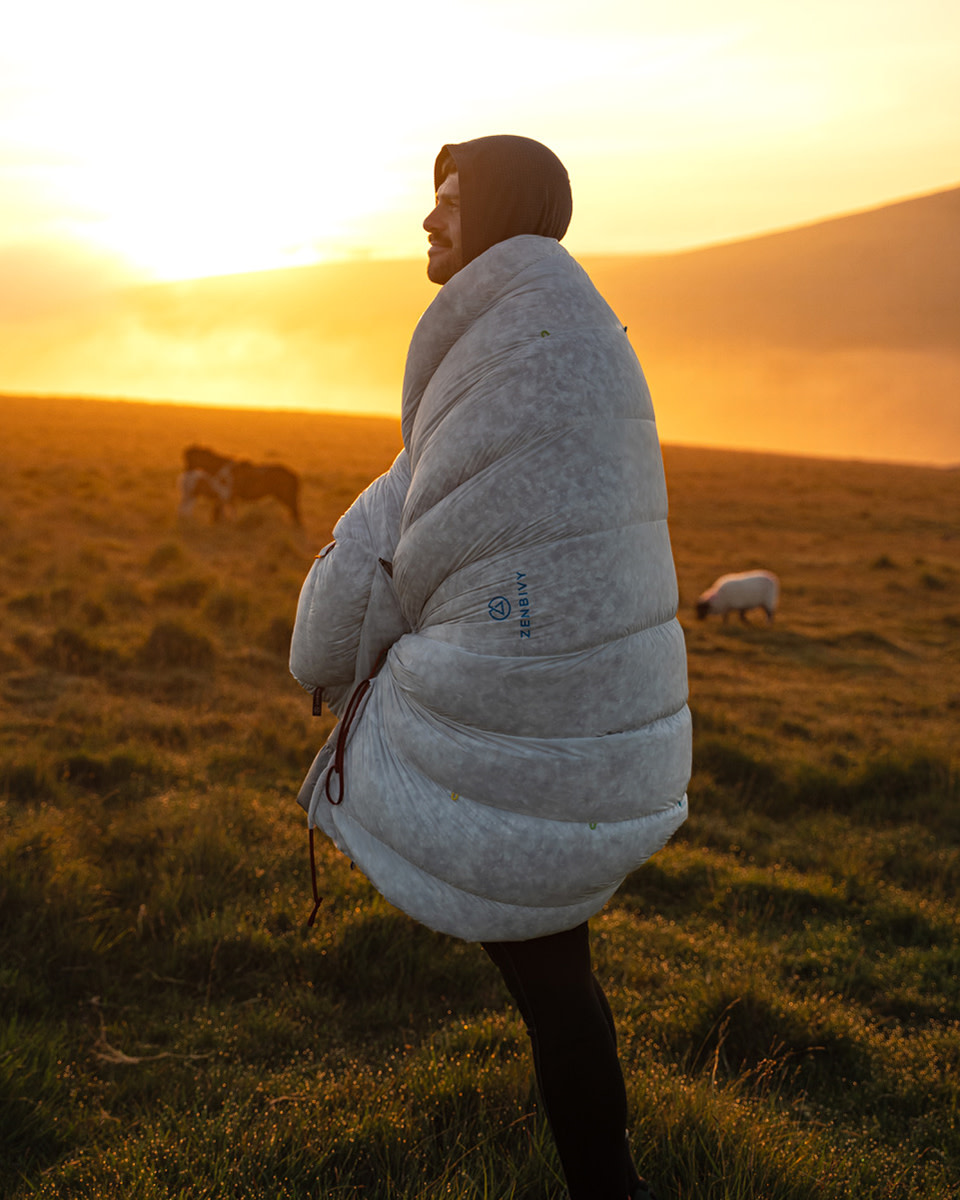
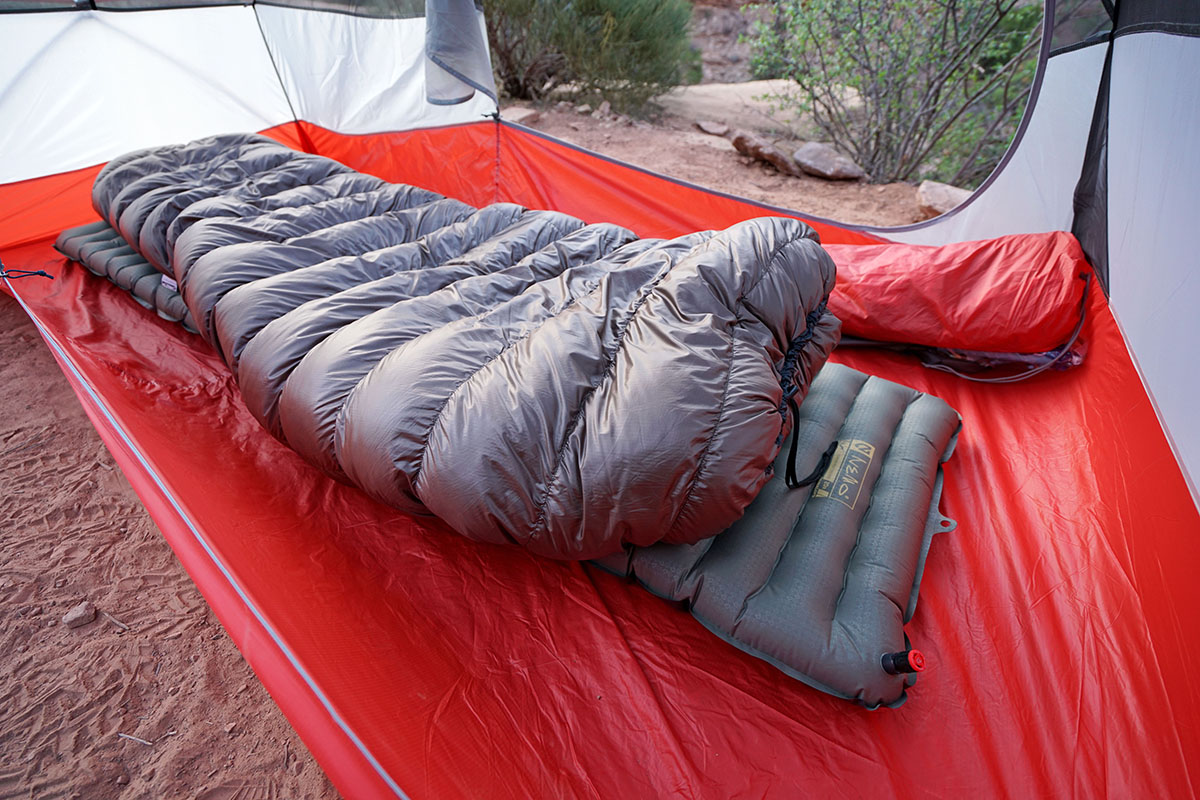
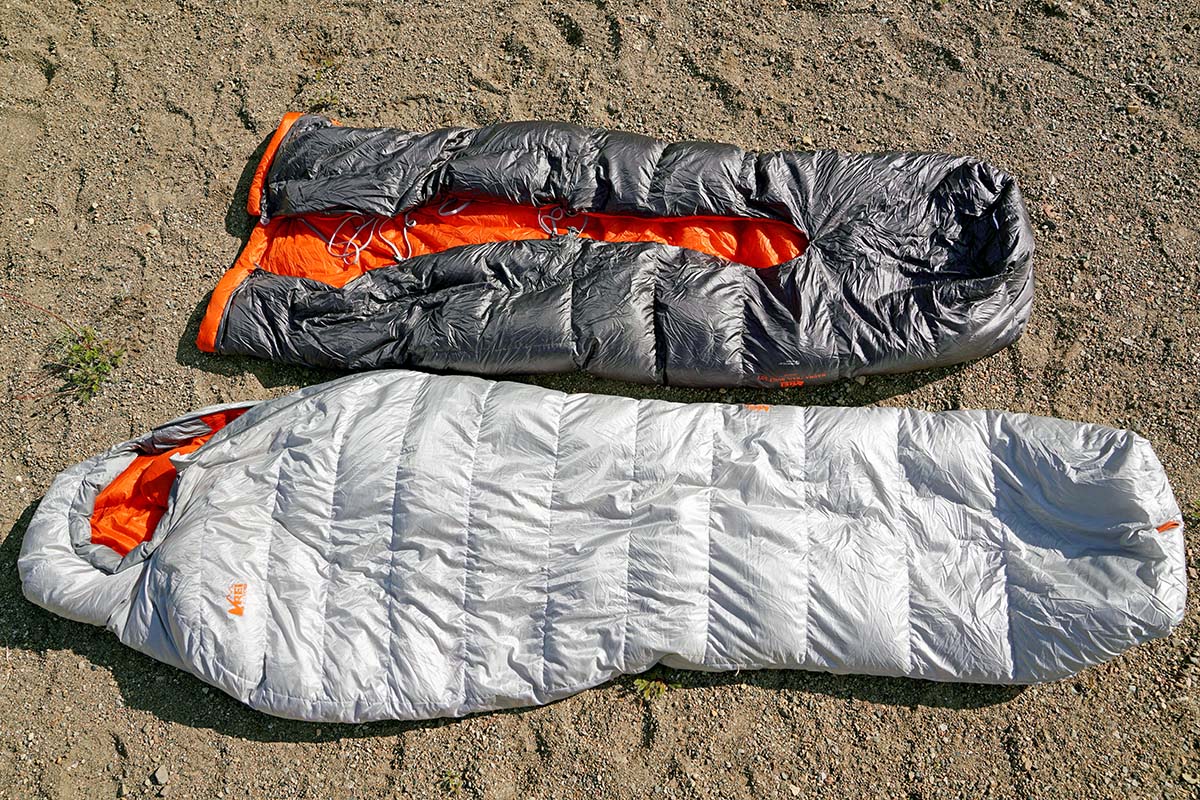
The debate of backpacking quilts vs sleeping bags has intensified as thru-hikers look for every possible way to shave ounces. A traditional mummy bag is a complete cocoon. It has a full-length zipper and an integrated hood. This design is superior for restless sleepers who toss and turn, as it prevents drafts from entering the sleep system.
However, many minimalists are moving toward hoodless designs. By eliminating the hood and the bottom fabric (which is compressed and provides little insulation anyway), a quilt or a hoodless sleeping bag can slash weight significantly. When sleeping bag vs quilt for thru-hiking is the question, consider your sleeping pad. Since quilts rely on the pad for insulation from the ground, the sleep system synergy between a quilt and a high R-value pad is essential.
One of the pros and cons of hoodless sleeping bags is the loss of head insulation. If you choose a hoodless model, you must carry a dedicated down hat or a hooded jacket to keep your head warm in freezing temperatures. For those who prioritize a tapered cut to save every gram of fabric, moving to a quilt can be the most effective way to drop your pack weight.
Best Ultralight Sleeping Bags of 2026: Detailed Reviews
We took these bags into the High Sierra and the windswept ridges of the Appalachian Trail to see if they lived up to their manufacturer claims.
Feathered Friends Hummingbird UL 30
This bag is a masterclass in ultralight sleeping bags engineering. It feels like sleeping inside a cloud. The 950-fill down provides incredible loft, and the Pertex shell fabric is surprisingly soft against the skin. We were impressed that it actually weighed in at 1 pound 5 ounces on our scale.
Pros
- Highest warmth-to-weight ratio in its class.
- Incredible compressibility.
- High-quality 7D ripstop nylon denier fabric.
Cons
- Expensive initial investment.
- Very narrow cut which may feel restrictive.
Western Mountaineering Summerlite
For hikers who want a full-zip bag that feels "traditional" but weighs almost nothing, the Summerlite is a classic. It utilizes an 850+ fill power down and a very breathable shell. During our testing, high-performance 20-degree mummy bags like the Western Mountaineering UltraLite and the Mountain Hardwear Ghost Whisperer 20 verified at weights between 1 pound 10 ounces and 1 pound 13 ounces, keeping the Summerlite even lighter at the 32-degree mark.
Pros
- Continuous baffles allow you to shift down to the top or bottom.
- Full-length zipper for ventilation.
- Exceptional durability for such a light bag.
Cons
- Not treated with water-resistant down.
- Conservative temperature ratings might feel chilly for some.
REI Co-op Magma 30
This is often cited as one of the best budget ultralight sleeping bags for backpacking because it brings high-end features to a mainstream price point. It uses 850-fill power down and has a very generous cut around the shoulders compared to the Feathered Friends models.
Pros
- Best price-to-performance ratio.
- Water-resistant down helps in humid conditions.
- Excellent hood design for a mid-tier bag.
Cons
- Slightly heavier than boutique options.
- Baffles are not quite as sophisticated as higher-end bags.
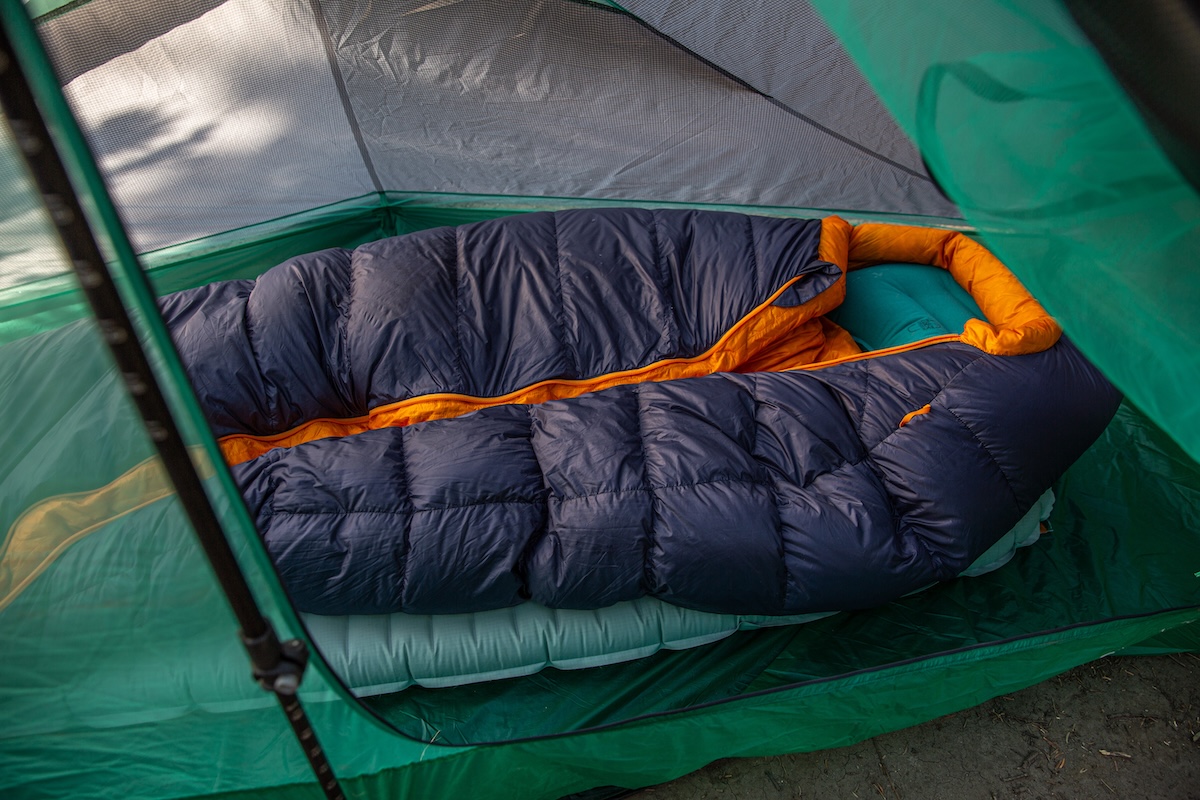
Zpacks Classic 20F
Looking for hoodless sleeping bag reviews often leads you directly to Zpacks. The Zpacks 20F Classic hoodless sleeping bag weighs just 18.8 ounces and features 900 fill power water-resistant down. By removing the zipper and the hood, they have created one of the warmest 20 degree ultralight sleeping bags under 2 pounds on the market.
Pros
- Extreme weight savings.
- Water-resistant down prevents loft loss in damp weather.
Cons
- The 3/4 length zipper can be tricky.
- Requires a separate hat for head warmth.
Field Durability: 7D vs 10D Shell Fabrics
When you are chasing the lightest possible gear, the shell fabric becomes incredibly thin. Manufacturers typically use 7D or 10D ripstop nylon denier to keep the weight down. While these fabrics are technically advanced and featherweight, they require care.
In our long-term testing, we found that durability and care for thin denier ultralight shell fabrics involve keeping the bag away from sharp sticks, zippers, and campfire sparks. A single spark from a fire can melt right through a 7D Pertex shell. We also recommend using a silk or synthetic liner to keep body oils away from the down, as oils can cause the down to clump and lose its thermal efficiency over a long thru-hike.
If you are planning a 2,000-mile hike, the trade-off of a slightly heavier 15D or 20D fabric might be worth it for the peace of mind. However, for those who treat their gear like fine instruments, the 7D shells provide unmatched weight savings.
FAQ
What is considered a light weight for a sleeping bag?
In the current market, any specialized backpacking bag weighing under 2 pounds (32 ounces) is considered ultralight. The most advanced 3-season bags now frequently hit the 20 to 24-ounce range, while budget light options usually sit between 25 and 30 ounces.
Are ultralight sleeping bags worth it?
For hikers covering more than 10 to 15 miles a day, the answer is usually yes. Reducing your base weight significantly lowers the strain on your joints and increases your daily mileage. However, if you only camp a few miles from the trailhead, the increased cost and delicacy of these bags might not be necessary.
What is the difference between a down and synthetic ultralight sleeping bag?
Down is made from the plumage of ducks or geese and offers the best warmth-to-weight ratio and compressibility. Synthetic insulation is made of polyester fibers; it is cheaper and performs better when wet, but it is much heavier and bulkier, making it difficult to find a synthetic option that truly fits the ultralight category.
Is a sleeping quilt better than an ultralight sleeping bag?
A quilt is better if your primary goal is weight savings and you find mummy bags too restrictive. Many side sleepers prefer quilts because they offer more room to move. However, if you frequently camp in temperatures below freezing, a traditional sleeping bag is better for preventing icy drafts.
Are ultralight sleeping bags durable?
They are durable in terms of tension and down retention, but they are vulnerable to punctures and abrasions. Because they use very thin shell fabrics like 7D or 10D nylon, you must be careful not to snag the fabric on a zipper or a rough shelter floor.
If you are a side sleeper who likes to stretch out, go with the Zpacks or the REI Magma Trail quilt. For those who want the ultimate alpine protection, we recommend sticking with the Feathered Friends Hummingbird. Your choice will define how well you recover for the miles ahead. What has been your experience with the switch to ultralight gear? Let us know in the comments below!